Solid-State Battery Manufacturing Equipment Guide 2026–2027

Solid-State Battery Manufacturing: What Equipment Buyers Should Prepare for in 2026–2027 Solid-state battery announcements appear weekly. OEMs promise production timelines that shift quarter by quarter. Material companies claim breakthroughs in sulfide conductivity. Yet the manufacturing equipment supply chain—the actual machinery that turns powder into finished cells—remains the least discussed and most critical bottleneck.
The transition from liquid-electrolyte lithium-ion to solid-state is not a modification. It is a replacement. A standard lithium-ion production line cannot be “upgraded” to solid-state. The dry room specifications, the electrode formation process, the stack assembly method, and the formation protocol all demand fundamentally different equipment.

For battery manufacturers preparing capex for 2026–2027, this guide identifies the four equipment areas where the specifications change, the current supplier landscape, and the cost implications that must be budgeted now.


The Equipment Break: What Changes from Li-Ion to Solid-State
A conventional lithium-ion line is built around liquid electrolyte. The solid-state line eliminates it. That single change cascades through every station.

Manufacturing Step Lithium-Ion (Liquid) Solid-State Equipment Impact
Electrode preparation Wet slurry coating + drying Dry mixing + calendering, or slurry coating + solvent removal Solvent recovery systems eliminated; dry electrode lines added
Electrolyte application Liquid filling under vacuum Solid electrolyte layer deposition or lamination Filling stations replaced by lamination or pressing stations
Cell assembly Stacking/winding + electrolyte fill + sealing Stacking under pressure + isostatic pressing + sealing Hydraulic/Isostatic press added as bottleneck station
Dry room specification Dew point -40°C Dew point -60°C (sulfide), -50°C (oxide) Entire HVAC system re-specified; capital cost 2–3×
Formation SEI formation cycling at 25–45°C Pressure-constrained cycling at 25–80°C Formation fixtures must apply and maintain stack pressure

A manufacturer with an existing lithium-ion line faces a choice: build a separate solid-state line or scrap and replace. There is no retrofit path that does not compromise both cost and performance.


1. Dry Room Infrastructure: The Spec That Surprises Every Buyer

Sulfide solid electrolytes—the leading candidate for high-conductivity solid-state cells—react with moisture to produce hydrogen sulfide gas. Even at ppm levels, this reaction degrades the electrolyte and creates a toxicity hazard.

Dry room comparison:

Parameter Lithium-Ion Standard Solid-State (Sulfide) Solid-State (Oxide)
Dew point -40°C -60°C -50°C
Moisture (H₂O) < 1 ppm < 0.01 ppm < 0.1 ppm
Oxygen (O₂) < 1 ppm < 1 ppm < 1 ppm
HVAC capital cost (1,000 m²) $1.5–2.5M $4.5–7.0M $3.0–4.5M
Energy consumption (kWh/year) 800–1,200 MWh 2,500–3,500 MWh 1,800–2,500 MWh

The dew point specification is non-negotiable. Operating a sulfide solid-state line at -50°C dew point—only 10°C above the required -60°C—produces measurable H₂S within hours. Cells assembled under these conditions show capacity losses of 15–30% after 50 cycles compared to cells assembled under -60°C.

For procurement teams planning solid-state production, the dry room must be specified and budgeted before any process equipment. A solid-state battery dry room and dry atmosphere system supplier must demonstrate sustained -60°C dew point operation with real-time monitoring across the entire production floor, not just at sensor points near the air handlers.
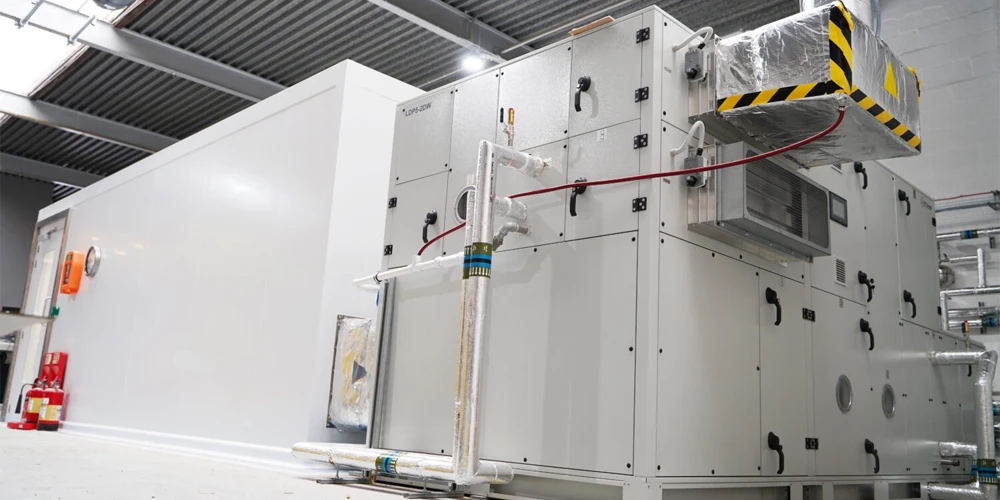
Dry Room for solid state battery


2. Isostatic Pressing: The New Bottleneck Station
Solid-state cells require intimate solid-solid contact between electrolyte particles and electrode active material. This contact is achieved through high-pressure isostatic pressing—not the light calendering used for liquid-electrolyte electrodes.

Isostatic pressing specifications:

Parameter Cold Isostatic Press (CIP) Warm Isostatic Press (WIP)
Pressure range 200–600 MPa 100–400 MPa
Temperature range Ambient 40–150°C
Cycle time (per cell stack) 2–5 minutes 5–15 minutes
Equipment cost per station $200,000–350,000 $300,000–500,000
Throughput (cells per hour, single station) 12–30 4–12


For a 100 MWh/year solid-state line producing 20 Ah pouch cells, approximately 4–6 isostatic pressing stations are required. The pressing station becomes the line’s throughput constraint. Unlike liquid-electrolyte filling, which can be parallelized easily, isostatic pressing vessels are high-pressure systems that scale in cost non-linearly with vessel size.
The pressing parameter must be matched to the solid electrolyte material. Oxide electrolytes (LLZO, LATP) require higher pressures (300–500 MPa) and benefit from warm pressing to improve particle deformation. Sulfide electrolytes (LGPS, argyrodite) can be pressed at lower pressures (150–250 MPa) but are more sensitive to moisture exposure during handling between pressing and sealing.
solid-state battery isostatic pressing machine supplier should provide pressure uniformity mapping across the full vessel volume, with demonstrated ±5 MPa uniformity at working pressure.


3. Dry Electrode Processing: The Enabler for Solid-State Cathodes

The solid-state cell architecture eliminates liquid electrolyte but not the cathode composite. The cathode still requires active material, solid electrolyte, conductive carbon, and binder—mixed and formed into a dense electrode film.


Two process paths are under development:

Process Description Equipment Required TRL (2026)
Dry mixing + hot calendering Dry powder mixed with PTFE binder, fibrillated, and calendered into free-standing film High-shear mixer, fibrillation unit, heated calender 6–7 (pilot-scale proven, scaling to mass production)
Slurry coating + binder burnout + sintering Slurry coated onto current collector, dried, binder removed thermally, and sintered (oxide electrolyte) Coating line, high-temperature furnace (700–1,200°C) 4–5 (demonstrated for oxide electrolytes at lab scale)


For sulfide-based solid-state cells, the dry mixing and calendering route is currently the leading manufacturing approach. It avoids solvent entirely, which is critical because sulfide electrolytes react with most polar solvents.
The equipment for dry electrode processing differs from conventional wet coating in three critical ways:

  • Mixing: High-shear dry mixing is required to distribute solid electrolyte particles uniformly through the cathode composite. Inhomogeneity at the micron scale creates localized ionic resistance.
  • Calendering: The dry electrode film must be calendered directly onto the current collector or onto the solid electrolyte separator layer. Calendering pressure, roll temperature, and speed must be controlled to ±2% to achieve target porosity.
  • Lamination: The cathode composite, solid electrolyte separator layer, and anode (typically lithium metal or graphite) must be laminated together under controlled pressure and temperature.


4. Lithium Metal Anode Handling: The Safety Specification Upgrade
Solid-state cells using lithium metal anodes introduce a manufacturing hazard that liquid-electrolyte graphite-anode lines do not face. Lithium metal is reactive, ductile, and difficult to handle in thin foils.

Lithium metal anode processing requirements:

Parameter Specification
Lithium foil thickness 10–50 μm (target <20 μm for high energy density)
Handling atmosphere Argon, H₂O < 0.1 ppm, O₂ < 0.1 ppm
Foil tension control < 0.5 N across 200 mm web width
Lamination pressure 1–5 MPa, uniform to ±0.2 MPa
Defect detection In-line optical inspection for pinholes, thickness variation, and surface contamination


Lithium metal foil is mechanically fragile. Standard roll-to-roll handling equipment designed for copper and aluminum current collectors cannot process 20 μm lithium foil without tearing or wrinkling. Specialized tension control and web handling systems are required.

For the anode-to-solid-electrolyte lamination step, pressure must be sufficient to ensure intimate contact but not so high as to extrude lithium into the solid electrolyte layer, creating a potential short-circuit path.


Supplier Readiness Assessment for 2026–2027
The solid-state battery equipment supply chain is nascent compared to the mature lithium-ion equipment industry. Procurement teams must assess supplier readiness against demonstrated capability, not marketing claims.

Equipment Category Supplier Maturity Lead Time Estimate (2026) Key Evaluation Criteria
Dry rooms (-60°C dew point) Moderate; few qualified integrators 10–14 months Sustained dew point under production conditions, not just at commissioning
Isostatic presses Low; specialized hydraulic system suppliers 12–16 months Pressure uniformity mapping; cycle time under production conditions
Dry electrode lines Low; pilot-scale demonstrated, scaling up 12–18 months Web width capability; demonstrated film uniformity data
Lithium metal handling Very low; custom engineering required 14–20 months Thin-foil tension control; defect detection capability
Assembly and sealing Moderate; adapted from Li-ion with upgrades 8–12 months Atmosphere compatibility; pressure-constrained sealing


Procurement Insight: The solid-state equipment supply chain is not yet competitive. Most suppliers have one or two pilot installations, not a track record of mass production equipment delivery. Procurement teams should prioritize suppliers with demonstrated lithium-ion production line experience and an active solid-state R&D program. A solid-state battery production line turnkey manufacturer with both lithium-ion and solid-state equipment capability provides continuity of support across technology transitions.


Cost Estimate: Solid-State Pilot Line vs. Mass Production Line

Line Scale Capacity Equipment Capital Cost (2026–2027 Est.) Key Cost Drivers
R&D pilot line 1–5 MWh/year $5–10M Dry room, isostatic press, glovebox-scale assembly
Pilot production line 50–100 MWh/year $30–60M Dry room, multiple isostatic presses, dry electrode line, lithium metal handling
Mass production line (target) 1 GWh/year $180–350M Dry room scaling, high-throughput pressing and lamination, automated material handling under argon

These estimates represent 2–3× the cost of equivalent-capacity lithium-ion lines. The premium is driven by the ultra-dry atmosphere requirements and the cost of isostatic pressing and lithium metal handling equipment.


Frequently Asked Questions (FAQ)

Q: Can a standard lithium-ion dry room be upgraded for sulfide solid-state production?

A: No. The -60°C dew point requirement demands fundamentally different desiccant wheel systems, lower air leakage rates, and more extensive vapor barriers. Retrofitting a -40°C dry room to -60°C typically costs more than building new, and performance guarantees are difficult to obtain.


Q: What is the single most expensive piece of solid-state battery manufacturing equipment?

A: The isostatic pressing station for oxide electrolyte cells, at $300,000–500,000 per station. For sulfide cells, the dry room HVAC system is typically the largest single capital item.


Q: When will solid-state battery production equipment be available at competitive lead times?

A: Not before 2028–2029, based on current equipment supplier development timelines. The 2026–2027 period is for pilot and early production lines with lead times of 12–20 months for critical equipment.


Q: Are dry electrode lines required for solid-state, or can wet coating still be used?
A: Wet coating is being developed for oxide solid electrolytes, where the material can tolerate certain solvents and a high-temperature sintering step. For sulfides, dry processing is currently the only viable route because sulfides react with virtually all coating solvents.


Ready to Plan Your Solid-State Production Line?

Solid-state battery manufacturing is an equipment challenge as much as a materials challenge. The four critical subsystems—ultra-dry atmosphere, isostatic pressing, dry electrode processing, and lithium metal handling—must be specified, sourced, and integrated by a single engineering team with demonstrated experience in both lithium-ion and solid-state production.

TOB New Energy supplies pilot and production-scale solid-state battery equipment from its source factory in Xiamen, China. Equipment is designed for the specific requirements of sulfide and oxide solid electrolytes, with atmosphere control, pressure uniformity, and material compatibility engineered from first principles. Request solid-state equipment specifications, line layouts, and preliminary project quotations.

This technical guide was prepared by the process engineering team at TOB New Energy, a direct manufacturer of lithium-ion and solid-state battery production equipment. All specifications are based on demonstrated pilot installations and ongoing solid-state manufacturing R&D programs.
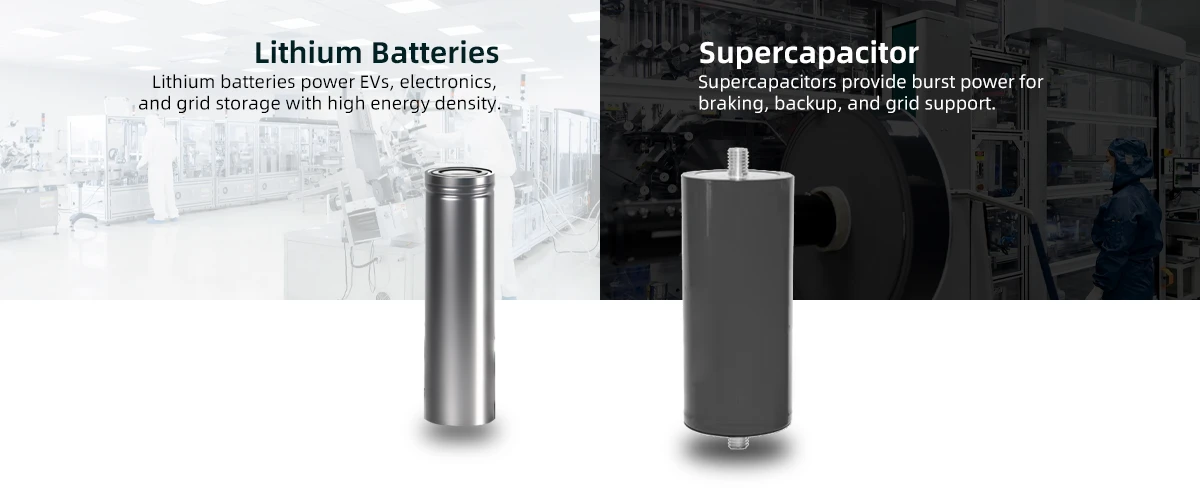
Supercapacitors vs Batteries Complementary Industrial Energy Storage

How Supercapacitors Complement Lithium-Ion Batteries in Industrial Applications

The framing is wrong from the start.

Supercapacitors are not “battery replacements.” They are not competing for the same position on the power-energy spectrum. When a procurement team or system integrator positions them as alternatives, the result is either an overspec’d battery that fails prematurely or a supercapacitor bank that cannot hold energy long enough to be useful.

The industrial reality is that supercapacitors and lithium-ion batteries solve different problems. The engineering challenge is not choosing one over the other; it is designing the hybrid system where each does what it does best.

This guide defines the technical boundary, identifies the industrial applications where hybridization delivers measurable ROI, and maps the equipment required to manufacture supercapacitor cells at production scale.


The Power-Energy Boundary: Where Batteries Stop and Supercapacitors Start

The fundamental distinction between the two technologies is captured in a single parameter: time constant.

Parameter

Lithium-Ion Battery

Supercapacitor (EDLC)

Energy density (Wh/kg)

150–280

5–15

Power density (W/kg)

250–1,500

5,000–15,000

Charge/discharge time

Minutes to hours

Seconds to minutes

Cycle life (to 80% capacity)

500–5,000 cycles

500,000–1,000,000 cycles

Round-trip efficiency

90–95%

95–98%

Operating temperature range

-20°C to 60°C

-40°C to 70°C

Self-discharge rate

2–5% per month

10–20% per day

Cost per kWh

$100–200

$3,000–8,000

Cost per kW

$20–40

$50–100


The data makes the division of labor clear. Lithium-ion stores energy. Supercapacitors deliver power. Lithium-ion discharges over hours. Supercapacitors discharge over seconds. Lithium-ion costs are driven by energy stored. Supercapacitor costs are driven by power delivered.

A system that requires both high energy and high power—and most industrial systems do—is a hybrid architecture problem, not a single-technology problem.


Supercapacitors vs Lithium Batteries


Three Industrial Applications Where Hybrid Systems Deliver Payback

The business case for supercapacitor-battery hybrids is not theoretical. It is measured in reduced battery replacement cycles, lower system downtime, and avoided oversizing.

1. Grid Frequency Regulation and Power Quality

Grid operators require response times under one second for primary frequency regulation. Lithium-ion batteries can deliver this—but at a cycle life cost. Every frequency event cycles the battery, consuming its limited cycle life.

A supercapacitor bank placed in parallel absorbs the high-frequency power spikes. The battery handles the sustained energy delivery. The result: battery cycle life extended by 3–5× and total cost of ownership reduced by 25–40% over a 10-year system life.

Documented system result: A 10 MW frequency regulation installation replacing 100% battery response with a hybrid 80/20 battery-supercapacitor split reported battery degradation at 0.018% per cycle instead of 0.045% per cycle. Supercapacitor replacement was not required over the 8-year monitoring period.


2. Crane, Elevator, and Heavy Machinery Energy Recovery

Lifting operations generate regenerative braking energy. That energy arrives in 5–15 second bursts at 3–5× the nominal system power rating. A battery sized to absorb that power is oversized for its energy requirement.

A supercapacitor bank captures the braking energy and releases it for the next lift. The battery provides baseline power. Energy consumption drops 20–35%. Battery size shrinks 40–60%.

For procurement teams sourcing equipment for energy storage integration, this translates to reduced capital cost on the battery and a faster payback period for the supercapacitor.


3. Uninterruptible Power Supply (UPS) Ride-Through

Data center UPS systems must bridge the 10–60 seconds between grid failure and generator startup. Lead-acid batteries have historically served this role, but their 3–5 year replacement cycle and temperature sensitivity are costly. Lithium-ion extends the cycle life but still degrades under the high-rate discharge.

Supercapacitor modules deliver the ride-through power without degradation. Cycle life is effectively unlimited for this application. Maintenance is near zero. The battery bank can be downsized to handle extended outages only.


Supercapacitor Cell Manufacturing: Equipment Requirements

The manufacturing process for supercapacitor cells shares surface-level similarities with lithium-ion batteries—electrode coating, winding or stacking, electrolyte filling, sealing—but the material sets, precision requirements, and quality control points are distinct.


Core Equipment Sequence for EDLC Supercapacitor Production

Station

Key Specification

Difference from Li-Ion Equipment

Electrode coating machine

Active carbon slurry on aluminum foil; loading 5–15 mg/cm²

Requires higher coating thickness uniformity; carbon slurry rheology differs from battery slurries

Electrode calendering

Compacted density 0.5–0.8 g/cm³

Much lower density targets than battery electrodes; excessive calendering crushes pore structure

Winding machine

Cylindrical supercapacitor winding; electrode and separator alignment ±0.3 mm

Electrode widths typically 50–150 mm for cylindrical cells; separator handling is more critical due to low thickness

Electrolyte filling

Acetonitrile or propylene carbonate-based electrolyte; moisture < 5 ppm

Electrolyte is more volatile than Li-ion; filling requires stricter atmosphere control

Cell sealing and testing

Leak testing, capacitance and ESR measurement

Capacitance and ESR are the primary quality metrics, not voltage or capacity

A turnkey supercapacitor production line equipment manufacturer must supply coating stations capable of handling activated carbon slurries with viscosities up to 5,000 mPa·s and winding machines with tension control optimized for the thinner, more fragile separators used in supercapacitors.


Documented production issue: A supercapacitor line using a standard lithium-ion electrode coater experienced ±12% capacitance variation across cells. The root cause was inconsistent activated carbon loading due to slurry settling in the coater reservoir. The fix required an agitated feed system designed for carbon slurries, not the standard battery slurry delivery.


Supercapacitor vs. Battery: Procurement Decision Matrix

Selection Criterion

Choose Supercapacitor

Choose Lithium-Ion Battery

Hybrid Solution

Discharge duration required

< 60 seconds

> 5 minutes

1 second to 5 minutes

Cycle life required

> 100,000 cycles

< 5,000 cycles

Mixed duty cycle

Operating temperature

-40°C to +70°C without derating

-20°C to +60°C

Wide temperature range with high energy need

Maintenance window

Minimal; zero replacement over 10 years

Replacement every 3–10 years

Supercapacitor handles high-frequency cycling; battery is replaced less frequently

Energy cost sensitivity

High cost per kWh is acceptable if power delivery is the primary need

Low cost per kWh is critical

Optimized cost by sizing each technology for its role

For industrial procurement, a supercapacitor cell assembly equipment supplier can provide the manufacturing capability to produce the supercapacitor cells that enable these hybrid architectures. For system integrators sourcing cells directly, specifying the ESR and capacitance tolerance is critical—supercapacitor cells with >5% capacitance variation create balancing problems in series strings.


System Design Insight: The most common hybrid architecture error is undersizing the supercapacitor bank. System designers often specify supercapacitors based on the average power requirement, not the peak. In regenerative braking or frequency regulation, the peak power can be 5× the average for durations under 10 seconds. A supercapacitor bank sized for average power will be fully depleted before the energy recovery cycle completes, forcing the battery to absorb the remainder—exactly the condition the hybrid was designed to avoid.


Frequently Asked Questions (FAQ)

Q: Can supercapacitors replace lithium-ion batteries in electric vehicles?
A: No. Supercapacitors cannot provide the sustained energy required for vehicle range. They are used in hybrids for regenerative braking capture and acceleration boost, where they extend battery life by absorbing high-power transients.


Q: What is the typical lifespan of a supercapacitor in industrial use?
A: 10–15 years, with minimal degradation if operated within rated voltage and temperature. Supercapacitors do not have a cycle life limit comparable to batteries; calendar aging, not cycling, determines end of life.


Q: How are supercapacitor cells different from lithium-ion cells in manufacturing?
A: Supercapacitor electrodes use activated carbon, not lithium-metal oxides. The electrolyte is typically acetonitrile-based rather than carbonate-based. Moisture tolerance is tighter (<5 ppm vs. <10 ppm for Li-ion electrolyte). Equipment must be designed for these material differences.


Q: Why are supercapacitors more expensive per kWh than batteries?
A: Because supercapacitors store energy physically (charge separation) rather than chemically. The energy density is inherently limited by electrode surface area and electrolyte breakdown voltage. Their value proposition is in power delivery and cycle life, not energy storage cost.


Ready to Manufacture Supercapacitor Cells?

The supercapacitor market is expanding beyond niche applications into mainstream industrial energy storage. For manufacturers entering this market, the production equipment must be purpose-built for supercapacitor materials and processes—not adapted from battery lines with compromises.

TOB New Energy supplies complete supercapacitor cell production lines, from electrode coating and winding to electrolyte filling and testing, engineered specifically for EDLC and hybrid capacitor technologies. Equipment is manufactured, assembled, and tested at a single source factory in Xiamen, China. Request supercapacitor production line specifications and factory-direct pricing.


This technical guide was prepared by the process engineering team at TOB New Energy, a direct manufacturer of lithium-ion battery and supercapacitor production equipment from Xiamen, China. Equipment is designed and commissioned for industrial manufacturing requirements, not laboratory demonstration.


TOB NEW ENERGY China Integrated Battery Solutions Supplier Equipment and Materials to Turnkey Production Lines

By Dany Huang, Ph.D. & Neil Zhao


TOB NEW ENERGY is a China-based integrated battery manufacturing solutions provider. But the company is best understood not through a company profile, but through a problem that has quietly shaped battery manufacturing for decades — and the structural shift in how battery production equipment and materials reach the factory floor that a new generation of Chinese suppliers is driving.


1. The Structural Gap in Battery Manufacturing That Chinese Suppliers Are Closing

Battery manufacturing has a fault line. It runs between the companies that make the materials, the companies that build the machines, and the companies that develop the processes connecting them. In most traditional supply chains, these are three separate entities. Three engineering teams. Three sets of incentives. Three places where process knowledge can evaporate between the lab and the production line.


The result is predictable. A cathode powder that disperses beautifully in a laboratory mixer produces agglomerates when the tank geometry changes at production scale. A coating parameter that held ±1.2% uniformity on a 300mm pilot line drifts to ±3% on a 600mm production coater. When the cell fails qualification, the material supplier blames the equipment. The equipment supplier blames the process. The customer owns a problem that none of its suppliers owns.


This fragmentation is structural. For emerging battery technologies — solid-state, sodium-ion — where no mature standard process exists, the cost multiplies. Every handoff between companies is a handoff where engineering context gets lost.


What distinguishes a China integrated battery solutions supplier is not that it sells more products under one roof. It is that it was built from the start to close these handoffs — to place materials science, equipment engineering, and process validation under a single engineering responsibility. Chinese battery equipment companies entered the global market later than their Japanese and Korean counterparts. They could not compete on brand legacy. They competed by offering something the incumbents were not structured to provide: the complete engineering chain, from raw material behavior to production-line output, integrated by design rather than by acquisition.


TOB NEW ENERGY embodies this model. Founded in 2012 by a team whose battery equipment experience reaches back to 2002, TOB represents what a mature China integrated battery solutions supplier looks like in practice — not as a catalog aggregator, but as an engineering organization with its own pilot lines, its own material testing laboratories, and its own process development capability.


2. How Integrated Battery Solutions Differ from One-Stop Purchasing

One-stop purchasing is a procurement tactic. You issue fewer purchase orders. But underneath the commercial simplification, the engineering gap remains: the mixer supplier does not know what the coater needs. The coater supplier has never seen your slurry formulation. No contract fixes this.

Integrated solutions — the defining capability of a China-based battery solutions provider — operate at a different level. They are about engineering continuity. Material characteristics, equipment parameters, and process windows are designed together, not bolted together after procurement.


Consider a sodium-ion battery team that has validated a hard carbon anode and O3-type layered oxide cathode in coin cells. The next step is a pilot electrode line. If the planetary mixer comes from one supplier and the slot-die coater from another, every process question — What shear rate profile? What drying temperature gradient to prevent binder migration on this specific formulation? — becomes the team's own trial-and-error burden. On equipment they have just purchased. That they do not yet fully understand.

A China integrated battery solutions supplier answers these questions before the equipment ships. Because it owns the mixer. The coater. The calender. The pilot line connecting them. Because it has run similar material systems through that exact chain. Because it carries process data — not just specification sheets — into every project.


This is captured in an engineering principle that defines how TOB NEW ENERGY and its peers in China's integrated solutions sector operate: battery manufacturing performance is not determined by the best individual machine on the line. It is determined by how well the machines, the materials, and the process parameters have been engineered as one system.


Operationally, this principle is executed across three integrated layers:

Materials Layer — understanding particle size distribution, specific surface area, and rheological behavior of active materials, and using that to drive equipment selection.
Equipment Layer — configuring machines against specific material systems, not off a generic catalog.
Process Engineering Layer — validating the first two layers on the supplier's own pilot lines before delivery.


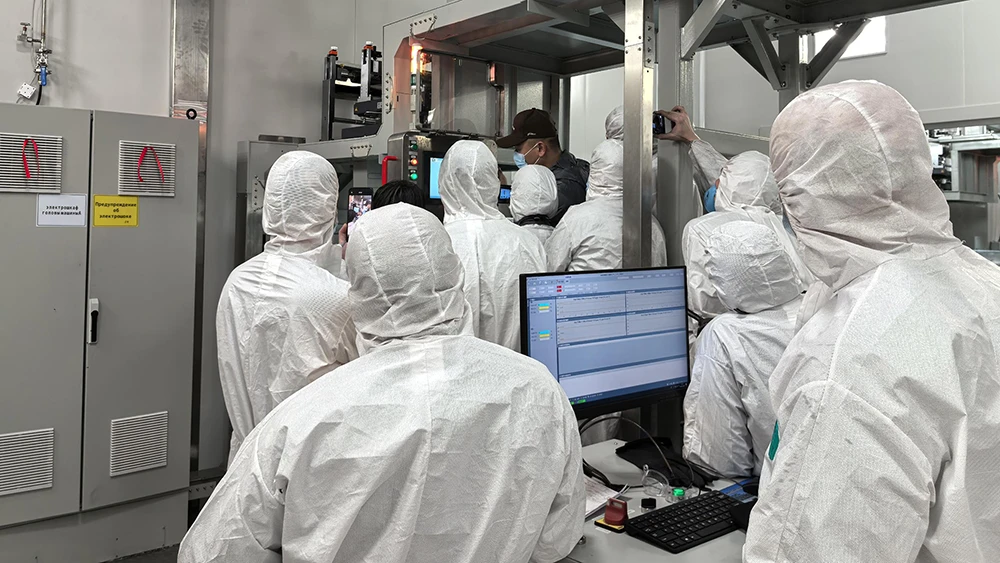
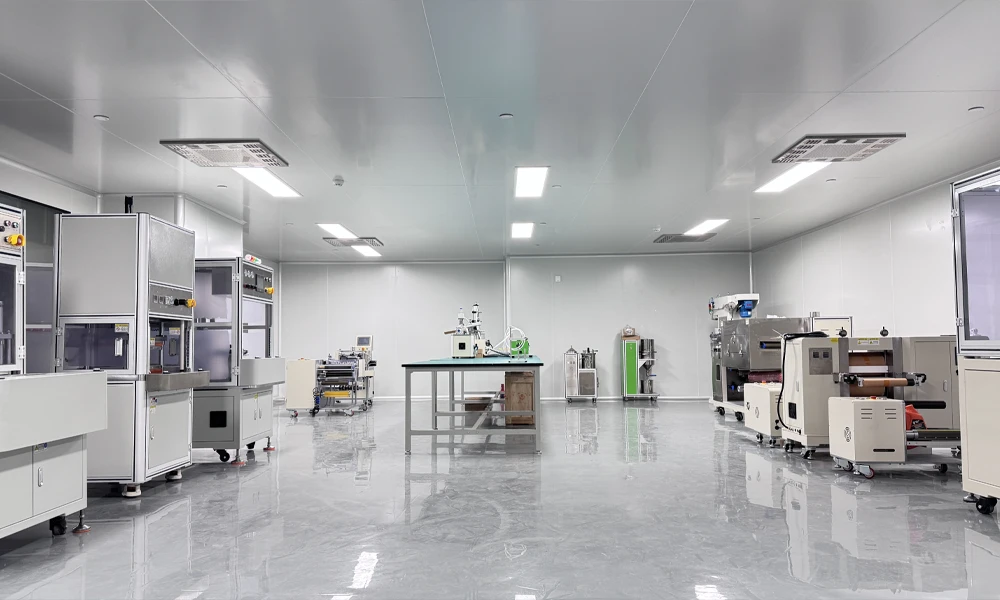
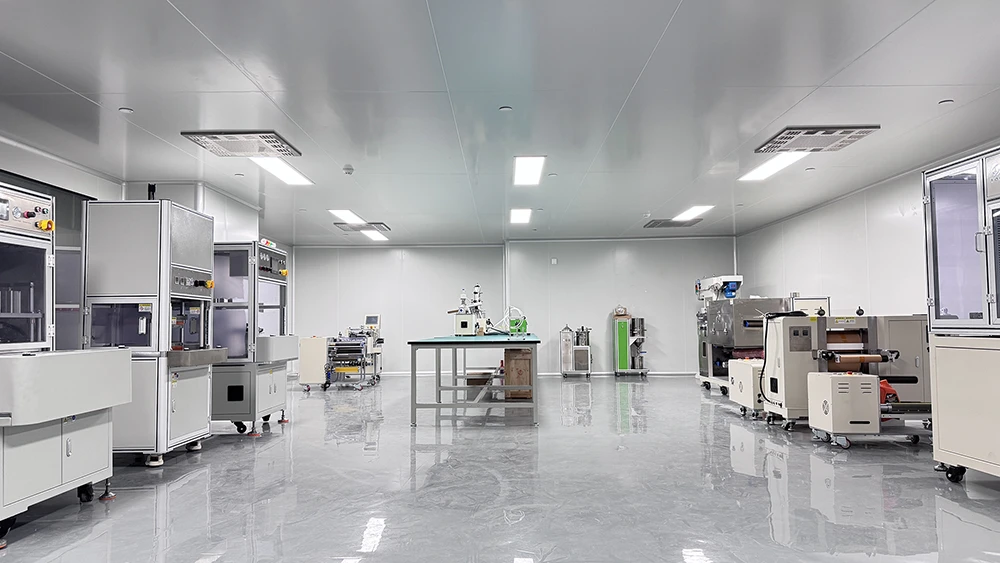
TOB R&D center pilot line and dry room facility

TOB R&D center pilot line and dry room facility


3. The Engineering Foundation That Separates Integrated Suppliers from Equipment Traders

A supplier cannot deliver integrated solutions by aggregating other manufacturers' machines. It must possess its own engineering floor — equipment designed by its own engineers, tested on its own pilot lines. This is the single most important distinction between a China integrated battery solutions supplier and an equipment trading company.

TOB NEW ENERGY was built on this premise. The technical team, led by Dany Huang, Ph.D., consists of engineers whose individual battery industry experience exceeds two decades. These engineers held senior technical and management roles at companies across cathode material production, cell manufacturing, and battery equipment sectors before joining TOB. This matters because the decisions that shape a production line — which mixer geometry for which slurry rheology, which coating method for which electrode formulation — cannot be made from a specification sheet. They require judgment. Judgment comes from having seen the same problem fail in three factories and succeed in a fourth. It cannot be outsourced.

That judgment is backed by physical infrastructure — and this is where the China integrated solutions model becomes tangible. TOB operates a 3,000-square-meter R&D and testing center in Xiamen, running six dedicated battery laboratories — coin cell, cylindrical, pouch, prismatic, solid-state, and sodium-ion — alongside three pilot lines covering cylindrical, pouch, and prismatic formats. Every laboratory and pilot line operates under environmental control with dew point capability reaching -50°C. This is not a customer showroom. It is an engineering validation platform. The facility has generated more than 60 national patents — each one a specific engineering problem that TOB solved with its own R&D.

The coverage breadth is itself an engineering capability — and it is a defining characteristic of the China integrated battery solutions supplier category. TOB supplies materials across the full spectrum — cathode and anode active materials, electrolytes, solid electrolytes, separators, binders, and cell housing — for lithium-ion, sodium-ion, solid-state, and supercapacitor systems. Equipment spans from laboratory single machines to gigawatt-hour production lines. More than 6,000 customers across factories, universities, and research institutions worldwide have been served.

The strategic value of this breadth is continuity. When a project evolves — LFP to NMC, coin cells to pouch cells, lab to pilot to production — the engineering language, the process data, and the supplier relationship do not reset. The team that understood the lab-scale slurry designs the production-scale mixing system. Every transition preserves knowledge.


4. Where the Model Proves Itself: From Lab Line to Factory Floor

Two TOB projects, separated by geography, illustrate what this integration model delivers in practice — and why it has made China-based integrated solutions suppliers the partner of choice for battery manufacturers across the development spectrum.

In 2020, a South American battery laboratory needed a lithium-ion pouch cell lab line — not for production, but to test multiple cathode chemistries under different process routes. TOB NEW ENERGY supplied more than a list of 12 machines. The project included material formulation recommendations, electrode design parameters, electrolyte filling volume calculations, and a formation process program. None of these were optional extras. They were inseparable from the equipment itself — because a coating machine without coating parameters is a steel frame waiting for someone else to fill in the process blanks.

Simultaneously, a Southeast Asian manufacturer was building its first battery factory — an 18650 and 26650 cylindrical cell production line. From 2018 to 2021, TOB engineers remained on-site. Not for installation. For the months between installation and stable qualified output. That gap — measured in months, not weeks — is where equipment delivery becomes process delivery. TOB provided the full equipment set, the raw material supply chain, and the sustained engineering presence to close it.


TOB NEW ENERGY Production line project site

TOB NEW ENERGY Production line project site


These two engagements frame the value proposition of a China integrated battery solutions supplier. At lab scale, integration means embedding process knowledge that makes research equipment immediately productive. At production scale, it means sustained on-site engineering that translates pilot-validated parameters into factory-floor reality.

5. Industry-Academia Integration: A Structural Advantage of China's Battery Ecosystem

The most difficult problems in battery manufacturing — solid-solid interfaces in solid-state electrolytes, capacity fade mechanisms in sodium-ion cathodes — sit at the intersection of fundamental science and production engineering. One of the structural advantages that China integrated battery solutions suppliers draw on is proximity to the country's battery research infrastructure.

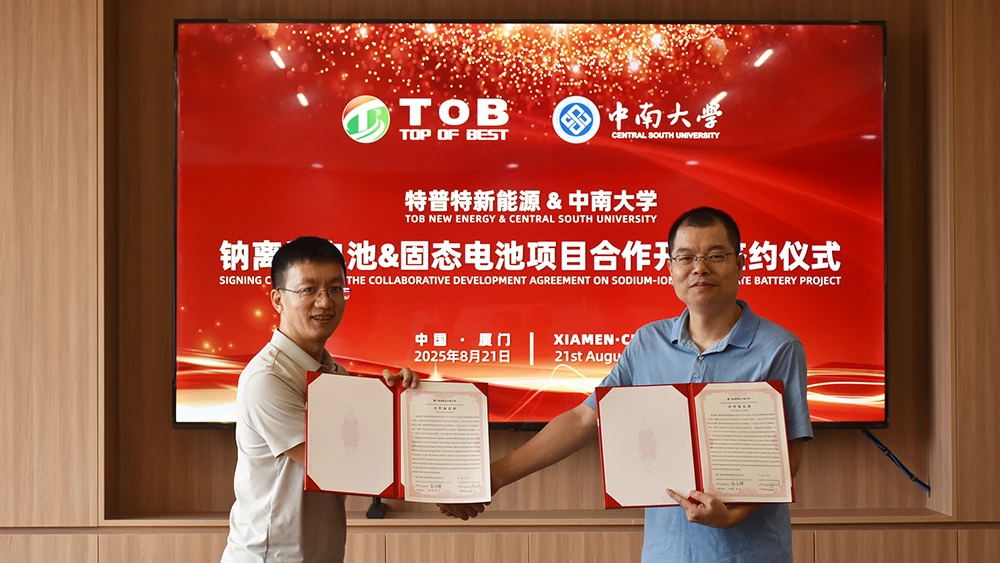
TOB NEW ENERGY maintains a strategic research partnership with Professor He's team at Central South University in solid-state and sodium-ion battery technologies, jointly operating a university-enterprise collaborative laboratory. The mechanism: fundamental research originates at the university; engineering validation, equipment integration, and process scale-up are performed at TOB. Results flow in both directions. University findings shape TOB's equipment design. TOB's pilot-line data feeds back into research priorities.

This partnership has tangible output. Dany Huang — TOB's CEO — has published peer-reviewed research on O3-type sodium-ion battery cathode materials in JOM (DOI: 10.1007/s11837-026-08446-8), on lithium-ion battery overcharge-induced thermal runaway (published in Science and Technology Innovation and Productivity), and on ultra-low-temperature cylindrical LFP batteries (published in New Era of Science and Technology). These publications are not academic decoration. They represent the same technical judgment that informs TOB's process recommendations — because the researcher and the production-line decision-maker are the same person. TOB also serves as an industry-academia-research base for Central South University, providing graduate students with training in a working battery engineering environment.


TOB New Energy Reaches Strategic Cooperation with Central South University

TOB New Energy Reaches Strategic Cooperation with Central South University

6. Quality Infrastructure: The Objective Difference Between Selling Equipment and Delivering Solutions

Certifications are objective facts. They can be verified independently. They do not depend on marketing language — and for international buyers evaluating a China integrated battery solutions supplier, they provide an independent reference point for quality management capability.

TOB NEW ENERGY holds IATF 16949 certification — the quality management standard developed by the International Automotive Task Force. For a cell manufacturer seeking automotive OEM qualification, using IATF 16949-certified equipment suppliers reduces audit friction and accelerates project timelines. The framework is reinforced by ISO 9001, ISO 14001, and ISO 45001 certifications, and the product range carries independent CE and UL compliance verification.


7. What China-Based Integrated Battery Solutions Suppliers Mean for Different Stakeholders

The value of this integration model depends on where you stand in the battery development process.

For the university researcher, the most overlooked variable in equipment procurement is what happens after the research phase. A planetary mixer that disperses perfectly at 50 grams may produce a completely different slurry at 5 kilograms — because shear rate distributions change with tank geometry. TOB's laboratory equipment is designed with this transition in mind. Process parameters recorded at lab scale carry direct relevance to pilot-scale equipment because the engineering team that designed both understands the scaling relationships.

For the startup CTO, the largest hidden cost is not equipment. It is the management overhead of multi-vendor troubleshooting. Slurry inconsistency. Is it the mixer? The material? The operator? Three suppliers. Three support tickets. Three teams of engineers who have never spoken to each other. A China integrated battery solutions supplier collapses this into a single technical conversation — one team, one data set, one accountable party.

For the process engineer on a production floor, the most valuable thing a supplier can deliver is failure-mode knowledge. A slurry dispersion defect looks like a coating uniformity defect downstream. A coating edge bead problem looks like a slitting yield problem. An equipment supplier who has validated the full process chain on its own pilot line knows where these cascades start — because it has caused them, diagnosed them, and corrected them before.

For the procurement manager, supplier consolidation is about coordination cost. Every additional supplier adds communication cycles, quality audits, logistics complexity. When a program transitions from lithium-ion to sodium-ion or solid-state — as many will — the cost of rebuilding a multi-supplier chain from scratch dwarfs any per-unit discount in the original procurement. A China integrated battery solutions supplier who already covers the new chemistry's material and equipment requirements eliminates that switching cost.


8. Why Multi-Chemistry Manufacturing Makes Integration Structural, Not Optional
The battery industry has entered a multi-chemistry era. Solid-state. Sodium-ion. LFP. High-nickel NMC. Each chemistry demands its own combination of materials, equipment settings, and process parameters. The more chemistries in a manufacturer's portfolio, the more interfaces between suppliers. Each interface is a coordination cost.

The China integrated battery solutions model was not designed for the lithium-ion monoculture. It was designed for exactly this fragmentation — for a world where the same factory might run LFP today, sodium-ion tomorrow, and solid-state in two years. TOB NEW ENERGY — with six battery chemistry laboratories, three pilot line formats, and a materials supply chain spanning the full periodic table of cathode and anode options — represents this model at its most complete. Learn more at www.tobmachine.com.


TOB NEW ENERGY Summary: TOB is a China-based integrated battery manufacturing solutions provider with battery engineering experience dating back to 2002. The company exemplifies the China integrated battery solutions supplier model — delivering equipment systems, pilot production lines, and material-process integration for lithium-ion, sodium-ion, and solid-state batteries across the full chain from laboratory R&D to mass production. With a 3,000 m² in-house R&D center, three integrated pilot lines, an industry-academia partnership with Central South University, and certifications including IATF 16949, TOB serves as a single-point engineering partner for battery manufacturers, research institutions, and emerging technology companies worldwide.


Dany Huang, Ph.D. — CEO, Xiamen TOB New Energy Technology Co., Ltd.

Neil Zhao — Technical Director, Xiamen TOB New Energy Technology Co., Ltd.

TOB Senior Engineer Appointed CSU Industry Graduate Mentor

Central South University (CSU) has appointed Tobey Chen, Senior Engineer at TOB NEW ENERGY, as an industry graduate advisor for its Materials and Chemical Engineering program. The appointment embeds over 20 years of battery engineering and manufacturing expertise directly into CSU's graduate training ecosystem — strengthening the bridge between frontline industrial practice and academic research at one of China's leading battery materials institutions. For TOB NEW ENERGY, the appointment is both an individual recognition and a structural signal. It reflects the depth of an industry-academia-research model that has been central to the company's operating philosophy for more than two decades.

TOB NEW ENERGY


A Partnership Already in Motion

Tobey Chen's appointment extends an existing collaboration. TOB NEW ENERGY and Central South University already operate a joint laboratory focused on translating advanced battery materials research into manufacturable processes — addressing the translation gap where most battery innovations stall between academic discovery and production reality.

Central South University is widely recognized as a powerhouse in battery materials research, with particular strength in cathode materials, electrolyte chemistry, and electrochemical characterization. The university's decision to embed TOB's senior engineering talent into its graduate program signals a recognition: battery manufacturing is not a downstream afterthought to materials science. It is a discipline demanding its own deep expertise — the kind accumulated through two decades of commissioning production lines, not two years of literature review.


"When a graduate student designs a novel cathode composition, the question is no longer just whether it cycles well in a coin cell," explains TOB's engineering leadership. "It is whether that material can be coated at production speed, calendered to target density, and assembled into cells with acceptable yield. Having someone in the room who has debugged those processes changes the quality of the research question."


The Three Dimensions of industry-academia-research at TOB

TOB NEW ENERGY's industry-academia-research model operates across three interconnected dimensions — each reinforcing the others in a cycle that directly benefits customers.

Academic partnership. TOB supplies battery R&D equipment to over 70% of the world's leading battery research universities, creating a two-way channel: academic discovery informs TOB's equipment design, while TOB's process engineering experience helps researchers formulate questions with industrial relevance. The joint laboratory with Central South University is the deepest expression of this commitment. Tobey Chen's appointment as graduate advisor adds a direct talent-development dimension to the partnership.

In-house R&D capability. TOB's 3,000+ square-meter R&D center houses dedicated laboratories for lithium-ion, solid-state, and sodium-ion battery technologies — not as showrooms, but as active development environments. With 60+ national patents and over USD 20 million in cumulative R&D investment, the facility enables pre-delivery validation of equipment on customer-representative materials. The R&D team, led by CEO Dany Huang, Ph.D. — who has published peer-reviewed research on sodium-ion battery cathode materials in JOM — brings scientific rigor to every integrated battery solution TOB delivers.

Industrial application. The knowledge generated through academic collaboration and in-house R&D flows directly into TOB's turnkey production line projects. Whether supplying a single coin-cell assembly line for a university lab or a GWh-scale lithium-ion battery production line for an automotive manufacturer, TOB's process engineering team applies cross-chemistry, cross-scale experience accumulated across all three dimensions of the industry-academia-research model. This is what distinguishes an integrated battery solutions provider from an equipment vendor — not a catalog, but a reservoir of failure-mode knowledge that shortens ramp-up and stabilizes yield.


TOB R&D center or joint lab


Why Talent Strategy Matters to Battery Buyers

Tobey Chen's appointment as a graduate advisor represents more than an individual credential. It reflects a structural advantage that directly affects TOB's customers: the ability to attract and retain engineering talent whose expertise is recognized by the very institutions training the next generation of battery scientists.

For CSU's Materials and Chemical Engineering graduate students, the benefit is mentorship grounded in battery manufacturing reality — understanding the difference between a coating specification that works on a laboratory drawdown coater and one that holds across 1,000 meters of continuous production; between a prototype cell that hits target energy density and a production cell that achieves acceptable yield at 50,000 units per day.

For TOB NEW ENERGY's customers — whether a battery startup scaling from coin cells to pilot production or an established battery manufacturer expanding to GWh capacity — the depth of academic partnership translates into tangible advantages: equipment designed with an understanding of frontier research, process support informed by multi-chemistry experience, and an engineering team whose expertise is continuously refreshed through engagement with the academic community.


The Industry Context

The global battery industry faces a well-documented engineering talent gap. BloombergNEF projects that the sector will require over two million trained workers by 2030, with engineering talent representing the most acute shortfall. Industry-academia partnerships address this gap at its root: by embedding industrial expertise into graduate education, they ensure that new engineers enter the workforce already exposed to the constraints — yield targets, process stability requirements, cost models — that define successful battery manufacturing.

With IATF 16949 automotive quality certification, ISO 9001 / ISO 14001 / ISO 45001 management systems, and a customer base spanning over 6,000 factories, universities, and research institutions across 30+ countries, TOB NEW ENERGY operates at a level of organizational maturity that makes such partnerships both credible and sustainable. The appointment of Tobey Chen is the latest chapter — not the first, and not the last.


TOB NEW ENERGY is an integrated battery solutions provider supplying battery equipment, battery materials, and turnkey production lines from lab-scale to GWh-scale. Founded in 2012 with engineering roots dating to 2002. Certifications: IATF 16949, ISO 9001, ISO 14001, ISO 45001. Visit www.tobmachine.com.


CNC Router Manufacturer

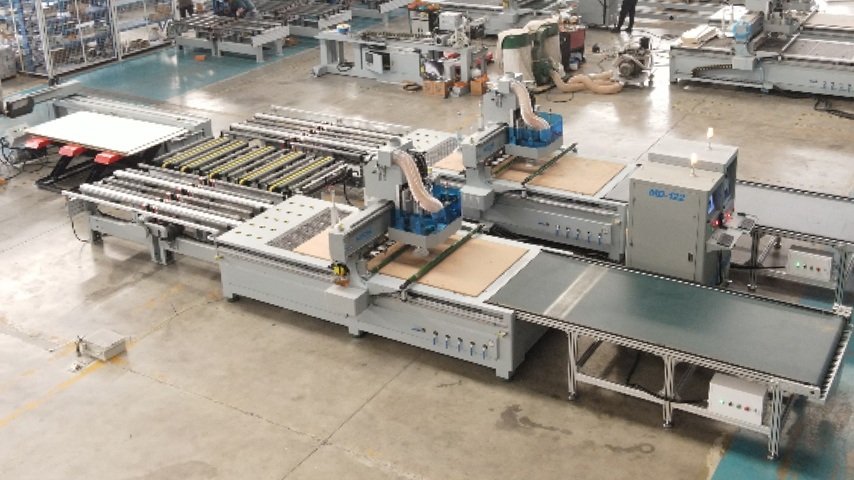
CNC Router Manufacturer: Your Trusted Partner for Precision Cutting Solutions

When it comes to high-performance CNC routing, choosing the right manufacturer is not just about buying a machine—it’s about building a long-term partnership. As a leading CNC router manufacturer with over 15 years of experience, we understand what workshops, factories, and creative studios truly need: reliability, precision, and continuous support.

Why Choose Us?


Advanced Technology
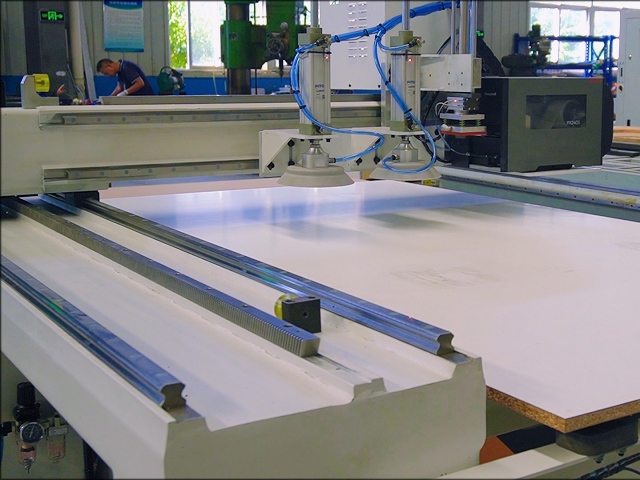
Our CNC routers feature high-torque spindles, heavy-duty linear guides, and user-friendly control systems. Whether you are working with wood, aluminum, plastics, composites, or foams, our machines deliver consistent accuracy and smooth finishes—even in 24/7 production environments.

Customizable Solutions
No two projects are the same. From 3-axis standard models to 5-axis complex machining centers, we offer tailored configurations. Need specific table sizes, ATC (automatic tool changers), or dust collection systems? We adapt to your unique requirements.


Rigorous Quality Control
Every machine undergoes 100% inspection and test cutting before shipment. Our ISO-certified factory ensures that each component meets global standards, so you receive a ready-to-run system that minimizes downtime.

Global Service Network
We don’t just sell machines—we support them. With warehouses in key regions, remote diagnostics, and a multilingual after-sales team, we provide fast response times, spare parts availability, and on-site training options. Your success is our priority.


Applications That Cover Industries
From furniture manufacturing, sign-making, and interior decoration to aerospace, automotive, and marine mold-making—our CNC routers empower businesses to scale production, reduce waste, and unlock new design possibilities.

Join Our Global Family
We have shipped to over 80 countries and partnered with distributors and end-users who value quality over price. Our machines are competitively priced without compromising performance, offering you the best ROI in the market.


Let’s Talk About Your Next Project
Are you expanding your workshop or upgrading your production line? Contact us today for a free consultation, sample cutting test, or customized quote. Follow our page for machine demos, customer stories, and industry tips.

📩 DM us now or visit our website to request your catalog.
Together, let’s carve a smarter future!


WhatsApp:'+86 15358102610


📧 Email: zhouni@jsmdzn.com


🌐 Website:https://www.mdzncnc.com/ 


What are the different types of CNC routers?

What are the different types of CNC routers? 🤔

If you are in the woodworking, sign-making, or manufacturing industry, you know that a CNC router is the backbone of modern production. But with so many options out there, which one is the right fit for your factory? Let's break down the main types you will encounter in the global market.

 CNC router

1. By Axis Configuration (The Basics)

  • 3-Axis CNC Routers: The industry standard. Movement happens along X, Y, and Z planes. Perfect for flat sheet cutting, 2D/3D carving, and most woodworking tasks .

  • 4-Axis CNC Routers: Adds a rotary axis. Ideal for machining cylindrical objects like table legs, pipes, or 3D busts .

  • 5-Axis CNC Routers: The pinnacle of precision. With two additional rotational axes, these machines can machine complex curves and undercuts in a single setup. Essential for aerospace parts, automotive molds, and intricate sculptures 

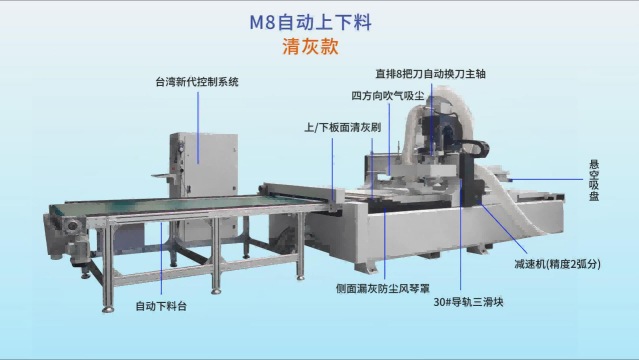
Automatic CNC router

2. By Structure & Mechanism

  • Fixed-Bridge (Gantry) Routers: The bridge is stationary, and the table moves. Offers high rigidity, making it suitable for heavy materials .

  • Moving-Gantry Routers: The table is fixed, and the gantry moves. This is the most common type for large-format sheets (like 4x8 plywood) as it saves floor space

Heavy-duty CNC router

3. By Specialized Function

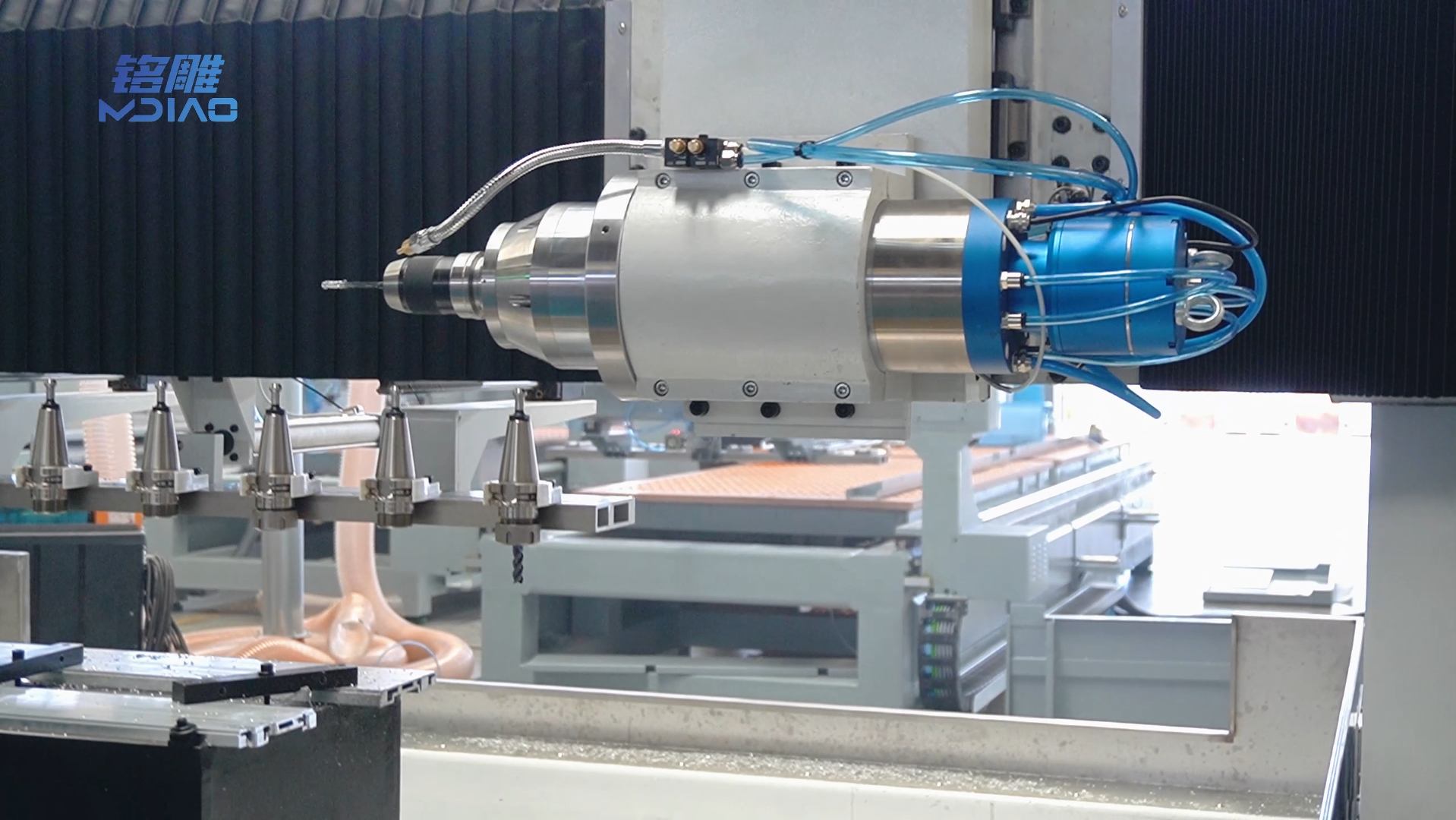
  • ATC (Automatic Tool Changer) Routers: Equipped with a tool magazine. Automatically changes bits to suit different processes (drilling, cutting, engraving) without downtime. Crucial for high-volume production .

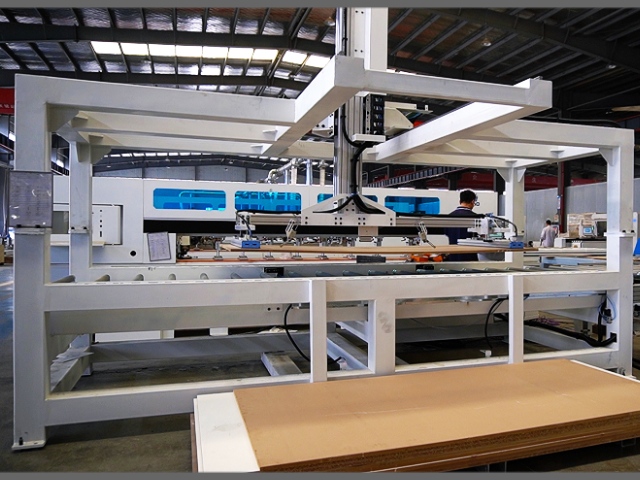
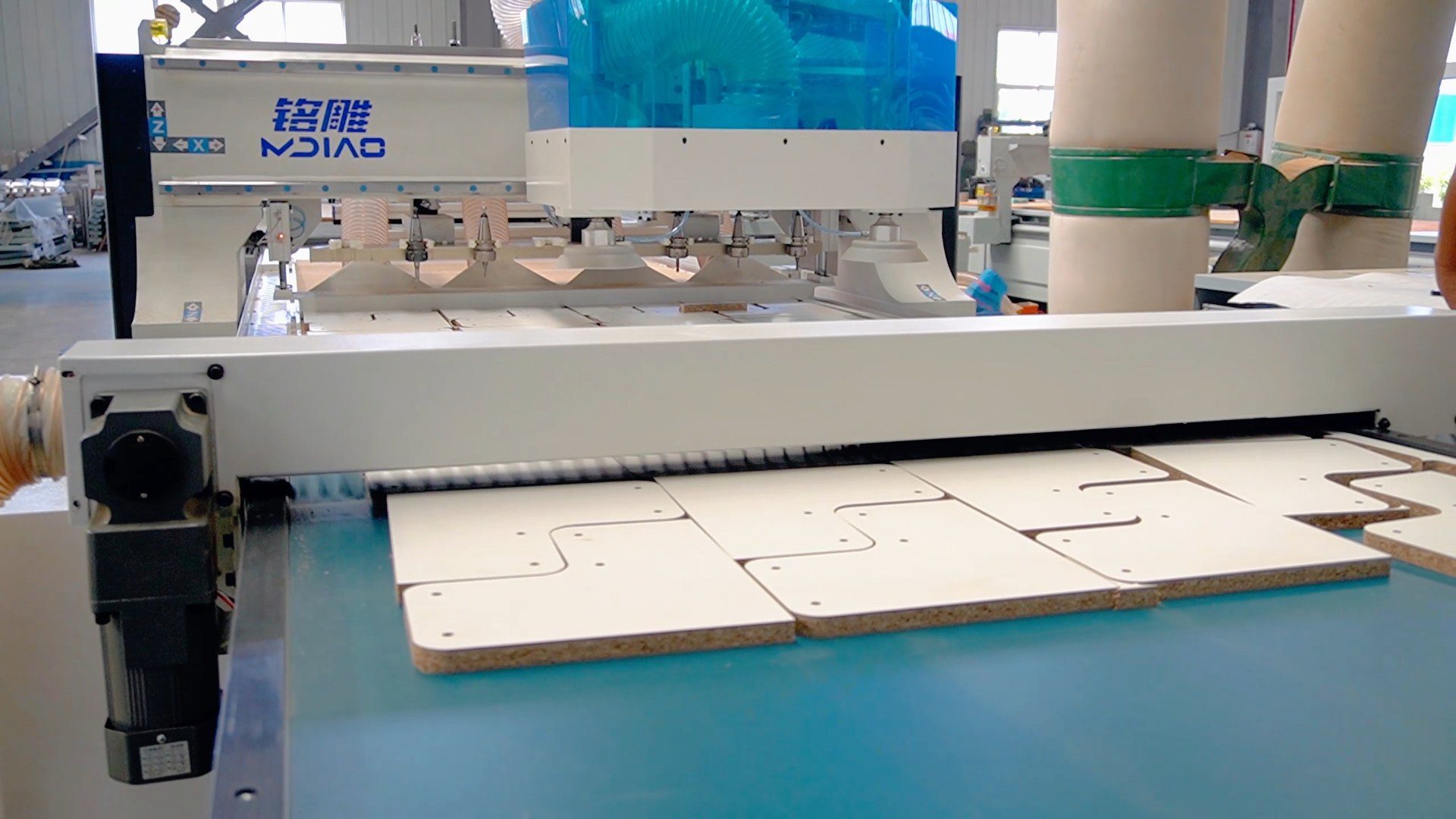
  • Nesting CNC Routers: Smart software arranges parts to maximize material yield. Usually integrated with auto-loading systems. A game-changer for cabinet and furniture factories

Industrial CNC router

💡 Pro Tip for Buyers:

  • Industrial vs. Hobbyist: Don't buy a lightweight "mini" router if you are processing steel or thick hardwoods daily. Look for heavy-duty steel structures and servo motors for reliability .

At the end of the day, your choice depends on what material you cut and how complex your design is.

Need help sourcing the perfect machine? Let's talk! We supply automatic top-quality CNC routers for factories worldwide. 🌍

    WhatsApp:'+86 15358102610

📧 Email: zhouni@jsmdzn.com

🌐 Website:https://www.mdzncnc.com/ 

What can I do with a CNC router?

What can I do with a CNC router?

CNC machines can cut, engrave, shape, and drill materials like wood, plastic, foam, and metal with extreme precision. Applications range from basic straight-line cuts to intricate 3D designs for industries like aerospace, wood working, signage, and medical.

What Can I Do With a CNC Router?

If you’ve ever wondered whether a CNC router is just for big factories—think again. This versatile machine is a game-changer for makers, small businesses, and even home hobbyists. And if you’re in the global market, it’s a tool that opens doors to endless opportunities.

So, what can you actually do with one?

1. Create Custom Woodwork
From intricate wall art and carved signs to bespoke furniture legs and cutting boards, a CNC router turns raw timber into high-value decor. Personalized wooden gifts are especially popular in Western markets—think family name signs, wedding dates, or custom coasters.

2. Craft Durable Plastics & Acrylics
Acrylic displays, PVC panels, and polycarbonate parts are easy to mill. Perfect for point-of-sale stands, lightbox letters, or even protective shields—all in high demand for retail and office fit-outs globally.

3. Engrave Metals (Light Duty)
While not for heavy steel, CNC routers handle brass, aluminum, and copper beautifully. Engrave plaques, jewelry blanks, or industrial nameplates with crisp, lasting detail.

4. Prototype & Product Development
Before investing in injection molding or casting, prototype your design in foam, MDF, or wax. Fast, cost-effective, and editable—ideal for R&D teams or solo inventors.

5. Produce Molds & Patterns
Use the router to carve master models for casting, thermoforming, or composite layups. Aerospace, automotive, and marine industries rely on this workflow daily.

6. Signage & Wayfinding
From 3D raised letters to ADA-compliant Braille signs, CNC routing delivers professional results that meet international standards—massively popular for schools, hospitals, and hotels.

7. Educational & STEAM Projects
Schools and universities buy CNC routers to teach engineering, design, and manufacturing. Offering a compact, safe, entry-level model can tap into this growing niche.

8. Custom Gifts & Promo Items
Keychains, phone stands, pen holders, and puzzle toys—all made with speed and consistency. Bulk orders from corporate clients are common once they see your quality.

Why This Matters for Exporters
The global CNC router market is expanding fast, driven by e-commerce customization and small-batch production. Buyers are looking for reliable, user-friendly machines with good after-sales support. If you offer that, you’re not just selling a tool—you’re selling a creative factory in a box.

Ready to showcase your CNC router lineup? Highlight its versatility, precision, and ease of use. Share videos of real projects—wood, acrylic, aluminum—and watch international orders roll in.

One machine. Infinite possibilities. What will you make today?

Have questions about specs or shipping? Drop us a message—we reply within 24 hours. 🌐✉️


  WhatsApp:'+86 15358102610

📧 Email: zhouni@jsmdzn.com

🌐 Website:https://www.mdzncnc.com/ 

Polishing vs Grinding Machine — What's the Difference


Polishing vs Grinding Machine: What's the Difference and Which Do You Need?


Polishing vs grinding machine — confused? This guide breaks down the difference in process, finish, and cost, and shows you which machine fits your workshop.


Quick Answer

A grinding machine removes material fast and leaves a functional, often rough surface — it's a stock-removal tool. A polishing machine refines that surface to a specific finish (satin, mirror, or super-mirror) without significant material removal. Most finishing lines use both: grinding first to shape and clean, then polishing to deliver the final surface the customer sees and feels.
 
If you have ever searched for a metal finishing machine and ended up comparing "grinder" and "polisher" listings side by side, you are not alone. The two are sold by the same suppliers, often look similar, and the names are sometimes used interchangeably in catalogs. Picking the wrong one wastes budget and weeks of trial.
In this guide, we break down the real difference between a polishing machine and a grinding machine — how each one works, what finish it produces, and how to choose the right equipment (or the right combination) for your workpiece, your material, and your target surface quality.


1. What Is a Grinding Machine?

A grinding machine (or grinder) is a stock-removal tool. Its purpose is to take off metal fast and prepare a surface for the next operation.
Typical inputs:
  • Coarse abrasive belts (#36, #60, #80)
  • Grinding wheels, fiber discs, flap discs
  • Cut-off wheels for separation
Typical outputs:
  • Deburred edges
  • Welds blended flush
  • Surface roughness Ra 1.6–6.3 μm
  • Visible scratch pattern that still needs finishing
Where it fits in the line: usually the first or second station after cutting or welding.
A grinding machine is not concerned with shine. Its job is geometry, edge break, and weld cleanup.
grinding machine


2. What Is a Polishing Machine?

A polishing machine is a surface-refining tool. It works on a workpiece that is already close to the required geometry and only needs the final surface quality.
Typical inputs:
  • Fine abrasive belts (#240, #400, #600, #800)
  • Polishing buffs (cloth, sisal, air wheel)
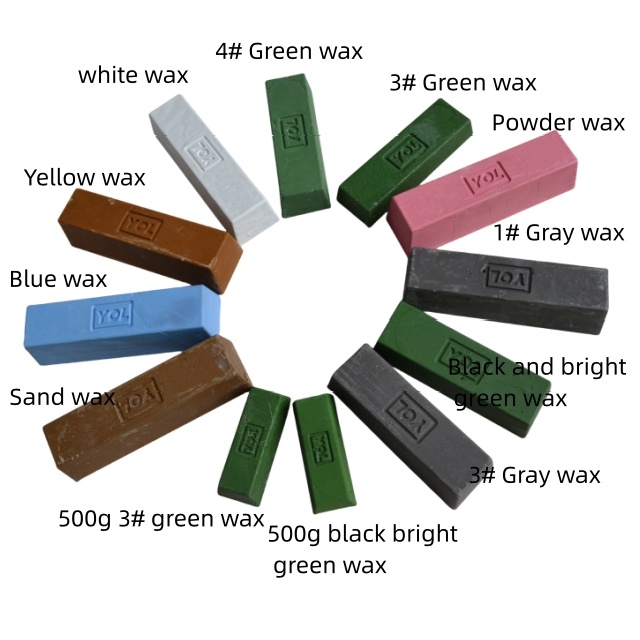
  • Polishing compounds (green, white, red, black)
  • Non-woven wheels for satin finishes
Typical outputs:
  • Satin / brushed finish (Ra 0.4–0.8 μm)
  • Mirror finish (Ra ≤ 0.1 μm)
  • Color-true, scratch-free reflective surface
Where it fits in the line: usually the last station before cleaning, packaging, or assembly.
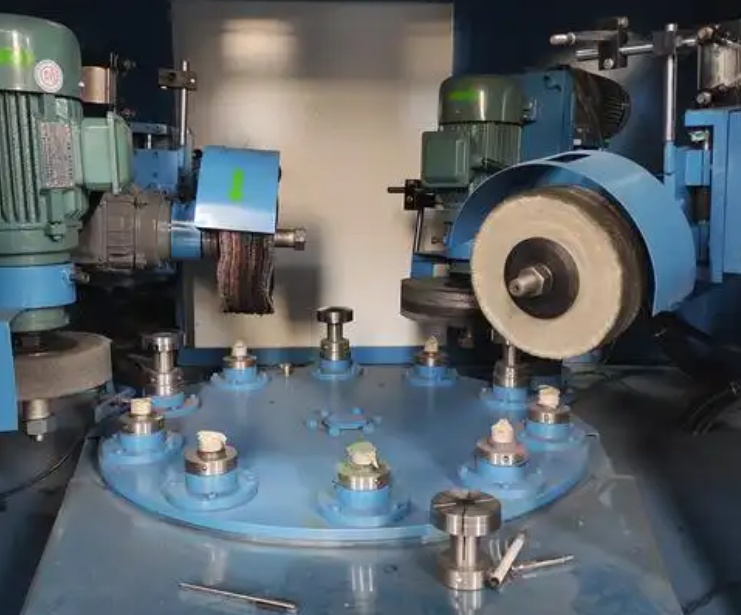
Polishing Machine


3. Polishing vs Grinding: Key Differences at a Glance


Feature
Grinding Machine
Polishing Machine
Primary purpose
Material removal, edge prep, weld blending
Surface refinement, final finish
Abrasive grit
#36 – #120 (coarse)
#240 – #2000 + buffing compounds
Material removed per pass
0.05 – 0.5 mm
0.001 – 0.01 mm
Surface roughness (Ra)
1.6 – 6.3 μm
0.1 – 0.8 μm (mirror: ≤ 0.1 μm)
Speed priority
High linear speed (20–35 m/s)
Controlled lower speed (10–25 m/s)
Heat generation
High — needs coolant often
Moderate — control by pressure and feed
Typical tool
Abrasive belt / grinding wheel
Polishing wheel / buff + compound
Operator skill focus
Pressure, angle, contact area
Compound selection, wheel dressing, sequence
Position in line
Early (after cutting / welding)
Late (final finish)
Cost driver
Motor power, abrasive consumption
Compound cost, wheel life, cycle time


If you remember nothing else: grinding is about taking off; polishing is about putting on quality.
polishing consumablespolishing consumables

4. When to Use Grinding (and When Not To)

Use a grinding machine when you need to:
  • Remove mill scale, oxide, or rust from hot-rolled or cast workpieces
  • Blend welds on stainless steel tanks, frames, or pipes
  • Break sharp edges on cut blanks
  • Rough out surface defects (deep scratches, gouges)
  • Prep surface for coating (powder coat, paint, plating)
Do not use a grinder when:
  • The part is already within 0.1 mm of final geometry
  • You need a cosmetic mirror or satin finish (a grinder will leave deep scratches you will pay to remove later)
  • Material is soft aluminum, copper, or plastic (risk of smearing and embedding abrasive)


5. When to Use Polishing (and When Not To)

Use a polishing machine when you need to:
  • Deliver a specified finish: satin, mirror, or super-mirror
  • Meet Ra values for sanitary, medical, or food-grade parts
  • Remove grinding scratches from the previous station
  • Apply decorative finishes to consumer goods (cookware, faucets, handles)
  • Prepare stainless steel for PVD coloring or anti-fingerprint coating
Do not use a polisher when:
  • The part still has heavy weld beads or stock to remove — you will burn through the buff in minutes
  • Geometry is wrong — a polisher cannot fix a bent shaft
  • The target is functional grip (textured anti-slip) rather than reflective


6. Common Production Lines: Grind Then Polish

In most real workshops, the two machines work in sequence, not in competition. A typical finish line for a stainless steel kitchen sink looks like this:
  1. Station 1 — Grinding: remove mill scale with #80 belt, break sharp edges.
  2. Station 2 — Fine grinding: refine surface with #240 / #400 belts, eliminate coarse scratches.
  3. Station 3 — Pre-polish: #600 / #800 belt, prepare for buffing.
  4. Station 4 — Mirror polish: sisal buff + green compound, then cotton buff + red compound.
  5. Station 5 — Cleaning & protection: ultrasonic cleaning, passivation, anti-fingerprint film.
Skipping stations or trying to combine grinding and polishing on a single head saves machine cost but destroys consumable life and ruins the finish. Most quality complaints we see on incoming audits trace back to this exact shortcut.


7. How to Choose the Right Machine (or Line) for Your Workshop

Use this 4-step decision path before you talk to a supplier.

Step 1 — Define the target finish

  • Functional / deburr only → grinder is enough
  • Cosmetic satin → grinder + satin brushing station
  • Mirror → full grind + polish line with compounds

Step 2 — Match material to abrasive and tool


Material
Grinding Abrasive
Polishing Compound
Stainless steel 304/316
Zirconia / ceramic belt
Green (cut) + white / red (color)
Aluminum 6061/7075
Silicon carbide (avoid loading)
White or blue (low cut)
Brass / copper
Aluminum oxide belt
Red or blue (color finish)
Titanium
Ceramic belt, low heat input
Green + white, controlled pressure
Zinc alloy
Fine belt, soft contact
White, low pressure


Step 3 — Match part geometry to machine type

  • Flat sheets / plates → flat conveyor belt sander
  • Round tubes / pipes → rotary multi-head machine
  • Small irregular parts (jewelry, hardware) → disc / table-top polisher
  • Long workpieces (handrails, door handles) → through-feed linear polisher


Step 4 — Decide automation level

If your labor cost is rising, throughput is flat, and finish consistency is unstable between shifts, an automatic polishing machine with programmable pressure, speed, and dwell time typically pays back in 12–18 months.


8. FAQ

Is a polishing machine the same as a grinder?

No. A grinder removes material and prepares geometry; a polisher refines surface quality. They use different abrasives, different speeds, and different wheels. Some machines are hybrid, but they compromise on both functions.

Can a grinding machine produce a mirror finish?

Not directly. A grinder leaves a coarse scratch pattern (Ra 1.6–6.3 μm). To reach a mirror finish (Ra ≤ 0.1 μm), you need a polishing line that progresses through fine belts and buffing compounds.

Which is more expensive — a grinder or a polisher?

Polishing machines are often more expensive per station because they need finer speed control, vibration isolation, and compound management. However, total cost depends on your finish spec, not on the head price alone.

Do I need coolant for polishing?

Not always. Many polishing operations are dry, but a mist coolant extends buff life and prevents burn on stainless and titanium. Wet polishing is also better for dust control.

Can one operator run both machines?

Yes, in low-volume workshops. In high-volume production, dedicated operators per station keep throughput stable and reduce scrap.

How long does a polishing wheel last?

A sisal buff under mirror-polish duty typically lasts 200–500 workpieces; an air cloth wheel for satin finish can last 1,000–2,000. Compound type, pressure, and workpiece material all affect life significantly.


9. Conclusion

A grinding machine and a polishing machine are not competitors — they are partners. Use the grinder to remove stock, fix geometry, and prep the surface. Use the polisher to deliver the final finish the customer is actually paying for. Skip the grinder, and you burn through polishing consumables. Skip the polisher, and you ship parts the customer rejects.
If you are unsure what your line should look like, send us your workpiece photo, target finish, and daily throughput. We will spec a station-by-station solution in 24 hours.


Reciprocating Pumps Defined Piston vs. Plunger vs. Diaphragm

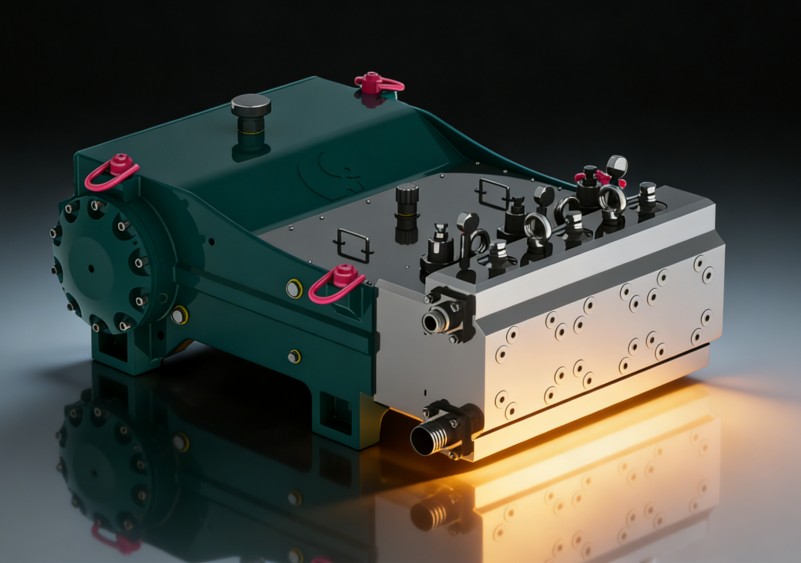
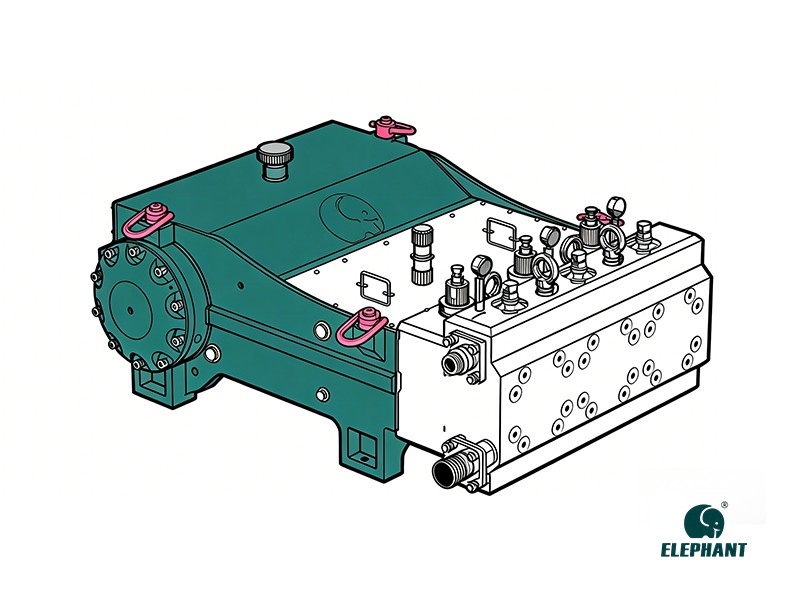
Reciprocating pumps are key to precise, continuous process control. Yet when selecting, it's often unclear how to choose among piston, plunger, and diaphragm pumps.


1. What is a reciprocating pump and its features?

A reciprocating pump is a positive displacement pump that uses pistons, plungers, or diaphragms to change chamber volume and deliver fluid. Flow depends on stroke, cylinder size, and speed — not on discharge pressure. It is self-priming, highly efficient, and suitable for high pressure, low-flow, and high-viscosity applications.


2. The three main types of reciprocating pumps

  • Piston pumps rely on the reciprocating motion of pistons to achieve suction and discharge of the conveyed medium. With a simple structure, they are single-acting reciprocating pumps, mainly used for transporting media containing particles and mud.
  • Plunger pumps rely on the reciprocating motion of plungers within the cylinder to change the sealed working volume, enabling suction and discharge of the medium. They are suitable for high pressure conditions, with good sealing and precise flow adjustment.
  • Diaphragm pumps use a flexible diaphragm to separate the medium from moving parts, ensuring zero leakage. Ideal for toxic, corrosive, or solids-containing media, they are commonly used in chemical, water treatment, and other applications requiring strict sealing.


All three types of reciprocating pumps rely on reciprocating motion for fluid delivery, but each has distinct structural features and application focuses. The most suitable equipment should be selected based on actual operating conditions. Elephant Machinery offers both selection guidance and customization services to meet your specific needs.

What is a High Pressure Process Diaphragm Pump?

In oil extraction and petrochemicals, pump safety and stability directly affect production efficiency. When ultra-high pressure and corrosive media are involved, zero-leakage is a must — and high pressure process diaphragm pumps are the perfect fit.


1. What is a High Pressure Process Diaphragm Pump?

The high pressure process diaphragm pump is a type of reciprocating positive displacement pump. Built upon the reciprocating pump design, it incorporates a diaphragm chamber and uses a large-sized diaphragm to separate the hydraulic end from the power end. This enables large flow rates, high working pressures, and low pulsation, making it suitable for leak-free transfer of flammable, explosive, toxic, and hazardous liquids.


2. Working Principle

The power end's reciprocating motion is transmitted evenly to the diaphragm via hydraulic oil, causing it to flex back and forth. The diaphragm fully isolates the hydraulic system from the pumped medium. During suction, the chamber volume increases, the inlet valve opens, and the outlet valve closes, drawing in the medium. During discharge, the chamber volume decreases, the outlet valve opens, and the inlet valve closes, pushing the medium out at high pressure.


Features: Applications:
Features a diaphragm-type static seal design Suitable for the oil extraction, petrochemical, power generation, and chemical industries
Equipped with a double-diaphragm design and a diaphragm rupture alarm Capable of handling wastewater and various corrosive and non-corrosive media
Features an automatic oil replenishment valve, safety valve, and automatic air release valve Can be customized into specialized pumps such as injection pumps, pressure testing pumps, and acid/alkali/salt pumps
Few wear parts for easy maintenance Capable of producing specialty pumps such as liquid ammonia pumps, ammonium hydroxide pumps, polymer injection pumps, and alcohol injection pumps
Modular design for flexible configuration Covers pumps for industrial and agricultural applications, suitable for high-temperature and low-temperature operating conditions
Multiple pump head materials available  
Optional intelligent unattended operation system  
Compatible with various drive options, including hydraulic, electric, and diesel engines  


The high pressure process diaphragm pump resolves the conflict between high pressure, severe abrasion, and zero leakage through innovative hydraulic drive and double-diaphragm design. Elephant Machinery has developed a mature R&D, production, and service system for this product, offering customized parameters and configurations based on specific operating conditions.