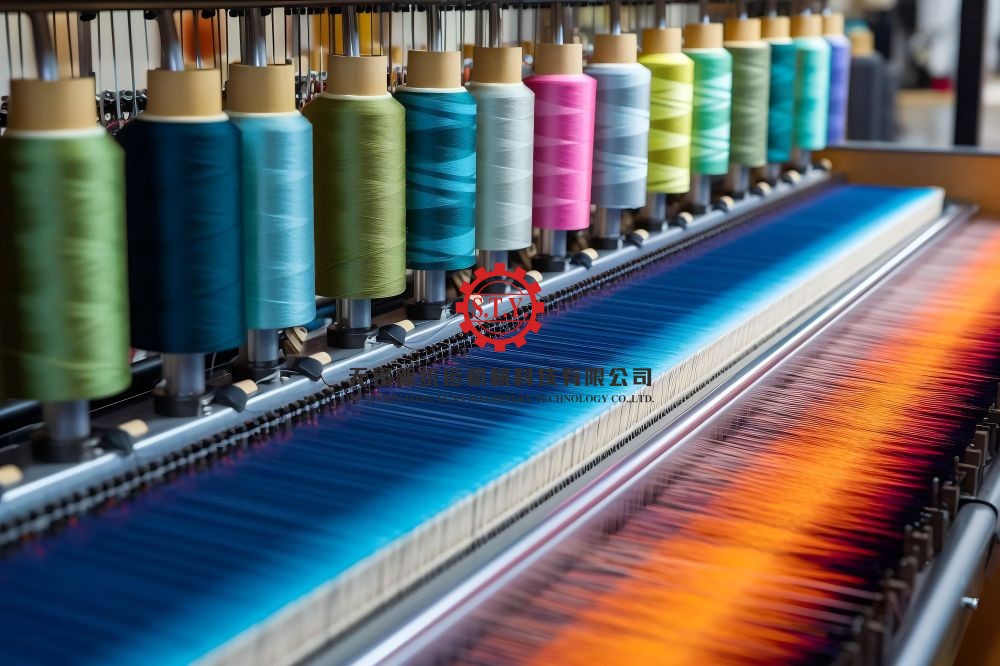
What's the reason causes yarn non-recurrence by package yarn dyeing?2

PRETREATMENT INFLUENCES REPRODUCIBILITY

Many dyeing plants don't pay attention to pre-treatment. Actually, many problems in dyeing processing because of ingnoring do enough pre-treatment. Impurity removal degree, whiteness, pH value after washing, purification of hydrogen peroxide after bleaching, amount of alkali carried by mercerized yarn, different tension affect gloss. When dyeing bobbin yarn, pre-treatment, dyeing and post-treatment are carried out in the same high pressure bobbin dyeing machine, and the pre-treatment effect is also different.

Generally, the dyeing factory pays more attention to force determination and weighing of dyes,but less attention is paid to the force determination and weighing of other chemicals. 

Caustic soda, soda ash, hydrogen peroxide is not analyzed, only calculated according to instructions, dye liquor are rarely titrated. So pre-treatment effect is different, causes difference of color depth and hue.

As mentioned, paying attention to compatibility, compatibility, sensitivity and quality of dyestuff, in order to ensure reproducibility.


RATIONALITY OF DYEING TECHNOLOGY INFLUENCES REPRODUCIBILITY

Although selecting appropriate dye, the dyeing process is designed not reasonable, there also be cylinder differences.  Such as temperature design, heating rate, holding time, amount of additives and feeding method scientificity, the rationality of post-treatment process design will affect the dyeing amount of dyestuff resulting in color difference.

Such as adding reactive dye solid alkali, fixation and hydrolysis of reactive dyes have a lot to do with the pH value of dye bath, the scientific feeding method is to maintain the Pu value at a fixed value (such as pH value is 11.5), which is related to the feeding method and feeding rate, if one-time feeding or feeding fast and slow all will cause pH fluctuations, amount of fixation and hydrolyzed dyes is different, finally eflects the different shades of light.

package yarn dyeing machine


Why do raw cotton dyeing and its spinning processing?

In order to fully improve the added value of colored product, except add patten, high-count yarn & blended yarn and special dyeing process can also be used to achieve a unique style of colored cloth. Pure cotton blended yarn-dyed fabric: soft feel, breathable, strong water absorption. In recent years, it has been favored by the majority of consumers. Color cotton by mixing cotton, carding cotton, spinning, weaving to eliminate color difference, it is convenient production.

RAW MATERIAL REQUIREMENT

1. Raw cotton requirement

After the raw cotton dyeing, the color cotton should be mixed, combed, spun, and finally wovenhttps://www.yarnfabricdyemachine.comknitted, and the requiements of color difference is not strictly, so it is suitable for any variety of raw cotton.

2. Dye compound

The dyestuffs and auxiliaries are used for cotton bleaching and dyeing: with fine particles and soluble in water, good diffusion and permeability.


DYEING

In order to obtain better color mixing effect of cotton textiles, pay attention to two important points in raw cotton dyeing: remove natural impurities of loose fiber and spinnability of dyed cotton fiber.

1. Pretreatment

Cotton fibers contain many symbionts, such as waxes, nitrogen, pectin, minerals and natural pigments, cottonseed shells, etc. The existence of these symbionts will seriously affect the wettability of cotton fiber, making it difficult to dyeing, so it must be removed first. The pre-treatment of raw cotton dyeing: boiling and bleaching and related washing. The purpose is to remove cotton impurities, fruit gum and natural pigments that hinder dyeing. After boiling and fully washing, it is necessary to check whether the concentration of alkali, residual hydrogen peroxide and whiteness meet the process requirements or not. Generally, the whiteness of the cotton fiber after pre-treatment are consistent, and the pH value is neutral.

2. Raw cotton dyeing

Using direct dyes and reactive dyes, considering the color fastness and convenience of use, using reactive dyes is better, because reactive dyes with bright color, complete chromatography and a certain wet processing fastness. The process control is stable and appropriate additives, the reproducibility of dyeing is good, cylinder (batch) difference is less. In addition, the use of reactive dyes dyeing, if it is combination of color, it is best to choose a better compatibility of reactive dyes for collocation.

3.  Postprocessing

Post-treatment is an important part of raw cotton dyeing, after dyeing should do fully washed and soaping treatment, in order to remove impurities and residual chemical additives on the cotton fiber. When washing, detergent with strong decontamination ability and good permeability should be used to enhance the cleaning effect of the inner layer of the fiber. After washing, in order to increase the spinnability, softening agent should be added for softening treatment to improve the lubricity of the fiber.


DEHYDRATOR AND DRYING

After dehydration , the color cotton treated by softener is easy to loose, after production practice, the moisture return after drying is controlled at 6 to 8, with soft feel and good spinnability.


SPINNING TECHNOLOGY

After raw cotton dyeing, the cotton fiber lost  spinnability processing of boiled and bleached, removed wax and oil, feel becomes coarse. In order to improve this situation, one the one hand, adding softener to loosen the cotton and improve its spinnability after full washing. On the other hand, reasonable cotton matching with raw cotton. There are two kinds of cotton matching between colored cotton and raw cotton: One is carried out in the cotton cleaning process, the color cotton and the raw cotton after grabbing cotton, mixing cotton, opening into rolls and  strips, finally spinning and knitted or woven fabric; Another one is processing during combining, the color sliver with the raw cotton sliver, through two strips, so that it is mixed into a strip, finally spinning and weaving or knitting. Through experiment, the former method is better, color cotton and raw cotton through mixing , carding, spinning and weaving, basically eliminate color difference.No matter which one is adopted, the mixing ratio of color cotton and raw cotton is generally controlled at about 0.5-10 percent, spinnability is better, don't  change the original production technology.


DYEING INTANCE

9.7tex red cotton using Shin Tong Yunn high pressure dyeing machine, bath ratio 1:15, internal and external cycle time ratio 5:3.

1. Process flow: raw cotton- boiling-washing-dyeing-washing-soft treatment-dehydration-drying - packing

2. pretreatment

Process prescription, (ghttps://www.yarnfabricdyemachine.comL)NaOH(36 'Be) 5 stabilizer FT 2OH202(27.5%) 8,  Temperature 120℃ penetrant JFc 1.0 time 120min.

3. Raw cotton dyeing (bright red) process prescription, (ghttps://www.yarnfabricdyemachine.comL) Peregal O 015 reactive brilliant orange X-Gn 3. 575N a2CO 3 25 Bright Red X一3B 6.i25Na2SO. 70。

4. Soft treatment

Process prescription, (ghttps://www.yarnfabricdyemachine.comL) softener HC-8

5. Dyeing cotton by spinning process

Cotton blending - roll - carding - strip - roving - fine yarn - raw cotton - fine cotton


NOTE:

DF241 series high pressure cone yarn dyeing machine is suitable doing pre-treatment, post processing and dyeing of raw cotton(cotton fiber), only need change the carrier form.

Why the choice of dyeing machine crucial to the quality of dyed products?

There are numerous factors that influence the quality of dyed products, chief among them being equipment, dyes and chemicals, processes (procedures, formulations, conditions)  and operational factors. Occasionally, defects in dyeing can also arise due to chance occurrences. Therefore, when analyzing the root causes of quality issues, it's imperative to consider all aspects thoroughly to pinpoint the actual cause, allowing for resolution and prevention of recurring issues. According experience, product quality control measures can be implemented.


In this context, let's delve primarily into the impact of dyeing equipment on the quality of dyed products.


To achieve superior dyed products, not only must suitable dyes be selected based on the type of fiber and fabric, but also must appropriate textile dyeing machine be paired with customized and rational dyeing processes. Despite advancements in production technology and the continuous improvement of dyeing machinery, quality issues stemming from equipment are still not entirely avoidable.

fabric

The primary concern related to yarn dyeing machine and fabric dyeing machine is its operational stability, efactors such as machine speed, drying condition, temperature ramp-up and ramp-down rate, and pressure control. When these parameters are tightly controlled, the dyeing and finishing machinery can ensure consistent color reproduction and reproducibility.


Textile dyeing machine pivotal role in achieving even dyeing. To this end, the following requirements are crucial:


1. **Strong Dyeing Process Adaptability**: dyeing machine must be capable of accommodating a wide range of process parameters like temperature, pressure, speed, and treatment time, as well as adjustment to dyestuff and chemical, ensuring compatibility with new processes and technologies. This ensures uniform dyeing and meets other quality standards.


2. **High Automation Level**: Automated detection and adjustment of key process parameters minimize human errors, enhancing precision control. This ensures the repeatability of processes and stabilizes product quality.


3. **Versatility for Multi Processing**: Given the limited resources in dyeing plant and ever-changing market demands,  fabric and yarn dyeing equipment should be versatile, allowing for cost-effective processing of various fabric and yarn types while maintaining dyeing uniformity and meeting other quality criteria.


4. **Low-Tension or Loose Running**: Tension is a significant factor affecting dyeing evenness. High or uneven tension can easily lead to quality issues. Hence, dyeing equipment should operate with minimal or uniform tension, preferably in a loose-running mode. It is related with the design of dyeing machine structure.

weaving yarn

In addition to the processes and operations defined, the color matching and dyeing levelness of products are intimately tied to the dyeing equipment chosen. The selected equipment must cater to the requirements of various dyeing processes, handle diverse product types, produce high-quality outputs, and be safe, durable, economical, high-speed, efficient, continuous, automated, low-energy consuming and environmentally friendly. In essence, the equipment must guarantee the quality of dyed product.


How are textile fibers classified?

Fibre soft and slender substance with length to diameter ratio at least 10:1,  the cross-sectional area less than 0.05mm2. For textile fibers, the ratio of length to diameter is generally greater than 1000:1. 

About textile fibers: Natural fiber, such as cotton, hemp, wool, silk and so on; Chemical fiber refers to natural or synthetic polymers as raw materials, through chemical methods and mechanical processing made as fiber.


1) According to the source of raw material: Regenerated fibre and Synthetic fibres

  • Regenerated fibre also be called as synthetic fiber, using natural polymers or lost textile processing value of fiber raw materials through a series of chemical treatment and mechanical processing be fiber again, the chemical composition of the fiber and original polymer is alomost same. Including Regenerated cellulose fibre (such as viscose fiber, copper ammonia fiber), Regenerated protein fiber  (such as soy protein fiber, peanut protein fiber), regenerated inorganic fiber (such as glass fiber, metal fiber)  and regenerated organic fiber (such as chitin fiber, seaweed gum fiber).
  • Synthetic fiber is made of natural low molecular compounds such as petroleum, coal, limestone, natural gas, salt, air, water and some agricultural and sideline products as raw materials, through chemical synthesis and processing be fibers. There are seven common types of synthetic fibers: polyester fiber (polyester), polyamide fiber (nylon), polyacrylonitrile fiber (acrylic fiber), polyvinyl formaldehyde fiber (vinylon), polypropylene fiber (polypropylene), polyvinyl chloride fiber (chlorinated fiber) and polyurethane elastic fiber (spandex), etc. 


    2) Classification by morphological structure: Continuous filament and Staple fibre

    • Continuous filament 

      During chemical fiber manufacturing process, spinning fluid (fusant or melt) after spinning forming and post-processing, the length of fiber is caiculated in kilometers is called chemical fiber filament. Chemical fiber filaments can be divided into monofil, multifilaments, twisted fibers, double twisted fibers, cord fibers and Textured filament.

      Monofilament: A single continuous fiber of very long length.

      Multifilaments: A filament composed of two or more single filaments joined together. Complex filaments of chemical fibers are generally composed of 8 to 100 single fibers.

      Twist yarn: twist Multifilaments  becomes twist yarn.

      Double twist yarn: Two or more strands of twist yarn are combined to be double twist yarn.

      Cord wire: composed of more than one hundred to several hundred single fibers, used to make tire cord fabric.

      Textured filament yarn: The chemical fiber filament is deformed and processed so that it has the appearance characteristics of curling, spiral, ring and so on, showing fluffy and flexible filament.

      • Staple fibre

        The product of the chemical fiber is cut into few centimeters to dozen centimeters in length, it is called staple fiber. According to the different cut length, staple fibers can be divided into cotton type, wool type and medium long staple fibers.

        The length of Cotton type fibre is 30 ~ 40mm, the linear density is about 1.67dtex, the fiber is fine, similar to cotton. The length of Wool type fibre is 70 ~ 150mm, the linear density is 3.3 ~ 7.7dtex, the fiber is thicker, similar to wool; Mid fibre has a length of 51 ~ 65mm and a linear density of 2.2 ~ 3.3dtex, between cotton type and wool type.


        3)  Classification by fiber manufacturing method

        Chemical fibers can be divided into two categories according to the basic manufacturing methods,  melt spinning fibers and solution spinning fibers (i.e. dry spinning fibers and wet spinning fibers).

        • Melt spinning is polymer melt is pressed out of the spinneret hole, melt is solidified into silk in the surrounding air (or water).
        • Dry-spinning is polymer concentrated solution is pressed out from the spinneret hole form as trickle, solvent evaporates rapidly in hot medium and solidifies into silk. 
        • Wet spinning is polymer concentrated solution is pressed out of the spinneret hole and solidified into silk in a coagulation bath.


          4) Classification by composition within a single fiber

          • Single-component fibers: Fibers composed of the same polymer are called single-component fibers, and most conventional fibers are single-component fibers, such as polyester.
          • Multicomponent fibers:Fibers composed of two or more polymers are called multicomponent fibers, such as acrylic fibers. 
          • Composite fiber:the components are arranged regularly along the fiber axis and form a continuous interface fiber.
          • Blended fiber: components are randomly dispersed or more evenly mixed fiber


            5) Classification by fiber difference

Rice Color Sorter Solution

Rice undergoes a series of processes during processing, including milling, polishing, and grading, and the rice color sorter plays a crucial role in this process.

  • Impurity Detection: The rice color sorter can effectively identify and remove impurities from the rice, such as small stones, broken rice, and discolored grains, which is essential for improving rice quality.
  • Color Sorting: Based on the color of the rice, the color sorter can separate normal rice from discolored or moldy grains, ensuring consistent color in the final product.
  • Grading: The rice color sorter can perform precise grading based on different colors and appearance characteristics, meeting the diverse needs of various markets.
  • Loss Reduction: By providing precise sorting, the color sorter can minimize losses caused by impurities or deteriorated rice, thereby enhancing production efficiency.
  • Improving Product Image: Using a color sorter can enhance the visual quality of the rice, strengthening the brand image and increasing market competitiveness, making the product more appealing.
  • Compliance with Standards: Many markets have strict quality requirements for rice, and using a color sorter helps produce products that meet these standards, increasing market access opportunities.

Specific Applications of Color Sorter in the Nut Industry

Color sorter technology plays a crucial role in the nut industry, enhancing product quality, safety, and efficiency. Here are some specific applications of color sorters in this sector:

1. Removal of Defective Nuts

Spotting Defects: Color sorter machines can detect defects such as black spots, mold, or discoloration on nuts. These defects are often indicators of spoilage or contamination, and removing such nuts helps ensure that only high-quality products reach the market.

Quality Assurance: By eliminating nuts with physical imperfections or undesirable color variations, color sorter improves the overall appearance and quality of the final product, which is essential for maintaining brand reputation and consumer satisfaction.

2. Contaminant Detection

Foreign Object Removal: Color sorter technology can help detect and remove foreign materials such as stones, metal fragments, or wood pieces that may be mixed with nuts. This is crucial for ensuring product safety and preventing potential hazards for consumers.

Mixing with Other Products: In cases where nuts are processed with other products or ingredients, color sorter helps segregate and remove non-nut materials or contaminants.

3. Sorting Different Nut Varieties

Variety Classification: Nuts come in various types and grades, each with distinct color profiles. Color sorter machines can sort nuts based on their color and appearance, which helps categorize different varieties and ensure that each type is packaged and marketed correctly.

Consistency in Product: Sorting nuts by variety ensures that each batch of nuts meets the specific quality standards expected by consumers and helps maintain consistency in product offerings.

 4. Enhancing Aesthetic Appeal

Visual Uniformity: Nuts with inconsistent color or appearance can be unappealing to consumers. Color sorter technology helps ensure the nuts are visually uniform, improving their market appeal and potentially commanding a higher price.

Brand Image: A well-presented product can enhance brand image and consumer trust. Consistently high-quality, visually appealing nuts help reinforce brand reputation and can lead to increased consumer loyalty.

5. Automating Production Processes

Efficiency: Traditional manual sorting of nuts is labor-intensive and time-consuming. Color sorter machines automate the sorting process, significantly increasing production speed and reducing labor costs.

Accuracy and Consistency: An automated color sorter ensures that each nut is assessed based on consistent criteria, leading to more accurate sorting and fewer errors compared to manual methods.

6. Optimizing Product Yield

Minimizing Waste: By effectively separating defective or non-standard nuts, color sorter helps reduce waste and increase the overall yield of marketable products. This contributes to more efficient use of raw materials and improved profitability.

Processing Efficiency: Efficient sorting means that only the best quality nuts are processed further, which can improve the efficiency of subsequent processing stages and reduce the incidence of rework or disposal of substandard products.

7. Practical Examples

Almonds: For almonds, color sorter machines can sort out those with defects such as dark spots or off-color kernels. This helps ensure that only premium almonds are packaged and sold.

Cashews: Cashew processing benefits from color sorter by removing broken or discolored nuts, ensuring that only whole, high-quality cashews are included in the final product.

Pistachios: Color sorter technology helps to identify and remove pistachios that are improperly colored or have shell defects, improving the overall quality and appearance of the product.

In summary, color sorter technology in the nut industry not only ensures higher quality and safer products but also enhances operational efficiency and product appeal. Its applications help producers meet consumer expectations and maintain a competitive advantage in the market.

The Working Principle of The Color Sorter

Color Sorter is a highly efficient automated device widely used in food processing, mining, and chemicals to ensure product quality. Its working principle can be divided into the following key steps:

  1. Feeding System: The materials to be sorted are delivered to the feed inlet via a conveyor belt. The feeding device starts vibrating, spreading the material evenly on the feed chute. Under the action of the vibrating chute, the material automatically forms a continuous linear arrangement and enters the photoelectric detection system at a constant speed.
  2. Photoelectric Detection System: The machine is equipped with an LED light source inside, providing stable and uniform illumination for the material to ensure the most accurate color is displayed during detection. High-resolution cameras and sensors capture images of the material under specific lighting and send them to the image processing center for identification.
  3. Image Processing System: The acquired images are transmitted to the control system. Hawit’s independently developed algorithm analyzes the color, shape, and size characteristics of each object. Using this algorithm, the system compares the material's features with preset standards (such as color differences between qualified and defective products) to quickly identify the materials that need to be removed.
  4. Execution System: Once defective material is detected, high-pressure air valves control the opening and closing of high-pressure gas according to preset instructions. The air nozzles then blow the non-compliant material into the waste bin.
  5. Output System: After processing, the finished products and waste are separately sorted into different discharge outlets, ensuring efficient sorting is achieved.

Tips and Tricks for Maximizing the Efficiency of the Moving Column Double-Column Machining Center YSMD-8042

The Moving Column Double-Column Machining Center YSMD-8042 is a powerful and versatile machine that offers exceptional precision and performance. Ideal for the medical industry enthusiasts, this gantry machining center can revolutionize your manufacturing processes. To help you make the most of this advanced technology, we have compiled a comprehensive list of tips and tricks. So, let’s dive in!

1. Familiarize Yourself with the Machine’s Features and Specifications

Before you begin using the Moving Column Double-Column Machining Center YSMD-8042, take the time to thoroughly understand its features and specifications. Familiarize yourself with its control panel, software interface, and different machining modes. This knowledge will enable you to utilize the machine to its full potential and achieve optimal results.

2. Plan Your Process and Set Up Proper Tooling

Efficient planning is crucial when working with a machining center. Determine the specific steps and cutting tools required for your project to avoid unnecessary delays. Proper tooling is vital to ensure accurate and effective machining. Choose the right tools based on the materials you are working with and pay attention to tool alignment and installation.

3. Optimize Cutting Parameters

To achieve desired results and maximize efficiency, it is important to optimize the cutting parameters. Adjust the feed rate, spindle speed, and cutting depth according to the material being worked on. Experiment with different parameters to find the optimal settings for your specific application.

4. Keep the Machine Clean and Well-Maintained

Regular maintenance is key to keep your Moving Column Double-Column Machining Center YSMD-8042 in excellent condition. Clean the machine regularly, removing any swarf, debris, or coolant residues. Lubricate moving parts as recommended by the manufacturer. Regularly inspect and replace worn-out parts to prevent any disruptions in production.

5. Leverage Advanced Software Capabilities

Explore the advanced software capabilities of the machine to enhance productivity. The Moving Column Double-Column Machining Center YSMD-8042 may include features such as CAD/CAM integration, simulation capabilities, and toolpath optimization. Take advantage of these functions to streamline your workflow and improve machining efficiency.

6. Ensure Operator Training and Safety

Proper training for operators is essential to utilize the machine effectively. Invest in training programs to empower your team with the necessary skills and knowledge. Emphasize safety protocols to ensure a secure working environment and prevent accidents or machine damage caused by human error.

7. Regularly Upgrade to Stay Ahead

Machine technology is continuously evolving, with new features and functionalities being introduced regularly. Stay updated with the latest advancements by regularly upgrading your machine and software. This will enable you to stay competitive in the ever-changing medical industry.

In conclusion, the Moving Column Double-Column Machining Center YSMD-8042 has the potential to revolutionize the manufacturing processes in the medical industry. By following these tips and tricks, you can maximize the efficiency and effectiveness of this advanced gantry machining center. Empower your team with the necessary skills and knowledge, keep the machine well-maintained, and explore the software capabilities to stay ahead in the industry. Get ready to take your manufacturing to new heights with this powerful machine!

Advantages and disadvantages of drone spraying

Drone spraying is a new type of operation method in technological development. High work efficiency, suitable for large-scale agricultural pest control. This is tens or hundreds of times more than physical labor. It can complete tasks that are easy to manually complete, such as forest and mountain forest operations. So how effective are unmanned aerial vehicles used for medicinal purposes on rural land?

Things often have two sides, namely advantages and disadvantages. Drone spraying is no exception, each with its own advantages and disadvantages. The advantage is that the spraying speed is fast. The crop protection drones used for agricultural spraying are generally multi rotor aircraft, much larger than typical small aerial photography drones, with longer endurance and much faster speed. Not to mention, compared to manual spraying, the spraying efficiency of aircraft is hundreds of times higher.

In addition, crop protection drones can adopt two control methods: manual remote control and satellite guided control. Usually, large plots use satellite navigation to control spraying. For land parcels, seamless spraying can be achieved without losing crops. No matter how slow and careful manual spraying is, there will always be omissions at the beginning, which machines cannot match

The spraying quality is also very high. The principle of drone spraying is to install the medicine box on the body of the drone, open the valve after the drone takes off to discharge the medicine, and then use the strong wind generated by the high-speed rotation of the drone blades to atomize and blow down the medicine. Due to the strong atomization and falling of drugs by the wind, the adhesion and diffusion rate of drugs is higher than traditional manual spraying, so the effect of spraying drugs in this way is higher than manual spraying.

In fact, there are many potential safety hazards hidden in drones, and some issues have also been documented in previous reports. For example, during the process of spraying pesticides, if no pesticides are sprayed into the river, all organisms in the river will be poisoned. A clear river on the horizon is easily destroyed. If there are artificially cultivated aquatic products in the Tianbian River, it is easy to become an economic dispute if such a problem is encountered.

In addition, the promotion of drone pesticide spraying in modern rural areas is insufficient, and there are many regulatory loopholes. Relevant departments need to introduce policies to guide and manage it correctly, avoid irreparable losses caused by technical errors, and ensure the safety of drone pesticide spraying.

Therefore, if rural areas want to implement drone pesticide spraying, corresponding technical support must be provided first, and drone training must be provided to farmers to ensure that they use drones in the correct situations, thereby avoiding many problems. As long as they have sufficient technology, they must maintain consistency in the spraying process.

In addition, due to its fast speed, the effect of uniform application is poor. The drone spray passes through instantly, making it difficult to mix evenly and thoroughly. The only way to overcome the problem of uneven and thorough beating is to increase the concentration of the liquid medicine, thereby increasing the investment cost. For example, when spraying drugs in cotton fields, UAV spray can not kill cotton bollworm in cotton buds, aphids on the back and bottom of leaves.

Only by absorbing crops can endogenous pests be dealt with, and some pests may not be killed by endogenous agents but can only be dealt with through contact. The main disadvantage of manual spraying is slow speed, making it difficult to spray at high altitudes. It has the advantage of uniform application, which can evenly and thoroughly hit crops up and down. Save technical solutions.

Although there are many advantages to using drones to spray pesticides, such as high efficiency and good quality, there are also certain limitations. For example, it depends on weather conditions. It cannot take off in bad weather and cannot work all day. It is only suitable for the vast northern regions, while the southern mountainous and hilly areas are not particularly suitable for large-scale operations.

Generally speaking, using drones to spray pesticides on farmland is very cost-effective. Short time, uniform spraying, and affordable price. Therefore, more and more farmers are gradually choosing to use drones to spray pesticides on crops. There are also many smart young people who see the vast prospects of this industry, specializing in drone spraying, and the profits are still considerable.

Drones are a manifestation of high-tech technology applied in agriculture, and are a progressive product of the combination of modern technology and traditional agriculture. From an efficiency perspective, it is indeed higher than manual spraying. From a practical perspective, it cannot be compared to manual operation. Drones can only spray on the front of crops, but cannot spray on the back of crops.

When spraying pesticides, unmanned aerial vehicles also pay attention to the weather. Due to strong winds and heavy fog, it is impossible to operate, and manual operation can completely ignore this situation. Therefore, unmanned operation has its own advantages, and manual operation also has its advantages, which should be complementary. We cannot veto drones with one vote. We should view new things from a developmental perspective. Although there are drawbacks to drone operation, it is an assistant for the future development of agriculture.
Development history of agricultural drones

The development process of agricultural drones can be divided into several important stages, each with its unique characteristics and milestones. ‌

Initial stage: Concept machine and demonstration machine

Conceptual stage (2010-2012): This stage mainly involves the dissemination of concepts, and the operational capabilities of crop protection drones are very limited, mainly used for small-scale demonstrations and testing within the industry.

Demonstration stage (2013-2015): With the advancement of technology, crop protection drones began to be demonstrated in farmland. Although their operational capabilities have improved, they have not yet reached the standard for large-scale application.

Development stage: trial application and batch application

Trial application stage (2016-2017): Plant protection drones began to be practically applied in farmland, and more and more practitioners entered this industry, further verifying the industry model and operational capabilities.

Batch application stage (2018-2020): Plant protection drones have the ability to make money, their business models and service capabilities are gradually maturing, and more social resources are entering this industry.

Mature stage: Wide application and future trends.

Widely used stage (2021 present): Plant protection drones have been fully accepted by the industry and cannot be replaced. All social resources know their purpose and have become a mature industry.

Future trend: Plant protection drones will further become intelligent and precise, improving operational efficiency and effectiveness while reducing costs and meeting the diverse needs of farmers.

Technological progress and market application

The development of crop protection drone technology is also accompanied by the continuous expansion of the market. Abroad, Japan developed the world's first crop protection drone in 1987 and currently has over 5000 in stock. Since 2004, China has been researching and promoting unmanned aerial vehicles (UAVs) for crop protection. By 2019, the number of UAVs in operation had reached 55000, covering an area of 33 million hectares. The advancement of policies and technology has also driven the rapid development of crop protection drones in China.

Key technologies and market acceptance

The key technologies of crop protection drones include power systems, flight control, and spraying systems. In the early days, it was mainly oil powered aircraft, but with the rise of electric drones, electric drones gradually became the mainstream in the market due to their cost-effectiveness and environmental friendliness. In terms of market acceptance, farmers have gradually shifted from a wait-and-see attitude to acceptance and recognition, and crop protection drones have become an indispensable tool in agricultural production.

BEONDT agriculture spraying drone