Sanitary Napkin Test Methods Ensuring Quality and Performance

Sanitary Napkin Test Methods: Ensuring Quality and Performance


When it comes to personal hygiene products like sanitary napkins, performance and reliability are paramount. Quality testing is crucial to ensure products meet the needs and comfort of users. GESTER explores the sanitary napkin test methods and highlights specialized equipment such as the Sanitary Napkins Backing Peeling Strength Machine GT-CN18, Sanitary Napkins Absorption Speed Tester GT-CN19, and Sanitary Napkin Water Absorbency Tester GT-CN20, all of which play key roles in ensuring product quality.

Importance of Testing in Sanitary Napkins
Sanitary napkins serve as essential products for women, and their functionality directly impacts user comfort and confidence. Testing ensures that each napkin performs optimally in terms of absorbency, adhesion, and material integrity. It also ensures compliance with international quality standards, which is vital for market acceptance.

Key aspects to evaluate include:
Adhesion: How well the backing adheres to fabrics or underwear.
Absorption Speed: The rate at which the napkin absorbs fluid.
Water Absorbency: The total amount of liquid a napkin can retain.
To achieve this, specialized testing machines are required.

1. Backing Peeling Strength Test: GT-CN18 
The Sanitary Napkins Backing Peeling Strength Machine GT-CN18 is a precise tool used to evaluate the adhesive strength between the sanitary napkin backing and cotton fabrics.

Key Features of Sanitary Napkins Backing Peeling Strength Machine
  • Touch screen control, Chinese and English menus, man-machine dialogue mode, easy yo operate.
  • Built-in thermal printer, convenient to print test results quickly on site.
  • Sanitary Napkins Backing Peeling Strength Machine Professional computer analysis software.
  • Sanitary napkin adhesive strength tester can realize bidirectional operation with computer; report statistics, graph visual analysis, etc.
  • High precision sensor, good linearity and stability; stepper motor drive, ball screw drive.
Product Detail Sanitary Napkins Backing Peeling Strength Machine
2. Absorption Speed Test: GT-CN19
The Sanitary Napkins Absorption Speed Tester GT-CN19 measures how quickly a sanitary napkin absorbs fluid, a crucial factor for user comfort and hygiene.

Key Features of Sanitary Napkins Absorption Speed Tester
  • Sanitary Pads Absorption Speed Tester Touch screen control, Chinese and English menus, man-machine dialogue mode, easy to operate.
  • Built-in thermal printer, convenient to print test results quickly.
  • High precision peristaltic pump to ensure the accuracy of penetrating liquid capacity.
  • Sanitary Napkin Water Absorption Rate Tester: Automatic liquid addition, automatic testing, no need to manually add liquid.
  • Electrodes are processed with special materials, good induction;electrodes are automatically positioned.
  • The sample mounting kit has overflow receiving device.
Sanitary Napkins Absorption Speed Tester
3. Water Absorbency Test: GT-CN20
The Sanitary Napkin Water Absorbency Tester GT-CN20 evaluates the total water absorption capacity of sanitary napkins.

Key Features of Sanitary Napkin Water Absorbency Tester
  • Sanitary Napkin Water Absorbency Tester: Touch screen control, Chinese and English menus, man-machine dialogue mode, easy to operate.
  • Built-in thermal printer, convenient to print test results quickly on site.
  • High precision sensor, good linearity and stability.
  • Humanized operation interface,fully automatic to finish process of immersion, weighing, hanging, reset, etc.
  • Automatic weighing and calculating results and average values. Report data can be required and printed.
  • Sanitary Napkin Water Absorption Rate Tester: Five stations can test together or independently.
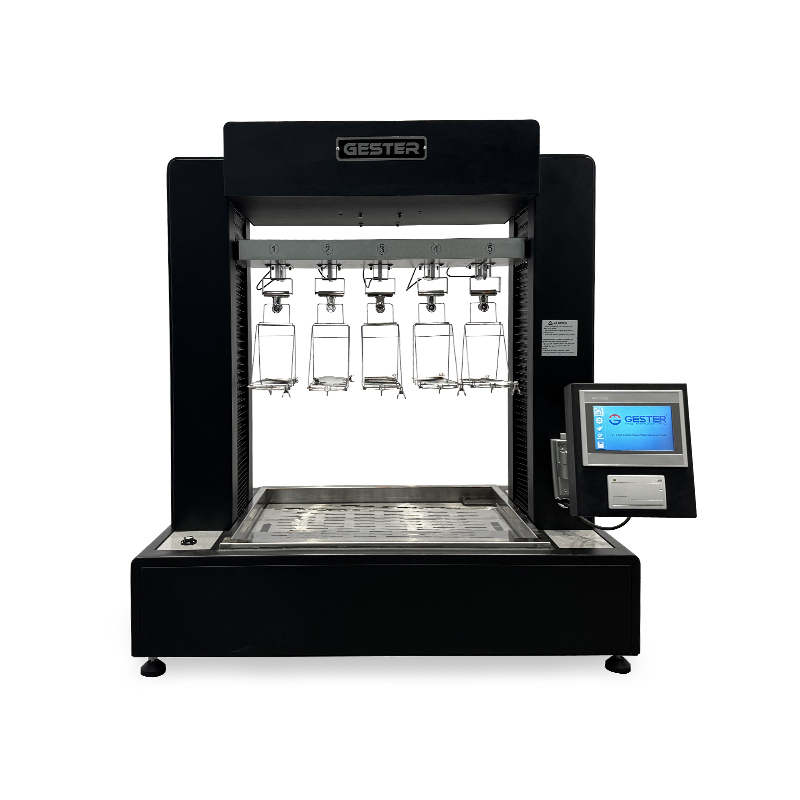
Sanitary Napkin Water Absorbency Tester
Why These Tests Matter
Each test method is designed to simulate real-world scenarios, ensuring that the sanitary napkins perform effectively. These tests also help manufacturers:

Enhance Product Design: Identify weak points in product structure and improve them.
Ensure User Safety: Verify that products meet health and safety standards.

Build Brand Trust: High-quality products boost consumer confidence and brand loyalty.


How GESTER Instruments Facilitate Testing
GESTER Instruments provides state-of-the-art equipment like Sanitary Napkins Backing Peeling Strength Machine GT-CN18, Sanitary Napkins Absorption Speed Tester GT-CN19, and Sanitary Napkin Water Absorbency Tester GT-CN20 to enable precise and reliable testing. Our machines are engineered with advanced features, ensuring repeatable results and compliance with industry standards.

Choosing the right testing solutions not only guarantees product quality but also reinforces brand reputation in a competitive market. With thorough testing, manufacturers can confidently deliver products that prioritize user comfort, safety, and satisfaction.

Softness Tester GT-CN05 A Comprehensive Guide

Softness Tester GT-CN05: A Comprehensive Guide

When it comes to evaluating the softness of materials like high-grade toilet paper, tobacco flakes, fiber paper products, and more, precision is key. Enter the Softness Tester GT-CN05 — a state-of-the-art device designed to ensure accuracy, reliability, and efficiency in softness testing. We will explore the applications, features, specifications, and advantages of this essential instrument, helping you understand why it’s the best choice for your testing needs.

Softness Tester


Applications of the Softness Tester GT-CN05


The Softness Tester GT-CN05 is a versatile device capable of determining the softness of various materials. Industries that benefit from this tester include:

Hygiene products: Evaluating the softness of high-grade toilet paper ensures customer satisfaction and meets quality standards.

Tobacco industry: Ensuring the right softness in tobacco flakes impacts production quality.

Paper manufacturing: Softness in fiber paper products is a crucial aspect of usability and performance.

Its wide application spectrum makes the Softness Tester GT-CN05 indispensable for maintaining high-quality standards across different industries.

Key Features of the tissue paper softness tester

The Softness Tester GT-CN05 boasts cutting-edge features that set it apart from its competitors. Let’s delve into what makes it a standout choice:

1. Leverage Principle for Precision

The measuring device incorporates the principle of leverage, significantly reducing data fluctuations caused by vibration. This ensures highly accurate and stable results.

2. High-Resolution Color Touchscreen

A modern, user-friendly touchscreen interface enhances operational ease, offering clear visibility of testing data and real-time force values.

3. Stepper Motor for Smooth Operation

The integration of a stepper motor guarantees precise transmission, ensuring stable and reliable performance during every test.

4. Advanced Force Sensor Technology

Equipped with a high-precision force sensor, the GT-CN05 softness tester for toilet paper delivers exceptionally accurate testing results, making it ideal for industries requiring stringent quality control.

5. Comprehensive Data Handling

This device can store data from up to 30 groups of 20 tests each, with separate memory for horizontal and vertical data. These records are easily accessible and printable, streamlining data management.

6. Real-Time Test Process Monitoring

During the test, real-time force values and graphical representations are displayed, enabling precise observation and analysis.

7. Built-in Thermal Printer

The built-in micro thermal printer generates reports quickly and quietly, with clear fonts for easy readability. This functionality simplifies result documentation and reduces noise in laboratory environments.

Technical Specifications

Here are the detailed technical specifications of the Softness Tester GT-CN05:

Testing Range: 10-1000mN

Testing Resolution: 0.1mN

Indication Error: ≤±1% FS (Allowable for 20% or less of the upper limit exceeding the specified range: 1mN)

Indicative Variability: <1%

Test Head Stroke: (12.0 ± 0.5)mm (Adjustable)

Test Head Press-in Depth: 8mm ± 0.5mm

Slit Width: 5mm, 6.35mm, 10mm, 20mm (Width error not exceeding ±0.05mm)

Testing Speed: (1.2 ± 0.24)mm/s

Printer: Thermal printer for immediate result reporting

These specifications underline the instrument’s ability to deliver accurate and repeatable results under varying conditions.

Benefits of the Softness Tester GT-CN05

The tissue paper softness tester stands out due to its unique blend of performance, ease of use, and advanced features. Here’s why it’s the go-to choice for professionals:

1. Enhanced Accuracy

The high-precision force sensor and advanced leverage mechanism work together to deliver exceptional accuracy, reducing errors and ensuring reliability.

2. User-Friendly Design

The intuitive interface, coupled with a high-resolution touchscreen, makes the device straightforward to operate, even for new users.

3. Data Management

With ample storage for test results and built-in reporting capabilities, data management becomes seamless and hassle-free.

4. Durable and Reliable

Crafted with durable materials and advanced components like the stepper motor, the GT-CN05 promises long-term reliable performance, reducing maintenance costs.

5. Real-Time Analysis

The ability to observe real-time force values and graphical outputs ensures immediate feedback, enabling quicker decision-making.

6. Quiet Operation

The low-noise thermal printer and smooth testing mechanism contribute to a quieter working environment, enhancing comfort during testing operations.

How to Get the Most Out of Your Softness Tester GT-CN05

To ensure the best performance and longevity of your GT-CN05 softness tester for toilet paper , follow these tips:

Calibration: Regularly calibrate the device to maintain accuracy.

Maintenance: Clean and inspect the machine after every testing cycle.

Storage: Store the tester in a stable environment, away from excessive vibration and temperature fluctuations.

Operator Training: Train your staff on optimal operation procedures to maximize efficiency and minimize errors.

Ready to elevate your testing capabilities? Choose the Softness Tester GT-CN05 and high precision, reliability, and efficiency like never before. Contact us today to learn more or place your order!

Understanding and Managing Mask Visual Field Tester GT-RA07

Understanding and Managing Mask Visual Field Tester GT-RA07

The Mask Visual Field Tester GT-RA07 is a precision instrument designed to evaluate the effective field of vision in full-face masks, half-face masks, and other respirators. Ensuring the visual field under a mask meets standard requirements is essential for user safety and comfort, particularly in industries where respiratory protection is critical, such as healthcare, manufacturing, and emergency response.

mask visual field testing machine

Key Features and Applications

The Mask Visual Field Tester GT-RA07 utilizes an apertometer to trace and measure the visual field. The primary objective is to determine whether a mask allows an adequate visual range without significant obstructions, ensuring users maintain awareness of their surroundings while wearing protective gear.

Testing Process:
- The mask is fitted onto a dummy head with lighting in each eye socket.
- The apertometer traces the shadow curves projected onto a hemispherical surface.
- Measurements include both the total field of vision and the overlapping field of vision, ensuring compliance with regulatory standards.

Acceptance Criteria


Before initiating the test, follow these preparation steps to ensure accurate results:


1. Install the Test Head Mould:
Attach the head mould and connect all necessary wires securely.

2. Head Mould Positioning:
- Adjust the head mould to the center position (0°), facing forward.
- Lock it in place to prevent any movement during testing.

3. Machine Level Adjustment:
Use the spirit level to ensure the machine is perfectly aligned.

4. Power Supply Check
- Confirm that the power source is stable and connected properly.
- Verify that both left and right lamp beads are glowing correctly.

Operational Steps

Testing with the Mask Visual Field Tester GT-RA07 involves evaluating both eyes separately and then analyzing the overlapping field of vision. Follow these steps for accurate operation:

1. Mask Installation
Fit the mask securely onto the dummy head. Ensure there is no slack or misalignment.

2. Left Eye Test
- Adjust the Head Mould: Move it to the right to position the left eye for testing.
- Activate the Left Lamp: Switch on the lamp and observe the visual field sphere.
- Plot the Curve: Trace the shadow formed on the sphere and draw the corresponding curve.

3. Right Eye Test
- Adjust the Head Mould: Move it to the left to position the right eye for testing.
- Activate the Right Lamp: Switch on the lamp and observe the visual field sphere.
- Plot the Curve: Trace the shadow formed on the sphere and draw the corresponding curve.

4. Overlapping Field Analysis
- Curve Intersection: Observe where the left and right eye curves intersect.
- Degree of Blocked Vision: Analyze the intersection to determine how much of the field of vision is obstructed by the mask.

Why Visual Field Testing Matters

Effective visual field testing ensures that respirators and masks provide:

- Safety: Users can remain aware of their environment, reducing accidents.
- Comfort: Minimizing visual obstructions enhances long-term wearability.
- Compliance: Adherence to industry standards and regulations is essential for product approval and user trust.


mask visual field testing machine


Common Industries Utilizing the mask visual field testing machine


1. Healthcare: Surgical and protective masks require unobstructed vision for precision tasks.
2. Manufacturing: Workers need clear peripheral vision to avoid accidents.
3. Emergency Response: First responders rely on masks that provide both protection and situational awareness.


What is Moving Die Rheometer GT-KR01 Complete Guide

What is Moving Die Rheometer GT-KR01: Complete Guide


The Moving Die Rheometer (MDR) GT-KR01 is a specialized instrument used to analyze the curing process of rubber compounds. GESTER will explain its purpose, application, features, working principles, and the standards.

Moving Die Rheometer


Application of the Moving Die Rheometer
The Moving Die Rheometer GT-KR01 plays a vital role in determining the rheological properties of rubber compounds during the curing phase. In practical terms, the Rubber Rheometer measures how a rubber compound behaves under specific conditions of heat and pressure, allowing researchers and manufacturers to optimize their formulations for desired performance characteristics.

The working setup of the rheometer involves placing a rubber specimen in a sealed pressurized cavity. Controlled heating is applied while the lower die produces sinusoidal oscillations. The corresponding torque response from the rubber compound is detected using a torque sensor attached to the upper die.

Key Features of Moving Die Rheometer GT-KR01
This device stands out for its advanced design and functionality. Below are the main features that define its superiority in rubber testing:

  • Advanced Rheometer Software: Equipped with cutting-edge software, the Moving Die Rheometer GT-KR01 enables in-depth analysis of the curing characteristics of rubber compounds.
  • Precision Measurements: The device can accurately determine essential curing parameters, including:
  • Scorch time (tₛ): The time required before the curing process starts.
  • Cure time (t₉₀): The time required for the rubber to reach optimal curing.
  • Cure rate: The speed at which the rubber compound cures.
  • Viscoelasticity: Measures the rubber's ability to resist deformation while retaining elasticity.
  • Cure plateau: Indicates stabilization during the curing process.
  • Research and Development Tool: Widely used in laboratories for R&D purposes, this rheometer supports innovation in rubber formulations.
  • Quality Assurance Utility: It plays a critical role in ensuring consistent and high-quality output in rubber manufacturing processes.

Standards Compliance
The Moving Die Rheometer GT-KR01 adheres to globally recognized standards, making it reliable and suitable for a variety of industrial applications:

  • GB/T 16584-1996: A Chinese national standard for rheological measurements.
  • ISO 6502-3-2018: International guidelines outlining procedures for evaluating vulcanization characteristics.
  • ASTM D5289-2017: An established American standard for determining dynamic properties of vulcanized rubbers.
By meeting these standards, the Moving Die Rheometer GT-KR01 assures compatibility and accuracy in diverse testing environments.

How the Moving Die Rheometer GT-KR01 Works
1. Sample Placement: A small sample of the rubber compound is positioned in a pressurized cavity between two dies.
2. Controlled Heating: The system applies heat at pre-specified temperatures to initiate curing.
3. Oscillation Mechanism: The lower die generates sinusoidal oscillations.
4. Torque Detection: The upper die detects the torque generated by the specimen as it undergoes the curing process. This data is then analyzed using rheometer software.
The resulting data provides a comprehensive profile of the rubber's curing characteristics, enabling better control over production processes.

Advantages of the Moving Die Rheometer
Using the Rubber Rheometer GT-KR01 comes with several benefits:

Optimized Formulations: Detailed analysis helps manufacturers fine-tune rubber compounds for specific applications.
Enhanced Efficiency: By identifying the curing times and rates, production schedules can be optimized, minimizing wastage.
Improved Product Quality: The Rubber Rheometer ensures that the end product consistently meets predefined performance standards.
Compliance with Regulations: Adherence to international standards ensures that the product is ready for global markets.

Common Applications
The Rubber Rheometer GT-KR01 finds its application across various industries where rubber is a critical material, such as:

Automotive: Testing tire compositions to ensure durability and performance.
Consumer Goods: Quality control for rubber items such as seals, gaskets, and footwear.
Industrial Manufacturing: Developing rubber components for machinery and tools.
Medical: Testing rubber formulations used in medical equipment and supplies.

Whether you’re in the automotive, industrial, or consumer goods sector, this mdr rheometer  delivers accuracy, reliability, and innovation, setting new benchmarks in rubber testing.

Automatic loader intelligent equipment to improve the loading efficiency and benefits of bagged powder products

Gachn Group's automatic loader is an efficient and stable equipment integrating CNC technology, mechatronics and servo technology, specially designed for automatic loading of bagged powder products. It represents the trend of modern industrial equipment moving towards intelligence and automation, and plays an important role in the field of bagged powder products loading. Its unique design and technical advantages not only improve loading efficiency and accuracy, but also bring significant economic and environmental benefits to enterprises.


1. Efficient vehicle scanning and space utilization

A core feature of Gachn Group's automatic loader is that it is equipped with 3D radar scanning technology, which can quickly and accurately measure and build vehicle models. Through precise scanning and intelligent modeling of the interior of the carriage, the system can judge and optimize the loading plan and maximize the utilization of the carriage space. This means that enterprises can load more bagged powder products in a limited carriage space, reduce the empty load rate, and improve transportation efficiency.


2. Intelligent loading method and flexibility

Gachn Group's automatic loading machine can not only perform intelligent identification according to the vehicle model, but also adapt to different loading methods, including horizontal and vertical packaging, to ensure that the bagged powder products are neat and stable during the loading process. The intelligent loading solution uses a precise robot control system to accurately place each bag of powder products in the car, avoiding confusion and errors that may occur during manual loading.


3. Simple operating system and environmentally friendly design

The operating interface of Gachn Group's automatic loading machine is clear and concise, and users can easily get started, reducing dependence on professional operators. During the loading process, the head of the loading machine extends into the car and drops the bag at a low position to ensure that the cement bag will not be damaged by falling to the ground. In addition, the amount of micro dust generated is greatly reduced, and it is equipped with an efficient dust collection system, which effectively reduces environmental pollution, ensures the air quality inside and outside the factory, and meets green and environmentally friendly production standards.


4. Improve corporate benefits and reduce labor costs

Considering the current labor market problems, such as difficulty in recruiting workers and high labor costs, automatic loading machines can significantly reduce labor demand and help companies reduce labor costs. Compared with traditional manual handling, the automatic loader not only improves the loading speed, but also ensures the neatness and accuracy of the loading process, reducing the loss of goods or inefficiency caused by human errors. In addition, the accuracy of automatic loading also reduces the breakage rate of powder bags and improves the overall benefits of the enterprise.


5. Stability and reliability, adapting to 24-hour continuous production

The automatic loader of Gachn Group adopts the main components of internationally renowned brands, and the overall structure enhances rigidity to ensure that the equipment maintains good performance and stability in long-term operation. Even under high load or 24-hour continuous operation, the automatic loader can still maintain efficient and accurate work performance, greatly improving the production efficiency and loading capacity of the enterprise.


6. Environmental protection and health protection

During the production process, the low-position bag drop design and supporting dust collection system of Gachn Group's automatic loader reduce the flying of dust, thereby reducing environmental pollution and creating a more environmentally friendly production environment. At the same time, this low-dust operation method also protects the occupational health of employees and reduces the risk of long-term exposure to dust environments.


7. Strong adaptability to meet diverse needs

Gachn Group's automatic loader can not only adapt to various types and sizes of transport vehicles, but also automatically adjust according to the height of the carriage and the railing, ensuring that whether it is a large or small vehicle, or a high railing or a low railing, it can be perfectly adapted. This high adaptability enables the automatic loader to perform well in diverse transportation needs, further enhancing its wide application and the transportation flexibility of the enterprise.


Summary

As an intelligent device for modern cement loading, Gachn Group's automatic loader, with its efficient space utilization, flexible loading method, simple operating system and environmentally friendly design, not only greatly improves loading efficiency and reduces labor costs, but also provides a greener and healthier working environment for enterprises. With the continuous development of industrial intelligence and automation, the automatic loader will become a tool for enterprises to improve productivity and competitiveness, helping enterprises to remain invincible in the fierce market competition.


Enhancing the Intelligence of Block Bottom Valve Bag Making Machines The Unique Advantages of AI Vision Inspection Technology

In the modern packaging industry, block bottom valve bag machines play a crucial role in the production process, serving as the core equipment for producing packaging bags. With the advancement of technology, block bottom valve bag machine technology has continually evolved, transitioning from traditional manual inspection to today’s intelligent vision inspection, making the entire bag making process more efficient and precise. Compared to traditional methods that rely on manual labor, AI vision inspection systems offer significant advantages in terms of automation, accuracy, and real-time performance, making them an important innovation in the bag making machine sector. This article will provide a detailed comparative analysis of the significant advantages of our AI vision inspection technology in defect detection.


I. Traditional Defect Detection Methods in Block Bottom Valve Bag Making Machines

In traditional block bottom valve bag machines, many devices use a scrap removal mechanism based on sensors and labels. For example, European brands such as Strarlinger and W&H typically require manual labeling of bags during the production process. The bags are marked with specific labels, and the sensors then detect the presence of these labels to identify defective bags. The working principle of this method is as follows:


Manual Labeling: Before production, operators need to manually mark each batch of bags, usually by applying specific colored, shaped, or patterned labels.

Sensor Recognition: The bagging machine is equipped with sensors that scan the label positions to check for defects. When the sensor detects a missing or mispositioned label, the machine automatically discards the defective bags.

Frequent Human Intervention: The entire process relies heavily on the accuracy and consistency of the manually applied labels. Any errors in labeling may result in inaccurate defect identification, affecting both production efficiency and product quality.

While this traditional detection method is simple, it has notable drawbacks, particularly in terms of detection precision, human involvement, and production efficiency.


II. Advantages of AI Vision Inspection Technology

In contrast to traditional scrap removal mechanisms, Gachn Group's block bottom valve bag making machines employ AI vision inspection systems, which use high-speed cameras and deep learning algorithms to precisely detect various defects in bags without the need for pre-applied manual labels. The specific advantages of this technology include:


1. No Need for Manual Labels, Precise Automatic Detection AI vision inspection technology eliminates the need for manually applied labels on bags. Instead, it uses high-definition cameras and AI algorithms to scan the surface of the bags in real-time and analyze the image data. This method enables the system to directly identify fabric roll defects, bag making process defects, and printing defects, such as misprinted positions, and fabric flaws.

· No Labeling Required: There is no need for manual labeling on each packaging bag, reducing human error and inconsistencies in the labeling process.

· High Efficiency and Precision: AI algorithms can identify subtle defects with extremely high scanning precision, detecting even the smallest flaws that traditional methods may miss.


2. Fully Automated Inspection, Significantly Reducing Human Intervention Traditional block bottom valve bag making machines rely on manual labeling and sensor detection, which inevitably requires significant human intervention. In contrast, the AI vision inspection system fully automates the inspection process through intelligent image recognition and analysis. This eliminates the need for manual involvement and significantly reduces human errors and operational complexity.

Lower Labor Costs: Since the AI vision system automatically performs inspection tasks, it reduces the labor intensity and costs associated with manual operations.

Improved Production Efficiency: Automation in defect detection means the time spent on inspection within each production cycle is significantly reduced, enhancing overall production efficiency and minimizing downtime.


3. Multi-dimensional Detection Capabilities, Covering More Defects AI vision inspection technology offers comprehensive, multi-dimensional defect detection for various stages of the bag making process, including fabric roll defects, printing defects, and bag shape defects. This extensive coverage is unmatched by traditional label-based detection systems.

•  Fabric Roll Defect Detection: High-speed cameras quickly capture fabric roll defects such as tears, holes, seams, and stains, with no need for manual intervention.

Bag Making Process Defect Detection: During the bag forming process, the AI vision system can promptly detect issues such as shape deviations, bottom patch misalignment during heat sealing, folds, and uneven openings.

Printing Defect Detection: For printing quality, the AI vision system can accurately detect printing misalignment, defects, and other issues, ensuring that every bag meets high-quality standards.


4. Real-time Feedback and Adjustment, Optimizing the Production Process AI vision inspection systems not only detect defects efficiently but also provide real-time feedback, offering dynamic suggestions for adjustments to the block bottom valve bag making machine's production process. For example, when a particular defect occurs frequently, the system can issue an alert to inform operators to inspect the equipment or adjust production parameters, thereby preventing large-scale defective products from being produced.

•  Real-time Data Feedback: Defect data from each production stage is fed back to the system, providing detailed reports on the production status.

•  Optimized Production Decisions: Based on real-time feedback, operators can make timely adjustments during the production process, further optimizing production efficiency and product quality.


5. Intelligent Learning and Self-Optimization In addition to performing inspection tasks, AI vision inspection systems have the ability to learn and optimize themselves. As the system is used over time, the AI algorithms continuously adjust and improve based on real production data, enhancing detection accuracy and efficiency.

Deep Learning Algorithms: The AI system constantly improves its defect recognition capabilities through deep learning, becoming more accurate as production data accumulates.

High Adaptability: Whether it's changes in fabric types or adjustments in production processes, the AI vision system can quickly adapt and maintain high operational efficiency.


III. Conclusion

In conclusion, Gachn Group's AI vision inspection technology offers significant advantages over traditional scrap removal mechanisms, with features such as no need for manual labels, fully automated inspection, high precision, real-time feedback, and self-optimization. As intelligent technology continues to develop, AI vision inspection systems will become an essential core technology in the bagging machine industry, helping businesses improve production efficiency, reduce costs, and enhance product quality, ultimately achieving an intelligent upgrade of the packaging production process.


The introduction of AI vision inspection technology not only provides a new solution for the intelligent transformation of the packaging industry but also drives the entire industry toward higher standards, creating superior packaging products.


Introduction To PP Square Bottom Valve Bags And New Investment Opportunities

1. Overview and Development of PP Square Bottom Valve Bags


PP square bottom valve bags are high-strength composite woven bags made primarily from polypropylene (PP) through a unique heat-sealing process. Developed by Austria’s Starlinger company in the 1990s, these bags quickly gained popularity in industries like cement, fertilizer, and animal feed due to their eco-friendliness, lightweight design, durability, and cost-effectiveness.

Traditional cement and powder packaging typically used paper or plastic bags, which often faced issues like insufficient strength, poor resistance to damage, and inadequate moisture-proofing. PP square bottom valve bags address these shortcomings with innovative production techniques and material improvements, making them a globally recognized packaging solution.

Gachn Group's PP square bottom valve bag-making machines stand out for their advanced technology and production efficiency. Fully automated, these machines handle everything from cutting woven fabrics to outputting finished bags in a single streamlined process, ensuring high productivity and consistent quality.


2. Types of PP Square Bottom Bags


Based on design, functionality, and application, PP square bottom bags can be categorized into the following:


01. Valve Bags

Equipped with automatic sealing valves, suitable for automated filling equipment.

Micro-perforated surfaces allow air to escape quickly, preventing powder leakage.

Ideal for products with high flowability or requiring efficient filling, such as cement, gypsum powder, and chemical powders.

By valve type:

    ♦ Long-valve bags: Feature extended valve openings for applications requiring additional sealing or specific filling equipment.

    ♦ Short-valve bags: Designed for quick and efficient industrial filling processes.

By material:

   ♦ PP Woven Valve Bags: Made of polypropylene fibers, offering high mechanical strength and water resistance. Laminated options enhance moisture-proof performance.

   ♦ BOPP Valve Bags: Coated with high-gloss BOPP film, providing superior waterproof and dustproof properties, along with high-definition printing for branded packaging. Common in fertilizers, animal feed, and food products requiring high visibility.

   ♦ Paper-Plastic Composite Valve Bags: Comprising an outer layer of PP woven fabric and inner kraft paper, they combine high strength and water resistance, making them ideal for transporting building materials in humid regions.

02. Open-Top PP Square Bottom Bags

Feature an open-top design for manual or machine sealing, catering to diverse packaging needs.

Commonly used in fertilizers, animal feed, food products, and industrial raw materials.

The square-bottom design ensures stable stacking and easy transportation, making them suitable for high-capacity products like 40-50 kg of cement or mortar.

03. Hand-Carry PP Square Bottom Bags

Open-top design with integrated handles, making them reusable as durable shopping bags.


3. Applications of PP Square Bottom Valve Bags


Thanks to their exceptional performance, PP square bottom valve bags are widely used in various industries:

01. Construction Materials

   ♦ Packaging for cement, mortar, gypsum, and other powder or granular materials.

   ♦ Square-bottom design aids stacking and transport, with excellent resistance to damage.

02. Agriculture and Chemicals

   ♦ Packaging for fertilizers, pesticides, seeds, and animal feed.

   ♦ Offers moisture resistance and long-term preservation, ensuring product quality.

03. Food Industry

   ♦ Used for flour, rice, cornmeal, and similar products.

   ♦ Made with food-grade materials and breathable designs to ensure hygiene and safety.

04. Industrial Raw Materials and Other Applications

   ♦ Includes packaging for minerals, plastic pellets, and composite materials.

   ♦ Provides reliable protection and high compression resistance.


4. Advantages of PP Square Bottom Valve Bags


01. High Strength and Durability: Made from polypropylene materials with heat-sealing technology, these bags exhibit excellent tensile strength and abrasion resistance, ideal for heavy loads and harsh transportation conditions.

02.Superior Moisture Resistance: The heat-sealed and micro-perforated design makes the bags both waterproof and capable of venting air during filling, preventing pressure-related damage.

03. Eco-Friendly: Produced without adhesives, the materials are 100% recyclable, minimizing environmental impact.

04. Automation-Friendly: Designed specifically for automated filling equipment, improving production efficiency and reducing labor costs.

05.Brand Promotion: BOPP bags support high-definition color printing, making them a top choice for branding and market differentiation.


5. PP Square Bottom Valve Bag-Making Machines: Driving Efficiency


Gachn Group’s PP square bottom valve bag-making machines are essential for producing these innovative bags. Their automated and precise production processes offer significant benefits:

01.Fully Automated Production: Integrates cutting, forming, heat-sealing, and outputting into a single production line, drastically reducing labor requirements.

02.High Productivity: A single production line can produce tens of millions of bags annually, meeting large-scale market demands effortlessly.

03.Stability and Consistency: Advanced heat-sealing and material handling systems ensure every bag meets international quality standards, with minimal defects.

04.Energy Efficiency and Eco-Friendliness: Optimized energy use reduces consumption by over 30% compared to traditional processes, while adhesive-free production supports sustainability goals.

05.Versatility: Capable of producing various bag types (valve bags, open-top square bottom bags, hand-carry bags) with quick configuration changes to meet diverse market demands.


6. Investment Analysis for PP Square Bottom Valve Bags


01. Strong Market Demand and Profit Potential:

The global demand for high-strength, eco-friendly packaging continues to grow, especially in cement, fertilizer, and food industries.

PP square bottom valve bags offer high added value and unique technical advantages, ensuring investors a competitive edge.

02. Reduced Operational and Logistics Costs:

Compared to traditional paper or plastic bags, these bags are lighter, more durable, and less prone to damage, reducing transportation and storage losses.

Optimized packaging costs translate to greater profit margins.

03. High Production Efficiency:

Gachn Group’s automated production lines can produce millions of bags annually, meeting large-scale demand with ease.

Low per-unit production costs provide significant economies of scale.

04. Brand Value Enhancement:

High-quality BOPP bags with vibrant printing enhance brand recognition and enable market differentiation, attracting more customers.

05. Short Payback Period and High ROI:

With strong demand in industries like cement, fertilizer, and animal feed, PP square bottom valve bags typically yield higher profit margins than conventional packaging.

Most investments can achieve payback within 2-3 years.


7. Future Trends


AI Visual Inspection and Waste Removal: Integrating AI technology to automatically detect and remove defective bags, reducing costs    and improving efficiency.

Eco-Friendly Material Upgrades: Developing biodegradable high-performance materials to align with green economy goals.

Expanded Applications: Exploring opportunities in food, pharmaceuticals, and high-end industrial sectors to broaden market reach.


Conclusion


With superior performance, diverse product types, and extensive applications, PP square bottom valve bags have become a preferred packaging solution in modern industry and commerce.

Gachn Group’s fully automated PP square bottom valve bag-making machines provide unmatched efficiency and quality, making them an ideal choice for industry investors. By investing in PP square bottom valve bag production, businesses can meet market demands for high-quality packaging, achieve economies of scale, and capitalize on environmentally sustainable and differentiated solutions to gain a stronger foothold in the global packaging market.

What is the automatic bending Angle measurement system of CNC bending machine?

The accurl automatic bending Angle measurement system of CNC bending machine is a system used to measure and adjust the bending Angle of CNC bending machine. It usually consists of sensors, data acquisition devices, control systems and display devices.


The sensor is usually an Angle sensor installed on a CNC bending machine to measure the Angle change during the bending process in real time. These sensors can be photoelectric sensors, laser sensors or displacement sensors, etc., which can accurately detect the bending Angle of the workpiece.


The data acquisition device is responsible for receiving the Angle data measured by the sensor and transmitting it to the control system for processing and analysis. These data acquisition devices usually output measurement results in the form of digital signals.


The control system is the core of the whole automatic bending Angle measurement system, which is responsible for receiving and processing the measured Angle data, and comparing and adjusting based on the preset bending parameters. The control system usually adopts microprocessor or embedded system to realize automatic control and adjustment.

cnc-press-brake

Display devices are used to present measurement results to operators or engineers in an intuitive manner. Common display devices include liquid crystal displays or computer screens that display measured Angle values, graphical representations, or other relevant information to help the operator make immediate judgments and adjustments.


Through the automatic bending Angle measurement system of the CNC bending machine, the operator can monitor the bending Angle of the workpiece in real time, accurately control and adjust the working parameters of the CNC bending machine to meet the precise processing requirements, improve production efficiency and product quality. This kind of automation system can greatly simplify the operation process, reduce the human error, and improve the production efficiency and precision.

Welcome to consult more bending machine related knowledge!

High-Quality Aeration Blades – Premium Products From Anhui, China

In modern gardening and lawn management, the use of  aerators is becoming increasingly popular. As an essential consumable for these machines, the quality of aeration blades directly affects their performance and effectiveness. We are proud to come from a renowned town in Anhui Province, China, known for its exceptional knife manufacturing expertise, specializing in high-quality aeration blades, including Lawn Aerator Tines

Product Features

* Premium Material: Our aeration blades are crafted from high-strength alloy steel, offering excellent wear resistance and corrosion protection, ensuring outstanding performance in various soil conditions.

* Sharp Design: Each blade is precision-engineered to feature superior sharpness, allowing for effortless penetration into the ground, reducing operational resistance and increasing work efficiency.

* Variety of Specifications: We provide a range of sizes and dimensions, compatible with different aerator models, including Lawn Aerator Solid Side-Eject Tines, ensuring versatility and ease of use for all customers.

* Easy Installation: Designed for convenience, users can quickly replace the aeration blades with minimal downtime, enhancing overall operational efficiency.

Price Advantage

We are committed to offering our customers highly competitive pricing. By streamlining our production processes and utilizing effective supply chain management, we can keep costs in check. Furthermore, our aeration blades not only maintain exceptional quality but are priced 20% to 30% lower than similar products on the market. This price advantage makes it easier for more users to purchase and benefit from Durable Aerating Tines, optimizing their lawn care efforts.

Contact Us

Whether you are a gardener, landscape designer, or lawn maintenance company, our aeration blades are your ideal choice. If you are interested in our products or have any questions, please feel free to reach out to us through the following:

· Websitehttps://www.dxlfgolf.com/

· Mobile: +86 13981920100

· Email2556034587@qq.com / lfgolf888@gmail.com

· Address: Bowang Town, Bowang District, Ma'anshan City, Anhui Province, China

Choose our aeration pins to safeguard your aerator and make your lawn management more efficient and effortless!

High-Quality Lawn Mower Bed Blades to Enhance Your Mowing Experience!

High-Quality Lawn Mower Bed Blades to Enhance Your Mowing Experience! In the gardening industry, lawn mowers are essential tools for maintaining lawns, and the bed blade—being the core component of the mower—directly impacts cutting performance and overall efficiency.


As a manufacturer of lawn mower bottom blades, including Lawn Mower Rotary Blades and Turf Sod Cutter Blades, based in Bowang District, Ma'anshan City, Anhui Province, we are committed to providing you with high-quality and cost-effective blade accessories to help you achieve the perfect lawn care.


Outstanding Quality Advantages
Our bottom blades are made from high-quality alloy steel and undergo rigorous heat treatment processes to ensure exceptional hardness and wear resistance. Each blade is precisely machined and thoroughly inspected for quality, featuring sharp edges that effectively cut through various types of grass, thus enhancing mowing efficiency. Even in complex lawn environments, our blades maintain stable cutting performance. Additionally, our anti-rust treatment significantly extends the lifespan of the blades, reducing wear and tear caused by environmental factors.


Competitive Pricing Advantage
Not only do we offer outstanding quality in our lawn mower bed blades, but our prices are also highly competitive. By selling directly from our factory to customers, we efficiently eliminate middlemen, which allows us to pass significant savings on to you. Whether you are looking to make bulk purchases or trying out smaller quantities, we provide flexible pricing and discount policies to suit your budget.


Free Sample Trial—Choose with Confidence
To help you gain a better understanding of our product quality, we are happy to offer samples for trial use. By experiencing our blades firsthand, you can appreciate their superior performance and quality. (Please note that international shipping fees for the samples will need to be covered by you.) However, we will ensure that the samples are sent promptly and safely to allow for your evaluation and decision-making.


Contact Us
If you are interested in our lawn mower bed blades, please feel free to reach out. We look forward to providing you with high-quality products and services, working together to enhance your lawn care efforts!


· Website: https://www.dxlfgolf.com/

· Mobile: +86 13981920100

· Email: 2556034587@qq.com / lfgolf888@gmail.com

· Address: Bowang Town, Bowang District, Ma'anshan City, Anhui Province, China

Choose us for a more effortless and efficient lawn care experience!