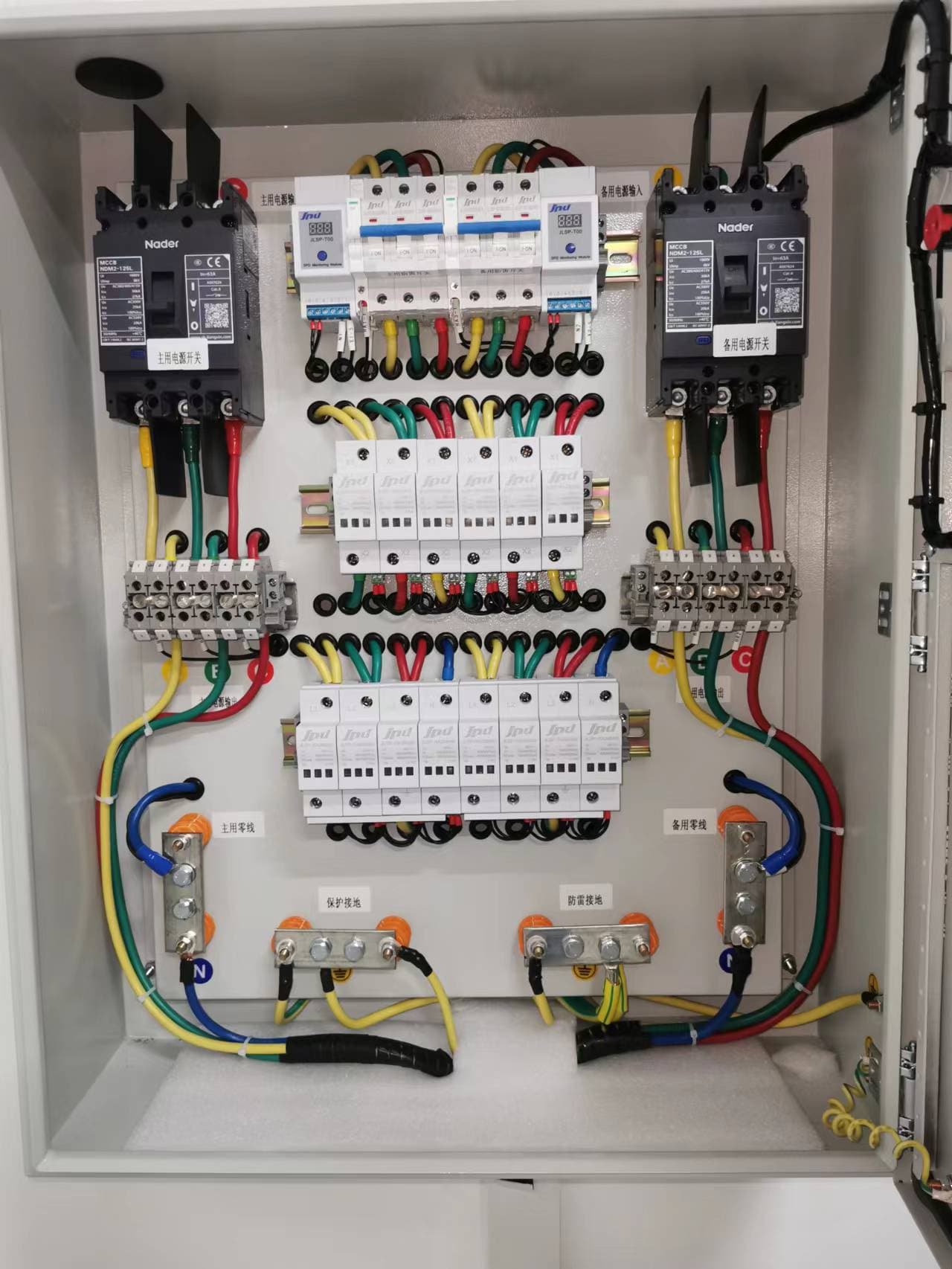
1)Required by the standard, the national standard is mandatory
GB 50057 Design code for protection of Structures against lightning:
Article 4.5.4 clearly requires that lightning protection devices should be inspected regularly, generally once a year;toflammable and explosive places, the inspection cycle needs to be shortened to once every six months.
Article 6.4.3 stipulates that the grounding resistance value must meet the design requirements (usually ≤10Ω, ≤4Ω in important places), otherwise rectification is required.
2)Industry norms and legal basis
"Work Safety Law": requires enterprises to fulfill their primary responsibility for lightning protection safety, and those who fail to conduct regular inspections and cause accidents must bear legal responsibility.
IEC 62305 series of standards: The International Electrotechnical Commission emphasizes that lightning protection systems must be periodically tested to ensure their effectiveness, especially in areas with high incidence of lightning.
2. Actual on-site requirements
1)Prevent direct damage from lightning strikes
Fire and explosion risks: Lightning strikes can directly ignite flammable materials in places such as gas stations and chemical plants. Testing ground resistance and equipotential bonding can eliminate potential spark discharges.
Structural safety: Corrosion or breakage of lightning arresters may result in the inability to safely discharge lightning current, causing damage to buildings.
2)Protect equipment and systems
Vulnerability of electronic equipment: Lightning strikes or power surges can damage precision equipment such as servers and medical devices. Testing SPD performance (such as residual voltage and leakage current) can ensure that it effectively limits voltage.
Power system stability: Detection of shielding and wiring compliance of distribution lines can reduce the impact of lightning-induced overvoltage on the power grid.
3)Adapt to environmental changes
Facility aging: Grounding corrosion and SPD component degradation are inevitable over time, and regular inspections can help replace failed components in a timely manner.
Site renovation: Building expansion or use change may damage the original lightning protection system, requiring reassessment of lightning protection level and adjustment of configuration.
4)Necessary needs for special places
Communication base stations and data centers: The high reliability of the lightning protection system must be ensured to avoid business interruption and data loss.
Hospitals and airports: Lightning protection failure may threaten life safety, and detection is a core measure to ensure the uninterrupted operation of critical facilities.
3. Undetected potential risks
1)Legal liability and economic compensation
If a lightning strike accident occurs due to failure to detectit, the company may face administrative penalties, civil compensation or even criminal liability (such as major safety accident crime).
2) Hidden safety risks
For example, if the grounding resistance exceeds the standard but is not discovered, the current cannot be effectively discharged when lightning strikes, which may cause step voltage electric shock or equipment damage.
3) Shortened equipment life
The leakage current of an SPD that has not been detected for a long time will increase, which may accelerate aging and eventually lose its protective function, causing frequent equipment failures.
The beverage industry has come a long way since its inception, and so has the equipment that supports it. KOCO IMP/EXP CO., LTD has been at the forefront of beverage manufacturing for 25 years, leveraging our expertise to deliver high-quality products. As the industry evolves, so do we—embracing advancements in filling technology to meet the growing demand for efficient and sustainable beverage production.
Key Features of Modern Beverage Equipment
Today’s beverage equipment is designed for speed, precision, and versatility. Here’s what makes modern machines different:
High-speed operation: These machines are capable of processing thousands of packages per hour, maximizing productivity.
Precision filling: Ensures consistent product quality by accurately measuring and filling liquids.
Sanitary design: Stainless steel construction and easy-to-clean components ensure compliance with food safety standards.
Versatile use: Can accommodate a variety of packaging formats, including bottles, pouches, and cartons, ideal for a wide range of beverage types.
ketchup packing machine
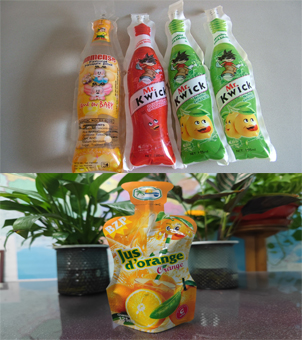
For the production of spout pouch liquid packaging.
For packaging juice, water, milk and other liquids.
Market Outlook and Trends
The market for automated beverage packaging solutions is booming, driven by consumer preferences for convenience and health. Here are the factors shaping the future:
Large-scale production: Equipment is trending toward larger capacities to optimize costs and meet large-scale production needs.
Smart technology integration: Modern machines feature IoT connectivity, real-time data monitoring, and AI-driven customization.
Sustainability focus: Innovations in eco-friendly packaging and energy-efficient operations are gaining traction.
Our Latest Innovations
At KOCO, we are committed to pushing boundaries. Our latest equipment combines advanced automation with a user-friendly interface to simplify operations while increasing efficiency. Whether you need a stand-alone juice packaging machine or complete juice treatment equipment, our team of experts will work with you to design the perfect solution for your business.
Conclusion
The beverage industry is rapidly evolving, and so is the technology that drives it. By investing in modern, versatile equipment, businesses can stay ahead of the curve while meeting consumer demands for quality and sustainability. Are you ready to change your beverage production? Let's build the future together!
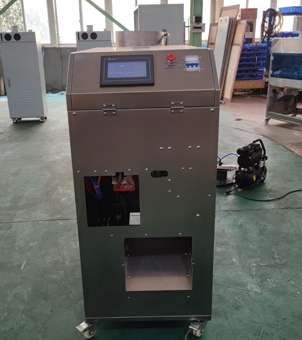
The falling ball impact tester is mainly used for impact strength test of plastics, building materials, ceramics, acrylic, glass, coatings, hardware and other products.
Test standard: GB/T9962-1998, GB/T9962-1999, JIS-K6745, A5430
Test principle: Cut a certain size of polyvinyl chloride hard sheet sample, hold the sample on the chuck of the falling ball impact tester, select a suitable steel ball and install it on the electromagnetic device, release the steel ball, let the steel ball fall freely in the center of the sample, observe the damage of the sample after impact, and calculate the damage rate after multiple tests.
Main components:
1. Main unit: intelligent operating system with pneumatic clamping and electromagnetic adsorption. In order to ensure the stable performance of the main unit, the pneumatic components used inside are all imported brands from abroad, and for the convenience of operation, a "ring light" is equipped in the middle, which is very humanized. Its shell is made of sheet metal spraying. Compared with the various stainless steel products that are the same on the market, it is not only more durable in overall performance, but also novel in appearance.
2. Steel ball: All steel balls used are of domestic unified standard specifications. Bearing steel is customized in a professional steel ball manufacturer, so the weight and diameter of the steel ball can be consistent with the test standards. Although the cost of choosing such a steel ball is much higher, it is durable and can ensure the accuracy of the experimental data
3. Foot switch: It has two opening methods: manual and foot pedal. However, since the foot pedal is more convenient for people to operate during the test, the entire test process is more humane.
4. Positioning device: The central positioning device is used, and the intelligent operation ensures the accuracy and reliability of the experimental results. It is also equipped with a protective device to make users safer during the operation and avoid similar situations where the steel ball accidentally hits people.
Furniture Universal Testing Machine GT-LA10 in Detail
We see furniture everywhere in our daily life, tables, desks, beds and chairs. When in use these pieces of furniture need to undergo some rigorous testing to ensure that they are able to withstand various external forces in actual use. So what kind of testing does furniture need? Our Furniture Universal Testing Machine GT-LA10 is a versatile, highly accurate and flexible machine capable of performing a wide range of furniture testing needs. This article will detail the applications, features and standards of the Universal Tables And Chairs Testing Machines GT-LA10.
Understanding Furniture Universal Testing Machine
Furniture Universal Testing Machine is used to test the mechanical properties of tables, desks, beds and chairs. It can perform the horizontal static load, vertical static load, impact test and durability test. These tests cover a variety of external forces that furniture may encounter in daily use, such as bearing heavy loads for a long time, sudden impacts, and wear and tear from repeated use. Through these tests, the load-bearing capacity, stability and durability of the furniture are understood so as to ensure whether the products comply with the relevant standards.
2. Multi-group cylinder configuration Up to 7 groups of cylinders are installed, one group on each side and three groups on the upper frame. All cylinders can be adjusted up and down, front and back, covering all mounting surfaces. Seven groups of cylinders can be linked or run independently, with a certain degree of flexibility and durability.
3. Bottom fixing block adjustable The position of the bottom fixing block can be adjusted according to the different specifications of the samples to increase the stability and accuracy of the testing process.
4. PC controller PC controller controls the movement of the instrument, which is intuitive and easy to operate.
5. High Precision Pressure Regulation Furniture Testing Machine adopts precision regulator to adjust the pressure and change the loading force value; high-precision force sensor senses the force value in real time, and each load group is individually adjusted and controlled, so the loading force is stable and reliable.
6.Removable loading pad Removable loading pad, can easily replace different loading pads to meet different test requirements.
What is a MIT Type Paper Folding Endurance Tester GT-N16–A Complete Guide
Paper products are folded or bent many times during daily use, such as book flipping, box folding, print processing, etc. The MIT Folding Endurance Tester evaluates the folding resistance of a material under a certain tension by simulating the folding stress of paper products in real applications. Next, we will take a closer look at the Paper Folding Endurance Tester GT-N16.
What is the MIT Folding Endurance Tester
Paper Folding Endurance Tester GT-N16 is a high-precision paper and cardboard folding resistance testing equipment, with a number of functions such as parameter testing, conversion, adjustment, display and memory. Paper Folding Endurance Tester is compact, lightweight and feature-rich, with horizontal design and stable performance, so the tester is suitable for different papers and cardboards.
Mit Paper Folding Endurance Testing Principle
The working principle of the folding endurance test for paper is based on the mechanics of materials and the analysis of the physical properties of paper, and the testing process is as follows:
The paper or cardboard sample is fixed in the clamping device of the tester.
A certain amount of tension is provided by a spring system, which causes the sample to be folded under controlled tension.
The Mit Paper Folding Endurance Tester 's folding device performs reciprocal folding to simulate the stresses on the paper or cardboard in actual use.
The sample is subjected to constant folding stresses and eventually breaks due to fatigue, and the tester records the total number of folds endured.
Test data is usually expressed in two ways:
Number of folds - a direct record of the number of folds the sample can withstand during the test. Logarithmic value of the number of double folds (base 10) - mathematically expresses the folding resistance data, which is more suitable for laboratory analysis and comparative studies.
The higher the folding resistance value, the stronger the folding resistance of the material.
Measuring range: 0 - 99999 times Folding Angle: 135±2 Folding frequency: 175±10 times/minute Folding head width: 19±1mm Folding radius: 0.38±0.02mm Spring tension: 4.91N~14.72N, every increase of 9.81N tension, the spring compression is reduced by at least 17mm. Folding mouth gap: 0.25, 0.50, 0.75, 1.00mm (four ranges) Change of tension force caused by eccentric rotation of clamping folding head: ≤0.343N
ISO 5626 (International Standard for Paper Folding Resistance Testing)
GB/T 2679.5 (China's national cardboard folding resistance test standard)
QB/T 1049 (Light Industry Folding Resistance Test Standard)
ASTM D2176 (American Society for Testing and Materials standard)
These standards ensure that the GT-N16 folding endurance test for paper's test results are accurate, repeatable and able to meet the quality control needs of different industries.
How to Operate Mit Paper Folding Endurance Tester
Acceptance
Check accessories: 1 set of wrench, 4 sets of clamps, 3pcs of weights.
Confirm power supply and connect, turn on the power switch.
Adjust the machine level according to the level meter.
Operation
Mounting the specimen: According to the thickness of the specimen, select the corresponding fixture and mount the fixture on it. Reset the fixture and start installing the specimen. Fix the specimen.
Install the weights.
Parameter setting: Click “SETTING” , there are two modes, “Counter” and “Timer” mode, select the “Counter” mode, set the counting times. Set the speed, click “TEST” to return to the test interface, click “Zero” to clear, click “TEST” to start the test. The test will automatically stop when the test is completed, and it will also stop when the specimen breaks during testing.
CNC milling machines are a cornerstone of modern manufacturing, shaping and refining metal, plastic, and other materials with unmatched precision. But what exactly is a CNC milling machine, and how does it work? How does it differ from other CNC machines like lathes? More importantly, what are the key components that make it function so effectively?
At its core, CNC milling is a subtractive machining process that uses rotating cutting tools to gradually remove material from a workpiece. These machines are widely used across industries such as aerospace, automotive, medical, and precision engineering. With advancements in technology, CNC mills now feature multi-axis capabilities, automatic tool changers, and advanced cooling systems—enhancing efficiency and accuracy like never before.
Understanding the parts and components of a CNC milling machine is crucial for anyone involved in manufacturing. In this guide, I’ll break down the essential elements that keep these machines running smoothly, from the spindle and worktable to the control system and cutting tools. Whether you're new to CNC machining or looking to deepen your expertise, this article will give you a comprehensive overview of CNC milling machine components and their functions.
How Does a CNC Machine Work?
A CNC (Computer Numerical Control) machine operates by following pre-programmed instructions to precisely cut, shape, or engrave materials such as metal, wood, plastic, and composites. The process begins with a CAD (Computer-Aided Design) file, where engineers or designers create a detailed 2D or 3D model of the desired part. This digital blueprint is then converted into G-code using CAM (Computer-Aided Manufacturing) software, which translates the design into specific commands that control the CNC machine’s movements. Once the program is loaded into the machine’s controller, the operator secures the raw material onto the machine’s worktable and selects the appropriate cutting tool. When the CNC machine begins operating, it moves along multiple axes (X, Y, and Z for basic machines, with additional A, B, and C axes for more complex ones) to follow the programmed path with extreme precision. High-speed motors, ball screws, and advanced sensors ensure accurate positioning and smooth operations. Depending on the type of CNC machine, whether it’s a milling machine, lathe, router, plasma cutter, laser cutter, or even a 3D printer; the tool either removes material (subtractive manufacturing) or adds material (additive manufacturing) to shape the final product. Throughout the process, automated monitoring systems track the machining progress to ensure consistency and quality. Once machining is complete, the part may require additional finishing processes such as sanding, deburring, or polishing before undergoing a final quality inspection, often using coordinate measuring machines (CMMs) or laser scanners to verify accuracy. CNC machines revolutionized modern manufacturing by providing high precision, repeatability, and efficiency, making them essential in industries such as aerospace, automotive, medical, and electronics manufacturing.
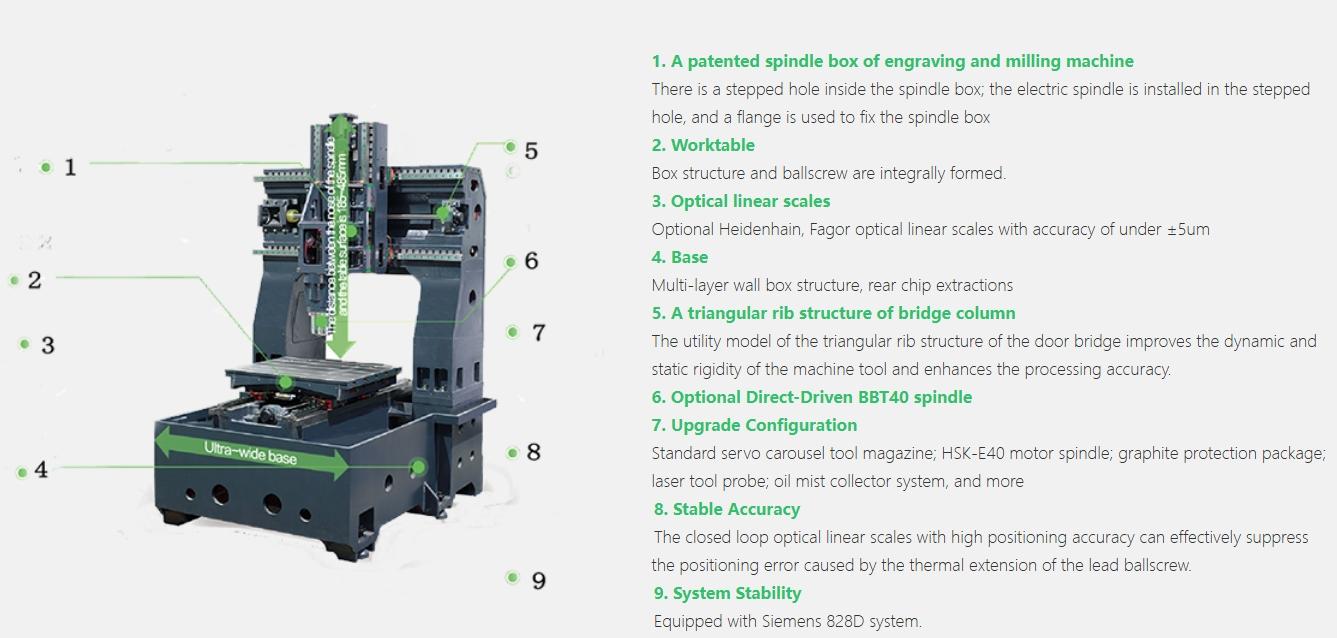
Major Parts of a CNC Milling Machine
A CNC milling machine consists of several components that work together to perform machining operations. Each part plays a crucial role in ensuring smooth and precise milling. Here is a breakdown of the primary parts of a CNC machine:
CNC Controller
The CNC controller is the brain of the machine. It interprets G-codes and converts them into precise movements by sending signals to stepper or servo motors. This eliminates the need for manual operation, making the machine more efficient and reducing human error.
Column and Base
The column and base form the foundation of a CNC milling machine. Typically made from cast iron, they provide rigidity and stability, reducing vibrations during cutting. The base supports the entire machine, while the column houses essential components like the coolant and oil systems.
Knee
The knee is an adjustable vertical part connected to the column. It facilitates vertical movement of the worktable, allowing the milling tool to reach different levels of the workpiece.
Saddle
The saddle sits on top of the knee and allows movement along the X and Y axes, positioning the workpiece correctly for machining.
Feed Mechanism
CNC machines use an electromechanical feed mechanism that controls the three-dimensional movement of the milling machine. This is powered by motors that execute movements as per the CNC program.
Work Table
The work table is the flat surface where the workpiece is placed. It includes T-slots that help secure the material using clamps or vices. Some advanced machines offer hybrid worktables that support both CNC milling and plasma cutting.
Spindle
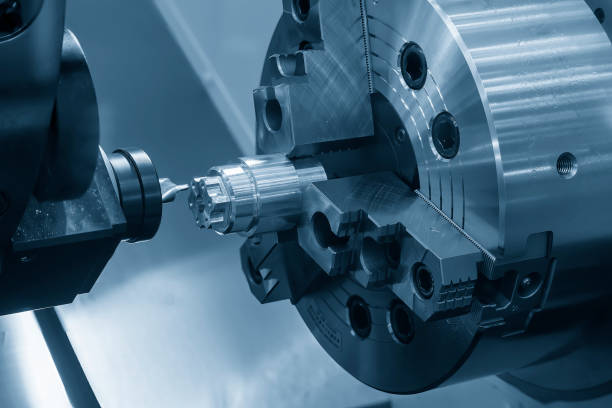
The spindle is a rotating component that holds and drives the milling tool. It is typically made of high-carbon chromium steel and can operate at various speeds, depending on the material and operation.
Milling Chuck
The milling chuck holds the cutting tool firmly in place. It consists of jaws that can be tightened or loosened to accommodate different tools.
Ram (For Vertical CNC Machines)
In vertical CNC machines, the ram is a movable arm that supports the milling head. It allows forward and backward movement for greater flexibility in machining.
Overhanging Arm (For Horizontal CNC Machines)
In horizontal CNC milling machines, an overhanging arm replaces the ram. It supports the arbor, which holds the milling cutter in place.
Arbor Support (For Horizontal CNC Machines)
The arbor support holds the arbor and cutting tool, ensuring stability and vibration reduction during cutting operations.
Common Accessories Used With CNC Milling Machines
Accessories improve the performance, safety, and efficiency of CNC milling machines. Some common accessories include:
Coolant System
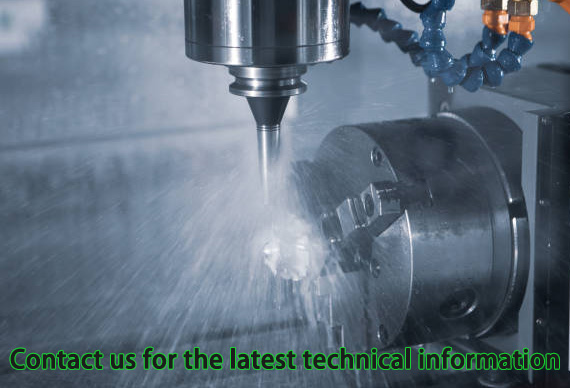
A coolant system prevents overheating by spraying coolant on the cutting area. This reduces friction, prevents tool wear, and improves surface finish. Coolants can be water-based (for heat reduction) or oil-based (for lubrication).
Powered Drawbar
A powered drawbar allows automatic tightening or loosening of the tool, reducing the time required for manual tool changes.
Safety Enclosure
A safety enclosure is a protective barrier that prevents chips, dust, and coolant splashes from flying outside the machine. This enhances operator safety.
4th Axis or Rotary Kit
A rotary kit enables 4-axis machining, allowing for the milling of cylindrical or curved surfaces. This is essential for engraving and complex part manufacturing.
Automatic Tool Changer (ATC)
An automatic tool changer (ATC) switches tools automatically based on the CNC program, making it ideal for complex machining tasks that require multiple tools.
Chip Tray
A chip tray collects metal or material chips, preventing buildup and making cleanup easier.
Machine Guards
Machine guards protect moving parts to prevent accidents, adhering to ISO 13849 safety regulations.
Most Important Tools Used with CNC Milling Machines
CNC milling machines use different cutting tools depending on the operation and material. These tools are typically made of high-speed steel (HSS) or carbide for durability.
End Mills
End mills are the most common milling tools. They come in different shapes and sizes for specific operations:
● Flat End Mills: Used for general cutting.
● Ball Nose End Mills: Used for contouring and 3D shapes.
● Corner Radius End Mills: Ideal for reducing stress on part corners.
Face Mills
Face mills are used to flatten surfaces and provide a smooth finish.
Roughing Mills
Roughing mills remove large amounts of material quickly, making them ideal for the initial cutting phase.
Slot Drills
Slot drills are designed to cut slots and pockets in materials.
Fly Cutters
Fly cutters are used for finishing operations and produce an extremely smooth surface.
Thread Mills
Thread mills cut internal or external threads in materials.
Reamers
Reamers enlarge holes and improve precision.
Drill Bits
Although CNC milling machines can perform drilling, specialized drill bits are sometimes used to create holes.
Top 8 Factors That Affect the Cost of a CNC Milling Machine
The cost of a CNC milling machine varies significantly based on its size, capabilities, and additional features. While entry-level machines may cost a few thousand dollars, high-end industrial models can range into the hundreds of thousands.
Understanding the key factors influencing the price of a CNC milling machine is essential for businesses and manufacturers looking to invest in the right equipment. Below are the eight most significant factors that impact the cost of a CNC milling machine.
Table Size: Larger Work Areas Mean Higher Costs
The size of the machine’s worktable is one of the primary factors affecting its price. CNC mills come with different table sizes, ranging from small benchtop models to large industrial machines capable of handling massive workpieces.
Why Does Table Size Matter?
● Larger tables allow for machining bigger parts, making them essential for industries like aerospace and automotive.
● A bigger table means more material is needed for construction, increasing the overall cost.
● Large CNC mills require stronger motors and rigid structures to maintain precision across a wide working area.
Example: A small benchtop CNC mill with a 12" x 18" table may cost around $5,000, while a large 60" x 120" CNC milling machine used in aerospace can cost over $150,000.
Spindle Power: More Power for Tougher Materials
The spindle is the heart of a CNC milling machine, responsible for rotating the cutting tool at high speeds. Spindles come in different power ratings, typically measured in horsepower (HP) or kilowatts (kW).
How Spindle Power Affects Cost
● Higher-powered spindles allow for machining harder materials like steel, titanium, and Inconel.
● Machines with powerful spindles have stronger motors, requiring better cooling systems and durable bearings, increasing cost.
● High-RPM (Revolutions Per Minute) spindles, such as 30,000 RPM spindles, are more expensive but offer better precision for delicate machining.
Example:
● A 3 HP spindle suitable for soft metals and plastics costs less.
● A 15 HP high-speed spindle used in aerospace applications costs significantly more.
Frame Rigidity: Stronger Machines Cost More
The rigidity of a CNC milling machine directly affects precision, durability, and cost. A machine with a rigid frame experiences less vibration during machining, ensuring accurate cuts and a longer lifespan.
What Affects Frame Rigidity?
● Material Composition: Machines made from cast iron or steel offer better stability but are more expensive.
● Weight and Reinforcement: Heavy-duty frames provide better accuracy but require higher manufacturing costs.
A lightweight aluminum-framed CNC mill is affordable but lacks stability for heavy-duty applications. In contrast, a steel-framed industrial CNC mill offers better precision but costs significantly more.
Tool Capacity: More Tools, More Cost
The number of tools a CNC machine can hold and automatically change during operation impacts both productivity and cost. CNC mills come with manual or automatic tool-changing systems (ATC).
How Tool Capacity Affects Cost
● Basic CNC mills with manual tool changes are cheaper but slow down production.
● ATC-equipped machines can switch between multiple tools within seconds, increasing efficiency but also the cost.
● Larger tool magazines (holding 10, 20, or even 100+ tools) require more sophisticated control systems, making them more expensive.
Example: A 3-tool CNC mill costs significantly less than a 20-tool capacity industrial CNC milling center, which can cost upwards of $50,000 due to its automation.
Number of Axes: More Complexity, Higher Price
CNC milling machines are classified based on the number of axes they can move in:
● 3-Axis CNC Mills: Moves along X, Y, and Z axes (most affordable).
● 4-Axis CNC Mills: Adds rotation around one axis, allowing for more complex cuts.
● 5-Axis CNC Mills: Adds rotation around two axes, making it ideal for complex aerospace or medical components but significantly increasing cost.
Why More Axes Cost More?
● More axes require advanced motors and controllers to synchronize movement.
● Higher precision components, such as rotary tables and multi-axis control software, add to the overall cost.
● Increased flexibility and automation allow for complex part machining in a single setup, reducing labor costs.
Example:
● A 3-axis CNC mill may cost $10,000 to $50,000.
● A 5-axis CNC mill with complex software and hardware may start at $100,000+.
Control System: More Advanced CNC Controllers Cost More
The CNC control system is the brain of the machine, interpreting G-code and controlling movements. Different brands and models of controllers vary in capabilities and price.
Control System Factors That Affect Cost
● Processing Speed: High-speed processors reduce cycle times but increase machine costs.
● User Interface: Intuitive touch-screen controllers with 3D simulation capabilities cost more.
● Brand Reputation: Fanuc, Siemens, Haas, and Heidenhain controllers are high-end, while basic controllers like Mach3 or GRBL are cheaper.
Example: A basic Mach3 controller costs a few hundred dollars, while an advanced Siemens 840D CNC controller can cost several thousand dollars.
Brand and Build Quality: Trusted Brands Demand Higher Prices
CNC milling machines from renowned brands tend to cost more due to their reputation, quality, and after-sales support.
Example: A generic Chinese CNC mill may cost $5,000, whereas a Mazak 5-axis CNC machine could cost $250,000 due to superior quality and reliability.
Accessories and Add-Ons: Enhancing Performance at a Cost
CNC milling machines can be customized with accessories to improve efficiency and precision. These add-ons increase the overall cost.
Common CNC Machine Accessories
● Coolant Systems: Extends tool life by reducing heat.
● Rotary Kits: Enables additional axes of movement.
Example: Adding an automatic coolant system may cost an extra $2,000, while a full machine enclosure could add $5,000 or more.
Conclusion
CNC milling machines are essential for precision manufacturing, and their efficiency depends on their components, accessories, and tools. Investing in the right machine requires evaluating table size, spindle power, frame rigidity, and automation features. While entry-level CNC mills are suitable for small businesses, high-end industrial CNC mills are best for large-scale production. Understanding these factors will help you choose the best CNC milling machine for your needs.
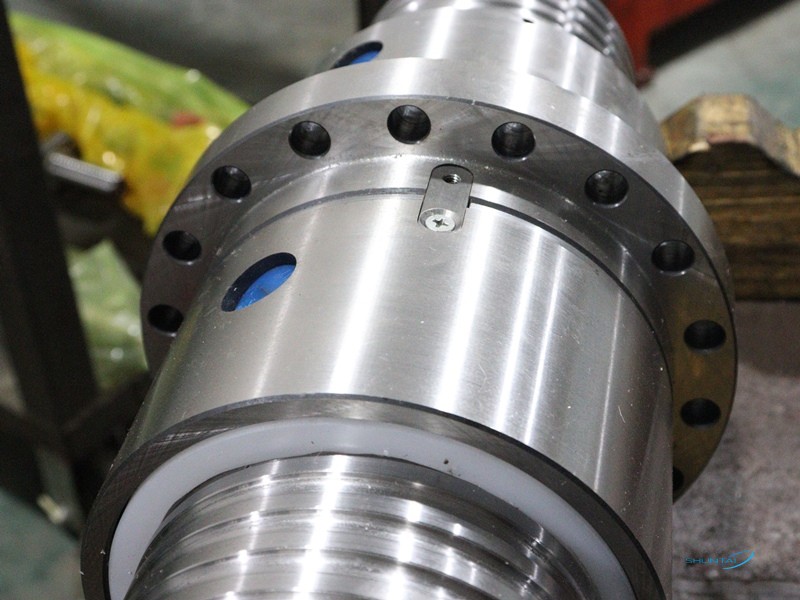
Preload adjustment of ball screws is a key step to ensure their high precision, high rigidity and long life. The role of preload is to eliminate the gap between the ball and the raceway, reduce the reverse clearance (backlash), and improve the axial rigidity and vibration resistance of the system. However, excessive preload may cause heating, increased wear and even jamming, so the adjustment must strictly follow the technical specifications. The following are the detailed methods and precautions for preload adjustment:
1. Purpose of preload adjustment
Eliminate axial clearance: Ensure that the screw has no empty stroke when moving forward and backward.
Improve rigidity: Enhance the system's ability to resist deformation due to load changes.
Extend life: Reasonable preload can evenly load the ball and avoid local wear.
Reduce vibration and noise: Reduce impact and abnormal noise caused by clearance.
2. Main methods of preload adjustment
a. Double nut preload method (most common)
Principle: Apply opposite axial forces through two nuts to squeeze the ball into contact with the raceway.
Steps:
Install double nuts: Install two ball nuts in reverse on the same screw shaft.
Apply preload: rotate the two nuts to bring them closer together, compress the elastic element in the middle (such as a disc spring) or directly lock them through the thread.
Adjustment method:
Torque control method: tighten the nut to the specified torque value with a torque wrench (refer to the manufacturer's data).
Displacement control method: measure the distance between the two nuts and adjust to the preset compression amount (usually 1%~3% of the lead).
Lock the nut: use a locking washer or thread glue to fix the adjusted position.
b. Shim adjustment method
Applicable scenarios: single nut structure or occasions where the preload needs to be accurately adjusted.
Steps:
Add a shim between the nut end face and the mounting seat.
Change the axial relative position of the nut and the screw by increasing or decreasing the thickness of the shim, and compress the ball and raceway.
The preload needs to be tested repeatedly until the target value is reached.
c. Spacer adjustment method
Principle: add a spacer (sleeve) of a specific length between the double nuts, and control the preload by changing the length of the spacer.
Advantages: High preload accuracy, suitable for equipment with high rigidity requirements (such as CNC machine tools).
Steps:
Measure the original spacing between the two nuts.
Calculate the required spacer length based on the preload amount (usually the required compression amount = spacer length - original spacing).
Install the spacer and lock the nut.
d. Variable lead method (preload type ball screw)
Principle: The manufacturer changes the lead of the ball circulation path to make the ball preload in the nut.
Features: Users do not need to adjust, and can obtain standard preload by direct installation (need to select according to the load).
3. Key parameters for preload adjustment
Preload level: usually divided into light preload (C0/C1), medium preload (C2/C3), heavy preload (C5), which needs to be selected according to the load and accuracy requirements.
Preload amount calculation:
Preload amount ≈ 0.05~0.1 times the elastic deformation corresponding to the rated dynamic load.
Empirical formula: preload = (5%~10%) × lead (refer to the manufacturer's manual).
Preload detection indicators:
Axial rigidity: The displacement after applying external force must be less than the allowable value (such as 1μm/N).
Reverse clearance: measured with a micrometer, the target value is usually ≤5μm.
IV. Detection and verification after adjustment
Torque test:
Manually rotate the screw to feel whether the resistance is uniform and avoid local jamming.
Use a torque meter to measure the driving torque and compare it with the manufacturer's recommended range (re-adjustment is required if it exceeds the limit).
Reverse clearance detection:
Fix the micrometer contact to the nut, move the screw in the forward and reverse directions, and record the displacement difference.
Temperature monitoring:
Run without load for 30 minutes to check whether the temperature rise is normal (generally ≤40℃).
V. Precautions
Avoid over-preloading: Excessive preloading will cause a sharp increase in friction heat, accelerated wear and even sintering.
Lubrication management: After preload adjustment, it is necessary to add an appropriate amount of grease. It is recommended to use high-speed and high-load lubricants.
Environmental adaptability: The preload amount needs to be re-checked in high or low temperature environments (affected by the thermal expansion coefficient of the material).
Regular maintenance: Check the preload status every 300-500 hours of operation and readjust it if necessary.
VI. Common problems and solutions
Problem 1: Large running resistance after preload adjustment
Cause: Excessive preload or insufficient lubrication.
Solution: Reduce the thickness of the gasket or the length of the spacer sleeve and increase lubrication.
Problem 2: The reverse clearance still exceeds the standard
Cause: The nut is worn or the screw shaft is bent.
Solution: Replace the nut, straighten the screw or replace a new screw.
Problem 3: Abnormal noise and vibration
Cause: Uneven preload or broken balls.
Solution: Readjust the preload and check the ball circulation system.
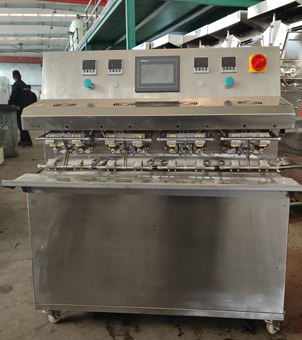
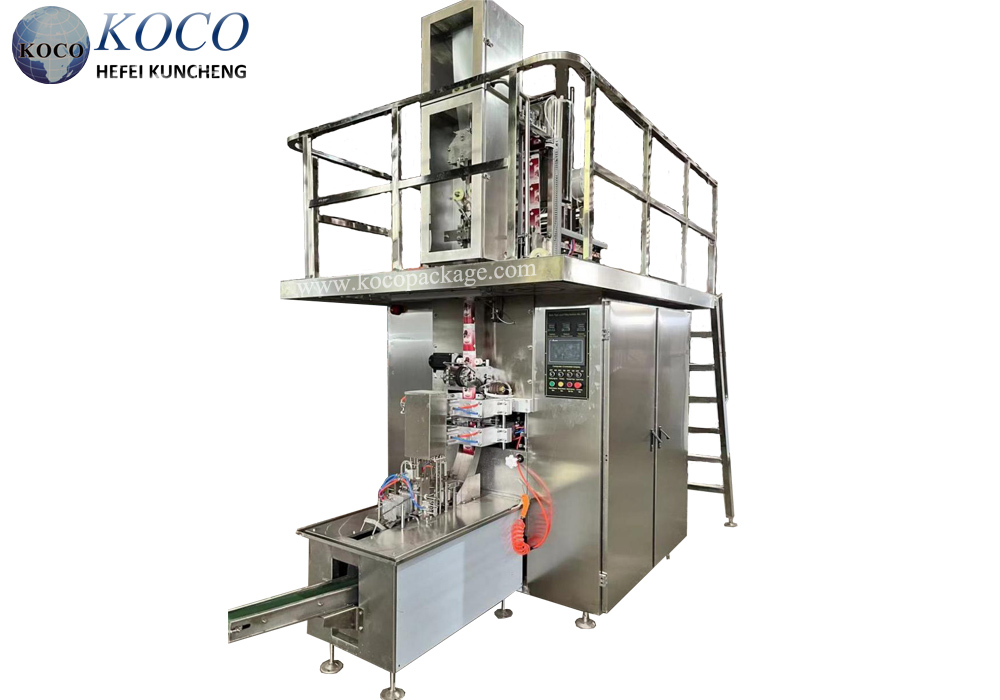
In the modern beverage industry, the need for efficient and reliable packaging solutions is paramount. The Boxed Juice Packing Machine, shown in the figure, is a state-of-the-art piece of equipment designed to meet these needs. The machine is designed to automate the process of filling and sealing juice into cartons, thereby increasing productivity and ensuring packaging consistency.
Features of the Machine
Constructed from stainless steel, the machine is not only durable but also easy to clean, making it ideal for food and beverage applications where hygiene is critical. It features a digital control panel that allows operators to easily adjust settings such as fill volume, speed, and temperature. The machine is also equipped with a conveyor system that moves cartons through various stages of the packaging process, from filling to sealing.
One of the main advantages of this machine is its versatility. It can handle different sizes and types of cartons, making it suitable for a wide range of juice products. This flexibility is essential for manufacturers who produce a variety of juice blends and want to maintain a consistent packaging style across their entire product line.
Operational Efficiency
The operational efficiency of the Paper Boxes Packing Machine is impressive. It can fill and seal cartons at high speeds, significantly reducing the time and labor required for packaging. The machine’s precision filling system further enhances efficiency, ensuring that each carton contains the exact amount of juice, minimizing waste and maintaining product quality.
Maintenance and Support
Regular maintenance is essential to the life and performance of the machine. Cleaning is required after each production run to prevent contamination and ensure hygiene. The design of the machine allows easy access to all parts, making cleaning and maintenance simple.
The manufacturer also provides comprehensive support, including training for operators, regular maintenance checks, and prompt service for any technical issues that may arise. This support ensures that the machine operates at its best and minimizes downtime.
In summary, the Box Packaging Juice Packing Machine is a valuable asset for juice manufacturers looking to streamline their packaging process. Its efficiency, versatility, and ease of maintenance make it a reliable choice for businesses of all sizes. By investing in such technology, manufacturers can increase production capacity and meet the growing demands of the beverage industry.
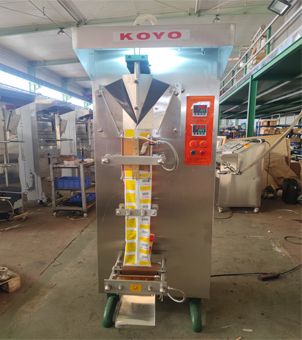
In today’s fast-paced world, access to clean and portable drinking water is essential. Sachet water has become a popular solution, especially in regions where bottled water is less accessible. The sachet packing machine, also known as a water packaging machine, plays a crucial role in producing these convenient single-use water sachets. In this blog, we’ll explore how this machine works and the steps involved in creating safe and hygienic sachet water.
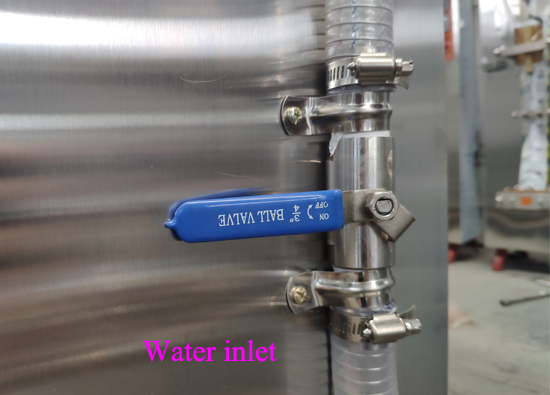
Step 1: Connecting the Pure Water Source
The first step in operating a sachet water making machine is ensuring a reliable supply of purified water. A pump is connected to the machine, linking it to a pure water machine or a storage tank containing treated water. This connection ensures that the machine can access clean, potable water for filling the sachets. The pump’s role is critical, as it maintains a steady flow of water into the machine during the packaging process.
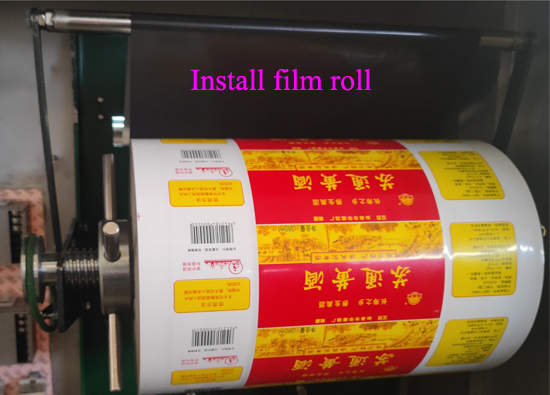
Step 2: Installing the Plastic Film Roll
Once the water source is secured, the next step is to install the plastic film roll. This roll is typically made of food-grade material, ensuring safety for consumption. The film is fed into the machine, where it will be shaped into individual sachets. Proper installation of the film roll is vital, as it directly affects the quality and consistency of the final product.
Step 3: Heating and Parameter Adjustment
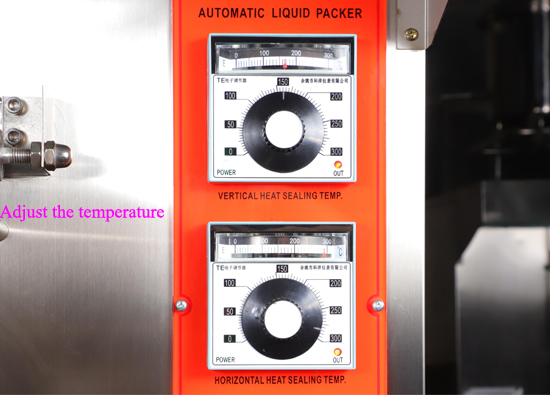
Before starting the packaging process, the machine’s heating function must be activated. Heating is necessary to seal the sachets properly, preventing leaks and ensuring longevity. During the heating phase, operators can adjust the machine’s parameters, such as temperature, speed, and sealing time, to match specific requirements. These adjustments are crucial for optimizing performance and achieving the desired sachet quality.
Step 4: Filling and Sealing
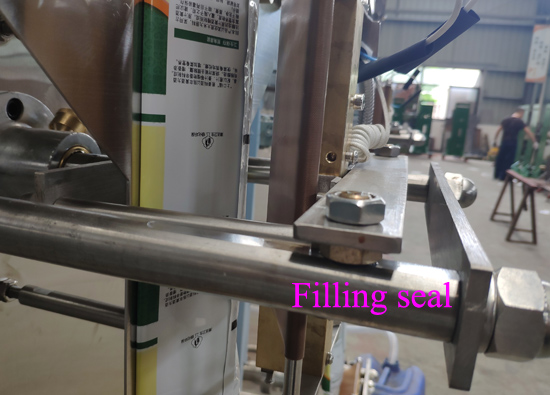
Once the machine reaches the set temperature, it’s ready for operation. The process begins with the machine automatically filling the plastic film with water. After filling, the machine seals the sachet using heat, creating a secure and leak-proof package. The entire process is automated, ensuring efficiency and consistency in production.
Cost-Effective: Sachet water is more affordable to produce compared to bottled water, making it accessible to a wider audience.
Hygienic: The machine’s automated process minimizes human contact, ensuring a hygienic product.
Portable: Sachets are lightweight and easy to carry, making them ideal for on-the-go use.
Environmentally Friendly: Many modern machines use biodegradable materials, reducing environmental impact.
Conclusion
A sachet packing machine or water packaging machine is a vital tool for producing safe, portable, and affordable drinking water. By connecting it to a pure water machine, installing the film roll, adjusting parameters, and initiating the filling and sealing process, operators can efficiently create high-quality water sachets. Whether for commercial or community use, this machine offers a practical solution for meeting hydration needs. Visit www.kocopackage.com to learn more about these innovative devices and how they can benefit your business.
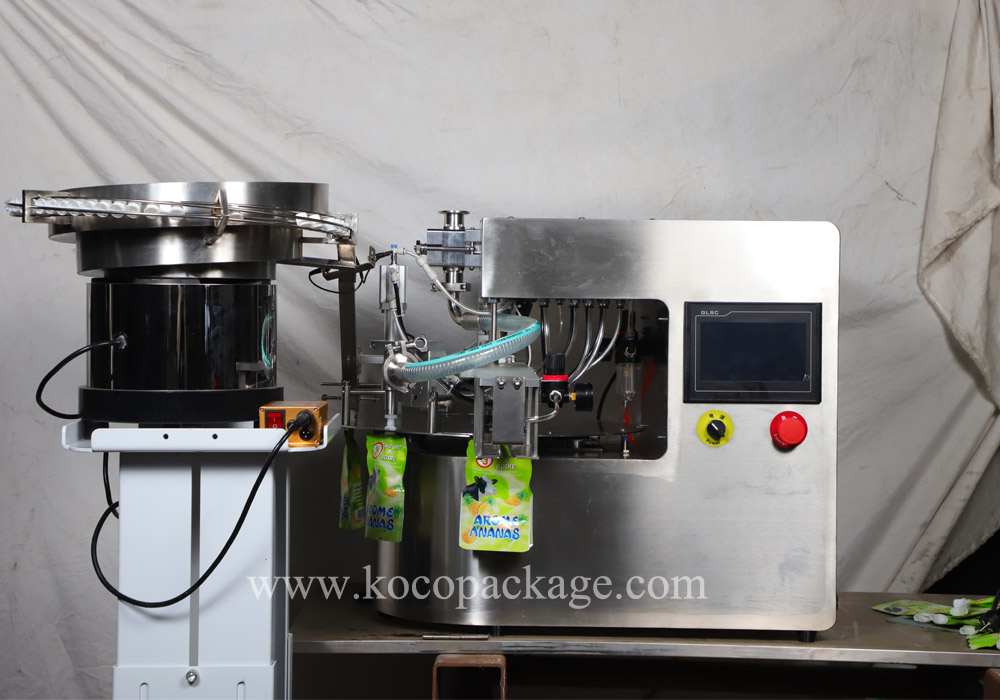
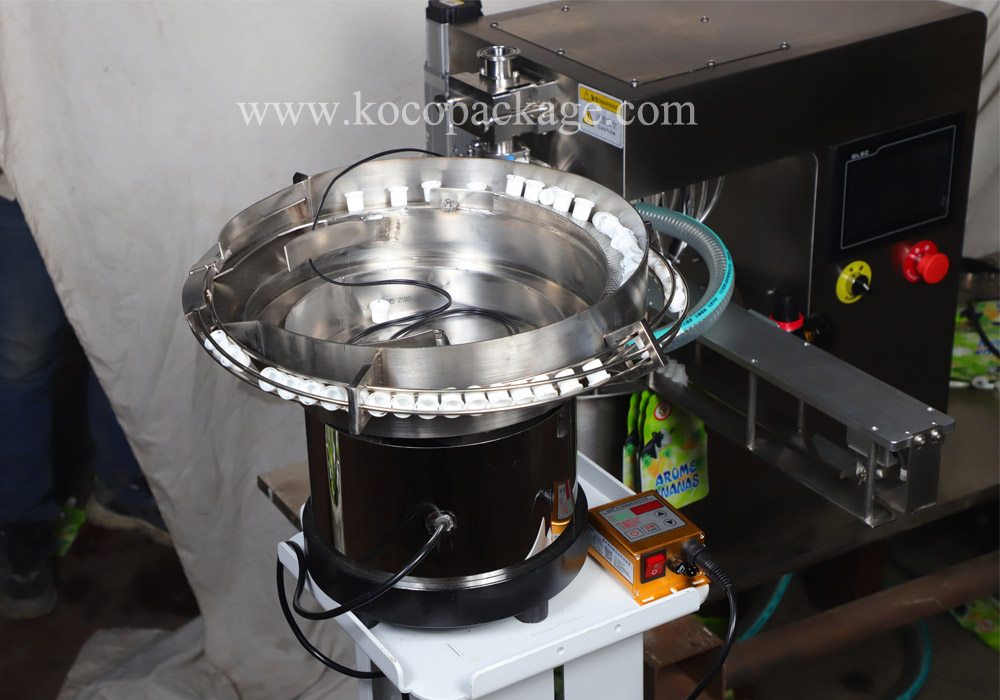
The Fully Automatic Desktop Spout Pouch Filling Machine is a sophisticated piece of equipment designed for the packaging industry, particularly for filling and sealing liquid products into spouted pouches. This machine is widely used in various sectors including food and beverage, pharmaceuticals, and cosmetics due to its versatility and efficiency.
Purpose of the Machine
The primary purpose of spout pouch filling machine is to automate the process of filling and sealing spout pouches, which are convenient for consumers to use and transport. It is designed to handle a variety of liquids, from thin to thick consistencies, such as juices, milk, sauces, and more. The machine ensures that the packaging process is hygienic, precise, and efficient, reducing manual labor and increasing production output.
Working Principle
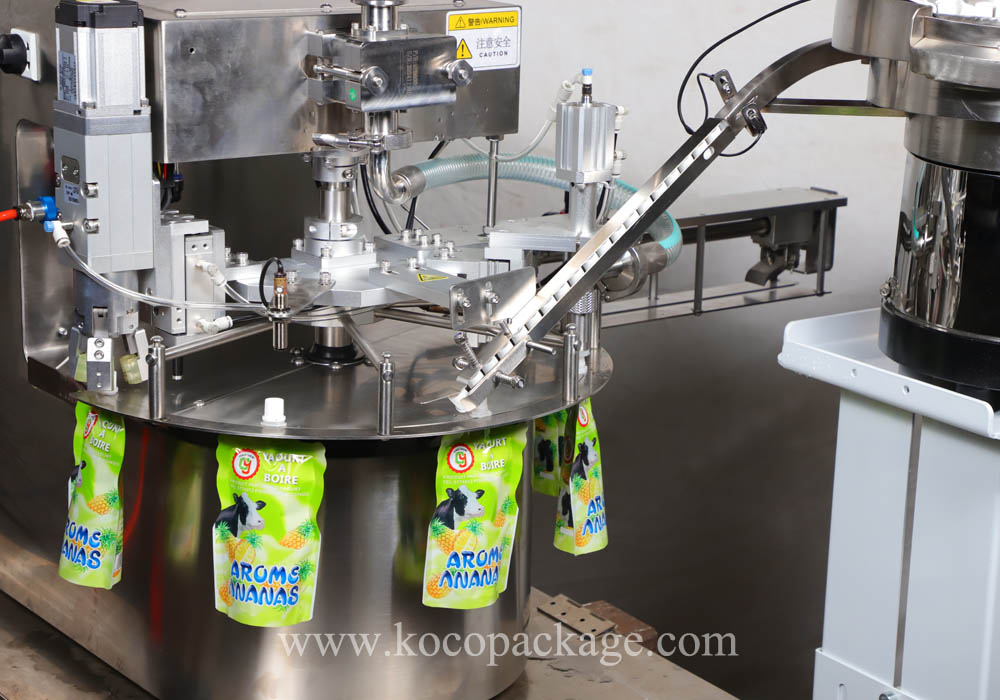
The machine operates on a fully automatic basis, which includes several stages:
Pouch Feeding: The machine automatically feeds the empty pouches from a roll or stack.
Filling: The liquid product is pumped into the pouches through a precise filling mechanism. The filling level can be adjusted according to the product's viscosity and the desired quantity.
Sealing: After filling, the machine seals the pouches hermetically to preserve the freshness and quality of the product.
Spout Insertion: The machine inserts the spout into the pouch, which is then sealed to ensure the spout is securely attached.
Output: The final product is dispensed from the machine, ready for packaging and distribution.
Materials Used
Doypack packing machine is typically constructed from stainless steel and other food-grade materials to ensure durability and compliance with food safety standards. The contact parts with the product are made from materials that are resistant to corrosion and easy to clean, such as stainless steel or food-grade plastics. The machine also uses high-quality seals and gaskets to ensure a tight seal and prevent leaks.
Common After-Sales Issues and Solutions
Filling Inaccuracies: This can occur if the filling mechanism is not calibrated correctly or if the product's viscosity changes. Regular calibration and adjustments based on product properties are necessary to ensure accurate filling.
Leakage: Improper sealing can lead to leakage. This can be addressed by checking the sealing mechanism and ensuring that all seals and gaskets are in good condition and properly aligned.
Spout Insertion Failures: If the spout is not inserted correctly, it can lead to product leakage or difficulty in opening the pouch. This can be resolved by adjusting the spout insertion mechanism and ensuring that the spout is the correct size and shape for the pouch.
Machine Overheating: Continuous operation can cause the machine to overheat. Regular maintenance, including cleaning and lubrication, can help prevent overheating and extend the machine's lifespan.
Software Glitches: The machine's control system may occasionally experience software issues. Regular software updates and troubleshooting can resolve these problems.
Conclusion
The Fully Automatic Desktop Spout Pouch Filling Machine is a valuable asset for businesses looking to automate their packaging processes. Its ability to handle various types of liquids and its precise filling and sealing capabilities make it a reliable choice for high-volume production. By understanding its working principles, materials used, and addressing common after-sales issues, businesses can maximize the efficiency and longevity of this machine. Regular maintenance and proper operation are key to ensuring that the machine continues to perform at its best, providing a high-quality packaging solution for liquid products.