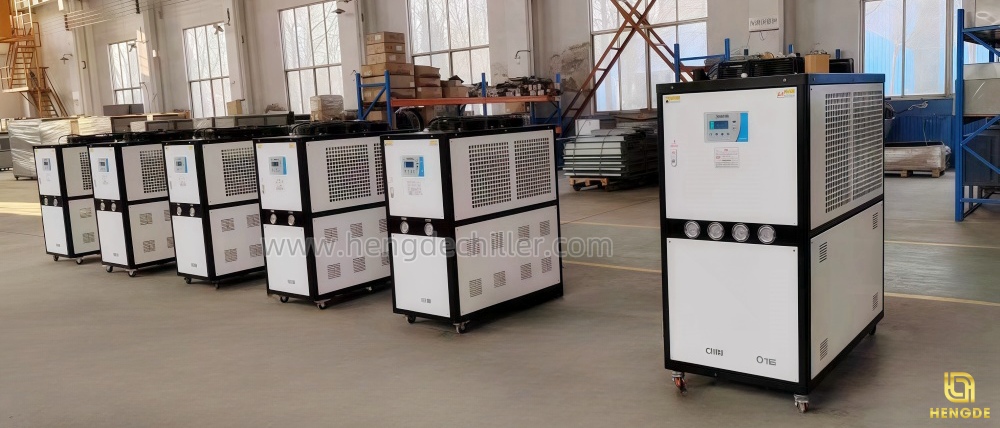
Temperature control is an important part of modern food production. Whether a factory manufactures dairy products, beverages, meat, seafood, or processed foods, reliable cooling helps maintain product quality, control processing conditions, and support food safety.
However, choosing an industrial chiller for food grade cooling is not simply a matter of selecting a machine with enough cooling capacity. Different food processing applications have different temperature requirements, hygiene considerations, and operating conditions.
A chiller that works well for beverage production may not be the right choice for a meat processing line or a dairy factory. Before purchasing equipment, manufacturers should understand the actual cooling process and evaluate several key factors.
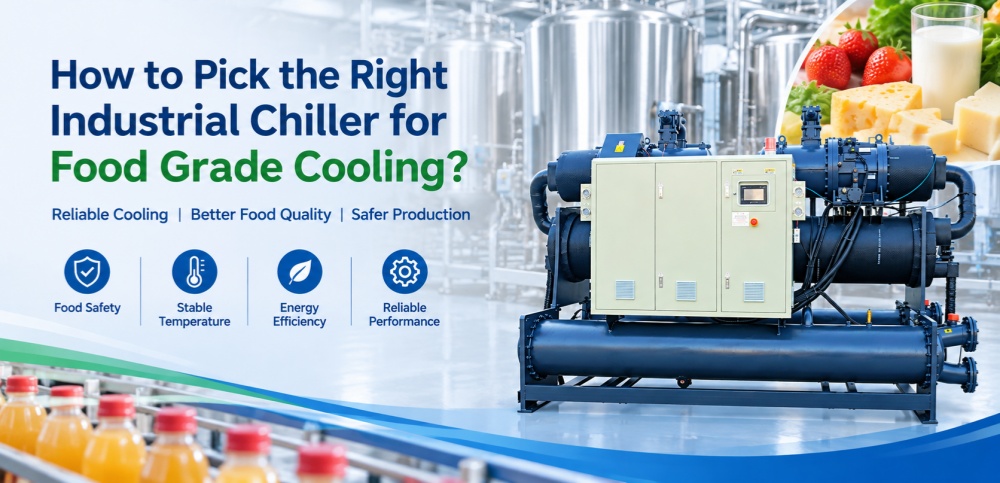
1. Understand Your Food Processing Application
The first step is to identify exactly what needs to be cooled.
Food processing covers a wide range of applications, and the required cooling conditions can vary considerably. For example:
- Dairy processing: Milk, cream, and other dairy products require carefully controlled cooling during processing and storage.
- Beverage production: Industrial chillers are used to cool mixing tanks, fermentation equipment, and beverage processing systems.
- Meat and seafood processing: Cooling systems help control processing temperatures and support product quality.
- Food ingredient production: Mixing tanks, reactors, and production equipment may require stable cooling during manufacturing.
These applications do not necessarily require the same chilled water temperature or cooling capacity.
Before contacting a chiller manufacturer, clarify the process temperature, target cooling temperature, cooling time, production volume, and whether the equipment operates continuously or intermittently.
2. Calculate the Required Cooling Capacity
Cooling capacity is one of the most important factors when selecting an industrial chiller. An undersized chiller may struggle to reach and sustain the required temperature, particularly during peak production. An oversized unit increases initial investment and may result in inefficient operation if the system is not properly designed for fluctuating loads.
The cooling load should be calculated according to actual process conditions. For liquid cooling, the basic heat-load formula is: Q = m × Cp × ΔT
Where:
- Q = heat to be removed (kJ)
- m = mass of the liquid (kg)
- Cp = specific heat capacity (kJ/kg·°C)
- ΔT = temperature difference (°C)
The required cooling capacity also depends on how quickly the product must be cooled. A process that needs to reduce a large volume of liquid from 35°C to 5°C within one hour requires a different cooling configuration from one that performs the same cooling over several hours.
Other factors include ambient temperature, tank insulation, heat generated by production equipment, pipeline heat gain, and simultaneous cooling demands.
Hengde Insight:One common purchasing mistake is selecting a chiller based only on the volume of the cooling tank. Tank volume alone does not determine the required cooling capacity. The cooling time and the actual temperature difference are equally important. We recommend asking suppliers to calculate the heat load based on your production cycle rather than simply matching the machine to tank size.
3. Choose the Right Cooling Temperature and Stability
Different food processes require different cooling temperatures.
Some production lines only need chilled water at 10–15°C, while others may require lower temperatures for rapid cooling or specialized processing. When selecting a chiller, confirm:
- Required chilled water outlet temperature.
- Temperature difference between inlet and outlet.
- Allowable temperature fluctuation.
- Required cooling time.
- Lowest expected operating temperature.
Temperature stability is particularly important in processes where inconsistent cooling can affect product quality.
It is also important to distinguish between the chiller's water outlet temperature and the actual food temperature. They are not necessarily the same. Heat transfer depends on the heat exchanger, tank design, flow rate, and product properties.
4. Consider Food Safety and Material Compatibility
Food grade cooling requires special attention to hygiene and material compatibility.
An important question is whether the cooling medium comes into direct contact with food.
In many industrial applications, the chiller cools water or a glycol solution that circulates through a jacketed tank, plate heat exchanger, or other closed-loop cooling equipment. In this arrangement, the circulating fluid does not directly contact the food.
However, if the cooling medium may come into contact with food because of the process design or a possible leak, the fluid and equipment materials must meet the applicable food safety requirements.
For equipment connected to food processing systems, buyers should consider:
- Corrosion-resistant materials where required.
- Appropriate stainless steel grades for product-contact surfaces.
- Hygienic design of product-contact heat exchangers.
- Suitable seals and gaskets.
- Compatibility with cleaning and sanitation procedures.
- Appropriate food-contact certifications where applicable.
It is worth emphasizing that not every component of an industrial chiller needs to be food-contact certified. The requirements depend on the system boundary and the possibility of contact with the food product.
5. Select the Appropriate Chiller Type
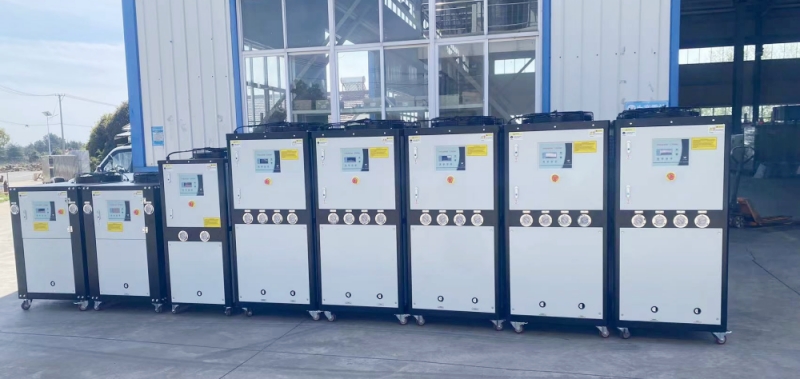
Industrial chillers are generally available in air-cooled and water-cooled configurations.
- Air-cooled chillers reject heat directly into the surrounding air through fans and condensers. They are often easier to install because they do not require a separate cooling tower.
- Water-cooled chillers reject heat through a water circuit, usually connected to a cooling tower. They can be suitable for larger industrial installations where a cooling water system is available.
The right choice depends on cooling capacity, installation space, ambient conditions, water availability, maintenance requirements, and operating costs.
For food factories operating in hot environments or running continuously, the condenser design and actual ambient temperature should receive particular attention.
6. Consider Energy Efficiency and Maintenance
A food production line may operate for long hours, so electricity consumption can become a significant part of operating costs.
When comparing industrial chillers, do not look only at the rated cooling capacity. Ask suppliers for performance data under your actual operating conditions, including chilled water temperature and ambient temperature.
Maintenance is equally important. Check whether the chiller allows convenient access to filters, pumps, electrical components, and heat exchangers.
Regular inspection of water quality, filters, condenser cleanliness, refrigerant systems, and circulation pumps helps maintain reliable operation.
Hengde Insight: For food manufacturers, a chiller should be evaluated by its ability to support the production schedule, not just its initial purchase price. Unexpected downtime during a production shift can affect an entire batch of products. Stable operation, accessible maintenance, and responsive technical support are therefore important purchasing considerations.
7. Work with an Experienced Industrial Chiller Manufacturer
Choosing the right supplier is just as important as choosing the right chiller. Nanjing Hengde Electrical Equipment Co., Ltd. was established in 2010 and specializes in industrial chillers, mold temperature controllers, and other industrial temperature-control equipment. Hengde manufactures air-cooled chillers, water-cooled chillers, scroll chillers, screw chillers, and low-temperature chillers for different industrial applications.
When discussing a food cooling project with Hengde, customers can provide their process temperature, required cooling capacity, product or liquid volume, cooling time, power supply, and installation conditions. These details help determine a suitable cooling solution.
For applications involving direct food contact, customers should also clearly identify the required hygiene standards and material specifications so that the appropriate process-side equipment can be considered.
Frequently Asked Questions
Q1: Can an industrial chiller be used for food processing?
Yes. Industrial chillers are widely used to cool food processing tanks, beverage production equipment, dairy systems, and other process equipment. The configuration must match the application and hygiene requirements.
Q2: Does a food processing chiller need to use stainless steel?
Not necessarily for every component. Stainless steel is particularly important for surfaces that directly contact food. Other parts should be selected according to their function, environment, and applicable requirements.
Q3: Should I choose an air-cooled or water-cooled chiller?
It depends on cooling capacity, installation conditions, available cooling water, ambient temperature, and operating costs. Both types can serve food processing applications when correctly selected.
Q4: How do I calculate the required chiller capacity?
Consider the product or liquid volume, initial and target temperatures, required cooling time, specific heat capacity, and additional heat loads. A professional heat-load calculation is recommended before purchasing.
Conclusion
Selecting the right industrial chiller for food grade cooling requires more than comparing prices and cooling capacities. Manufacturers should consider the actual process, cooling load, temperature stability, hygiene requirements, energy consumption, and long-term maintenance.
A properly selected chiller can help maintain consistent production conditions, reduce unnecessary energy costs, and support reliable food processing operations.
Looking for the Right Industrial Cooling Solution? Contact Hengde to discuss your food processing cooling requirements and find a suitable industrial chiller for your application.