Choosing a reliable drip irrigation equipment manufacturer is an important decision for agricultural distributors, irrigation contractors, project developers, and wholesale buyers. The quality of irrigation products directly affects system performance, installation efficiency, maintenance requirements, and long-term operating costs. However, comparing manufacturers based only on product prices or online catalogs can make it difficult to identify a supplier that can consistently meet project requirements.
A qualified drip irrigation manufacturer should offer more than individual products. Buyers should evaluate its manufacturing capabilities, quality control procedures, technical expertise, product range, customization options, and experience in serving international markets. These factors help determine whether a supplier can support both an initial order and future business development.
For companies sourcing agricultural irrigation equipment, CHINADRIP is one manufacturer worth considering. Chinadrip Irrigation Equipment (Xiamen) Co., Ltd. has focused on irrigation equipment research, development, production, and sales since 2006. Its product range covers drip irrigation systems, micro-sprinklers, filtration equipment, control valves, tubing, and fittings. This guide explains how to assess a drip irrigation equipment manufacturer and what buyers should verify before making a purchasing decision.
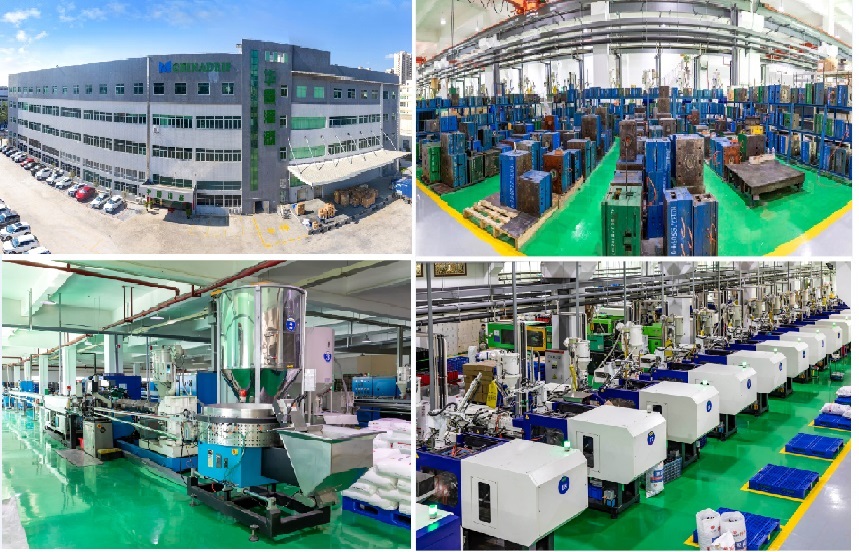
CHINADRIP factory and production facilities
Understand the Manufacturer's Industry Experience
Experience in the irrigation industry is an important starting point when evaluating a potential supplier. A manufacturer that has worked with irrigation products for many years is more likely to understand the practical requirements of different agricultural applications, including pressure management, water distribution, filtration, installation, and product compatibility.
However, the number of years a company has been operating should not be the only selection criterion. Buyers should also examine whether the manufacturer has developed its own product range, maintained production operations, and accumulated experience in different irrigation markets.
For example, CHINADRIP was established in 2006 and has developed its irrigation product portfolio over time. Its company information identifies drip irrigation, micro-sprinkler systems, filtration equipment, fertilizer injectors, tubing, and fittings as major product areas. The company also reports that its products are supplied to more than 70 countries.
This industry background is relevant to buyers who need a supplier familiar with different irrigation applications rather than a trading company offering only a limited selection of standard products. You can learn more about the company's background and development on the CHINADRIP manufacturer profile.
Verify Actual Manufacturing Capabilities
One of the most important differences between an actual drip irrigation equipment manufacturer and a trading company is its control over production. A supplier with its own manufacturing facilities can generally provide more direct information about production processes, product development, manufacturing schedules, and quality inspection.
When evaluating a factory, buyers should look beyond exterior building photos. Useful information includes the types of production equipment available, the number of production lines, manufacturing processes, workshop organization, and whether the company can provide actual production evidence.
Several questions can help verify a manufacturer's capabilities:
- Does the company operate its own production workshops?
- What types of manufacturing equipment are available?
- Does it have dedicated production lines for drip tape and drip lines?
- Can the factory handle repeat orders and different product specifications?
- Can it provide production photos, videos, or factory inspection arrangements?
According to the manufacturing information published in CHINADRIP's official FAQ, the company has more than 45 injection molding machines, over 20 fully automatic production lines, and more than 8 drip tape and drip line production lines. These facilities support the production of different irrigation products and components.
Manufacturing workshops and injection molding equipment
For wholesale buyers, these production resources are worth considering when evaluating a supplier's ability to support ongoing orders. Nevertheless, actual lead times and available production capacity should still be confirmed for each order, particularly when multiple product types or customized specifications are involved.
Evaluate Product Range and System Compatibility
A reliable irrigation equipment manufacturer should understand how individual components work together within a complete irrigation system. Purchasing drip tape from one supplier, filters from another, and fittings from a third can increase coordination requirements and make it more difficult to resolve compatibility issues.
For agricultural irrigation projects, a well-developed product portfolio may include the following categories:
Drip irrigation products: Drip tape, drip lines, pressure-compensating drippers, take-apart drippers, and related accessories. These components deliver water directly to the crop root zone and must match the project's pressure and discharge requirements.
Micro-sprinkler products: Micro-sprinklers, PC sprinklers, bubblers, sprayers, and foggers. They are used in applications that require localized spraying, greenhouse irrigation, orchard irrigation, or landscape watering.
Filtration equipment: Disc filters, screen filters, automatic self-cleaning filtration systems, and related backwashing components. Proper filtration helps reduce the risk of emitter clogging.
Valves and irrigation accessories: Hydraulic control valves, solenoid valves, air valves, pressure regulators, fertilizer injectors, tubing, and pipe fittings. These products help manage water flow and connect different parts of the irrigation network.
CHINADRIP's product portfolio covers these major equipment categories, allowing buyers to source multiple irrigation components from the same manufacturer.
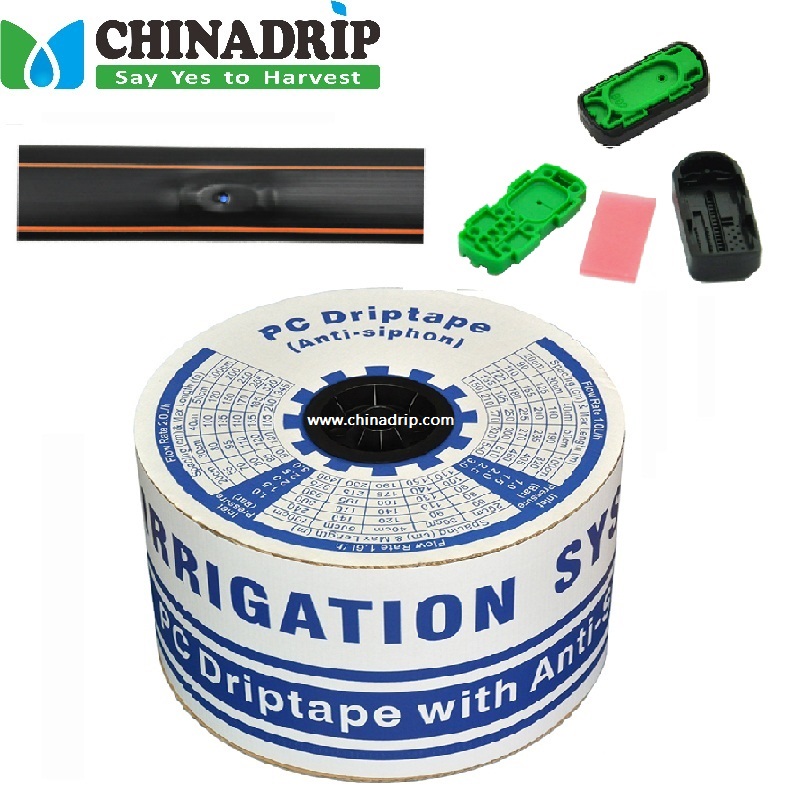
PC drip tape and emitter components
When assessing a supplier's product range, check whether the manufacturer can provide technical information for individual products and explain how they should be matched. For example, buyers sourcing PC100 pressure-compensating drip tape should confirm its working pressure, filtration requirements, emitter spacing, and flow rate against the intended irrigation design.
Examine Quality Control and Product Testing
Product quality should be evaluated through documented manufacturing and inspection procedures, not simply through product descriptions or promotional claims. In irrigation equipment manufacturing, small dimensional differences, inconsistent material properties, or poorly controlled production processes can affect product performance.
For drip irrigation products, buyers may need to pay particular attention to:
- Dimensional consistency of drip tape, tubing, and fittings.
- Emitter discharge consistency and pressure-compensating performance.
- Resistance to pressure changes under specified operating conditions.
- Material properties, including UV resistance and aging performance where applicable.
- Sealing performance and connection reliability of valves and fittings.
- Filtration and backwashing performance of filter assemblies.
A good manufacturer should be able to explain its inspection procedures and provide relevant test records or product samples. Buyers should also clarify whether quality checks are performed during production and before shipment.
CHINADRIP's official FAQ describes a quality inspection process that includes inspections after production processes, initial inspection, random inspection, and final inspection. The company also states that final products are inspected according to customer requirements and applicable international standards.
In addition, CHINADRIP's 2025 product catalog identifies ISO 9001 quality management system certification as part of its company profile. Buyers who require certification documents should request the current certificate and verify its validity, issuing body, and scope before placing an order.
A manufacturer's ability to explain how it controls quality is often more useful than a general statement that its products are of high quality. Ask for specific inspection items and acceptance criteria relevant to the products being purchased.
Check Research, Development, and Customization Capabilities
Agricultural irrigation projects do not always use standard configurations. Different regions, crop types, water sources, field layouts, and installation methods may require adjustments to product specifications.
This is why product development and customization capabilities should be considered when selecting a long-term irrigation equipment supplier.
Depending on the product and project, customization may involve:
- Product dimensions and connection specifications.
- Emitter flow rates and spacing configurations.
- Material or color requirements.
- Product structures developed from customer drawings or samples.
- Packaging, labeling, and other order-specific requirements.
CHINADRIP states in its official FAQ that it can develop and produce customized products based on drawings or samples provided by customers. Its company profile also identifies research and development, production, and sales as its core business activities.
For buyers with specific technical requirements, it is important to discuss customization details before mass production. Confirm drawing approval, material specifications, sample testing, tooling requirements, minimum order quantities, and any additional development costs.
A manufacturer with suitable technical support can help translate project requirements into workable product specifications. However, customization scope and feasibility should always be confirmed for each individual product.
Compare Export Experience and International Support
For overseas buyers, a manufacturer's export experience is another important consideration. Supplying irrigation products to international markets involves more than manufacturing. The supplier should also understand export documentation, packaging requirements, shipping arrangements, communication across time zones, and the needs of overseas distributors.
Before choosing a drip irrigation equipment manufacturer, consider the following questions:
- Does the manufacturer have experience supplying products to your target market?
- Can it provide clear product catalogs and technical documentation?
- Can it communicate effectively in international business transactions?
- Does it understand packaging, labeling, and shipping requirements?
- Can it provide timely responses to technical and order-related questions?
CHINADRIP reports that its irrigation products have been supplied to more than 70 countries, including markets in America, Europe, Southeast Asia, and Africa. Its official FAQ also states that the company can arrange sea freight, air freight, and express delivery for samples, depending on order requirements.
This international business experience can be useful for distributors and project buyers who need a supplier familiar with overseas purchasing and delivery processes. Buyers should still confirm the applicable Incoterms, delivery schedule, export documents, and shipping costs for each transaction.
Evaluate Communication and After-Sales Support
Communication is often overlooked when comparing irrigation equipment manufacturers, especially when buyers focus heavily on product prices. However, clear communication becomes important when technical questions arise, samples need approval, or production schedules change.
A reliable supplier should be able to provide accurate product information, respond to technical questions, and communicate clearly about order progress. Buyers should also understand how the manufacturer handles defective products, replacement parts, product installation questions, and other after-sales issues.
Before placing a bulk order, it is useful to confirm:
- Who will be responsible for handling your account?
- How quickly can technical questions be answered?
- Are installation instructions and product documentation available?
- What is the procedure for reporting product quality problems?
- Are replacement parts or additional product supplies available?
According to CHINADRIP's official FAQ, the company aims to reply to inquiries within 12 hours on working days. This provides overseas buyers with a stated response-time reference, although response times for complex technical matters may vary.
Compare Suppliers Beyond the Initial Purchase Price
Price is an important part of procurement, but selecting the lowest quotation does not necessarily result in the lowest overall project cost. Differences in material quality, product consistency, packaging, delivery reliability, and after-sales support can affect the total cost of ownership.
For a more accurate comparison, buyers should request quotations based on equivalent specifications. Two drip tape products, for example, should not be compared solely by price per roll if they have different wall thicknesses, emitter spacing, flow rates, or operating pressure requirements.
A practical supplier comparison should include:
| Evaluation Factor | What Buyers Should Check |
|---|---|
| Manufacturing | Factory ownership, equipment, and production lines |
| Product Quality | Materials, specifications, inspection, and testing |
| Product Range | Compatibility and availability of related components |
| Customization | Technical development and sample approval |
| Export Experience | International markets and shipping arrangements |
| Commercial Terms | MOQ, payment terms, lead time, and warranty |
| After-Sales Support | Technical assistance and complaint handling |
A structured comparison helps purchasing teams identify suppliers that offer a suitable balance of quality, production capability, and commercial value. It also reduces the risk of making a decision based only on an attractive initial quotation.
Why Consider CHINADRIP as Your Drip Irrigation Equipment Manufacturer?
CHINADRIP is an irrigation equipment manufacturer based in Xiamen, China, focusing on the research, development, production, and sales of agricultural irrigation products. Its business covers multiple product categories, allowing buyers to source equipment and related components for different irrigation applications.
The following company information is published in CHINADRIP's official website and product catalog:
2006
Year Established
70+
Export Countries
45+
Injection Molding Machines
20+
Automatic Production Lines
Source: CHINADRIP official company profile, FAQ, and 2025 product catalog. Figures are based on published company information.
Other relevant company information includes:
- More than 8 drip tape and drip line production lines.
- More than 100 employees, including over 10 professional technicians and 5 engineers, according to the official FAQ.
- ISO 9001 quality management system certification, as stated in the 2025 company catalog.
- A product portfolio covering drip irrigation, micro-sprinklers, filters, valves, tubing, and fittings.
- Customized product development based on customer drawings or samples.
For distributors, agricultural project contractors, and irrigation equipment buyers, these capabilities provide a basis for evaluating CHINADRIP as a potential manufacturing partner. The combination of production resources, product variety, and international supply experience can be relevant to both individual product sourcing and broader irrigation equipment procurement.
You can explore the CHINADRIP irrigation equipment product range to review its available categories and identify products relevant to your market or project.
What Should Buyers Do Before Placing a Bulk Order?
After identifying a potential manufacturer, buyers should complete several verification steps before confirming a large order. These steps help ensure that the products, commercial terms, and production arrangements are clearly defined.
Request a detailed quotation. Confirm product models, specifications, quantities, packaging, minimum order quantities, and shipping terms.
Review technical documentation. Check product drawings, material information, working pressure, flow rate, and relevant testing requirements.
Request product samples. Where practical, evaluate sample quality and compatibility before moving into mass production.
Confirm quality standards. Agree on inspection procedures, acceptance criteria, and how any non-conforming products will be handled.
Clarify production and delivery schedules. Confirm the estimated lead time, packaging arrangements, shipping method, and required export documents.
These steps are particularly important for distributors and buyers planning repeat orders. A clear procurement process helps establish realistic expectations and creates a more reliable foundation for long-term cooperation.
Frequently Asked Questions About Choosing a Drip Irrigation Manufacturer
1. How can I identify a reliable drip irrigation equipment manufacturer?
Check the company's manufacturing facilities, production equipment, product range, quality inspection procedures, technical support, customization capabilities, and export experience. Request factory information, product samples, and relevant technical documents before placing a bulk order.
2. What is the difference between a drip irrigation manufacturer and a trading company?
A manufacturer operates or controls production processes and can provide direct information about manufacturing, product development, and quality inspection. A trading company primarily sources products from other suppliers. Some manufacturers also operate their own international sales departments.
3. What products should a professional drip irrigation equipment manufacturer offer?
A comprehensive supplier may offer drip tape, drip lines, pressure-compensating drippers, micro-sprinklers, filtration systems, valves, tubing, and irrigation fittings. The required range depends on the buyer's market and project applications.
4. Can drip irrigation manufacturers provide customized products?
Some manufacturers can develop products based on customer drawings, samples, or technical specifications. Buyers should confirm customization feasibility, tooling costs, sample approval, minimum order quantities, and production lead times before proceeding.
5. How does CHINADRIP control product quality?
According to its official FAQ, CHINADRIP conducts inspections after production processes, along with initial, random, and final inspections. Final inspection is carried out according to customer requirements and applicable international standards.
6. What is the production capacity of CHINADRIP?
CHINADRIP's official FAQ reports more than 45 injection molding machines, over 20 fully automatic production lines, and more than 8 drip tape and drip line production lines. Actual available capacity and lead times should be confirmed for each order.
7. Does CHINADRIP supply irrigation equipment to international markets?
Yes. CHINADRIP reports supplying irrigation products to more than 70 countries, including markets in America, Europe, Southeast Asia, and Africa.
8. Can I purchase different irrigation products from CHINADRIP?
Yes. Its product range includes drip irrigation products, micro-sprinklers, plastic filters, automatic irrigation control systems, hydraulic valves, tubing, and fittings. Product availability and order requirements should be confirmed with the sales team.
9. What should I prepare when requesting a quotation from a drip irrigation manufacturer?
Prepare the product model or application, required specifications, estimated order quantity, destination country, packaging requirements, and any customization details. Drawings or samples are useful when requesting non-standard products.
10. Why is it important to request samples before placing a large order?
Samples allow buyers to inspect product dimensions, material appearance, workmanship, and compatibility with their intended application. Where performance is critical, samples should also undergo appropriate functional testing before mass production.
Looking for a Reliable Drip Irrigation Equipment Manufacturer?
CHINADRIP provides agricultural irrigation equipment for distributors, wholesalers, and irrigation projects. With manufacturing experience since 2006 and a product range covering drip irrigation, filtration, micro-sprinklers, valves, and fittings, CHINADRIP can discuss product requirements and customized solutions for different markets.
Contact CHINADRIP to discuss your product specifications, estimated order quantity, and project requirements.